
Send Your Inquiry Today
How to Verify a Hologram Sticker: A Brand & Buyer’s Guide
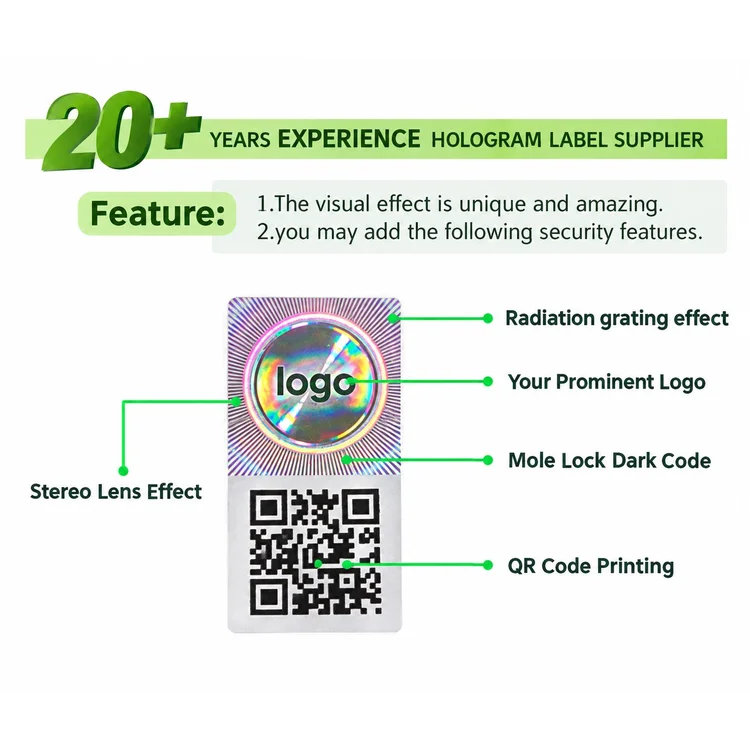
A shiny sticker is not proof of authenticity. A basic rainbow foil can be copied by any printer with the right film, and a “GENUINE” or “ORIGINAL” mark means nothing when the same stock roll is sold to anyone. For buyers, QA teams and brand owners, the real question is not “does it look holographic” but “can this specific label be verified as ours, and does the pack show proof of opening?” This guide walks through the four checks we teach our customers — tilt, look, scratch, scan — and explains what each one is actually testing for.
On this page
Why “does it look shiny” is the wrong question
Two shifts have changed how a security label should be verified. First, regulated supply chains now require a queryable identity, not just a visual one. The EU Falsified Medicines Directive (Directive 2011/62/EU and its 2016 delegated regulation) has required unique identifiers and tamper-evident packaging on prescription medicines in the EU since 2019, and the US Drug Supply Chain Security Act is in its full-enforcement phase from May 2026 (see the FDA DSCSA guidance). Second, GS1’s Sunrise 2027 initiative asks brands to make 2D codes scannable at retail by the end of 2027, collapsing many labels into one phone-readable surface.
The practical result: a label that only “looks holographic” is increasingly the weak link. The verification that matters is phygital — a visible optical mark that a person checks in seconds, backed by a code that a phone checks against a database. Learning to verify both is the skill this article builds.
This article is general guidance, not legal advice. For binding obligations consult the official texts linked above and qualified counsel; implementation dates can move with secondary legislation.
Who needs to verify a hologram label
- Brand owners — confirm a contract manufacturer or sub-supplier is applying the agreed master, not a generic substitute.
- QA and receiving teams — flag diverted or refilled stock at goods-in.
- Distributors and service centres — decide warranty validity from physical opening evidence.
- Consumers — a 30-second tilt-and-scan check at point of purchase.
The same four checks below work for all four roles; only the tools (a loupe versus a phone) change.
The 4-step check: tilt, look, scratch, scan
We train customers on a method we call tilt, look, scratch, scan. It takes under a minute and filters out the majority of convincing-looking fakes.
1. Tilt — test the optical depth
Hold the label under a light and tilt it side to side. A genuine 2D/3D or dot-matrix hologram shows parallax: foreground and background layers shift relative to each other, and kinetic elements (zooming lines, rotating globes) animate with angle. A cheap copy is a flat printed rainbow that merely changes colour. If nothing moves in depth, treat it as suspect.
2. Look — test the fine detail
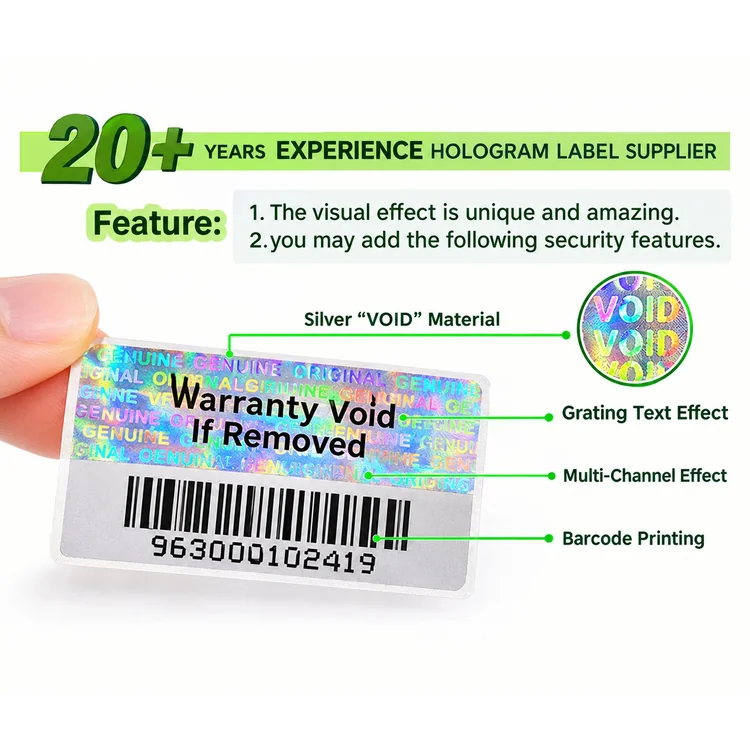
Inspect the surface closely. Genuine security art includes features too fine to scan cleanly: micro-text (brand or security wording under ~0.2 mm line width, readable only with a 10x loupe), guilloche linework (mathematically generated fine lines like those on banknotes), and grating text effects. On a copy these lines blur or break. If you can read the micro-text with a loupe on the original but not on the suspect, that is your answer.
3. Scratch — test the tamper layer
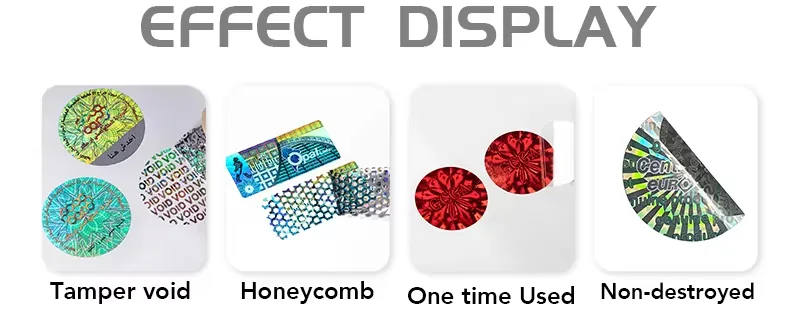
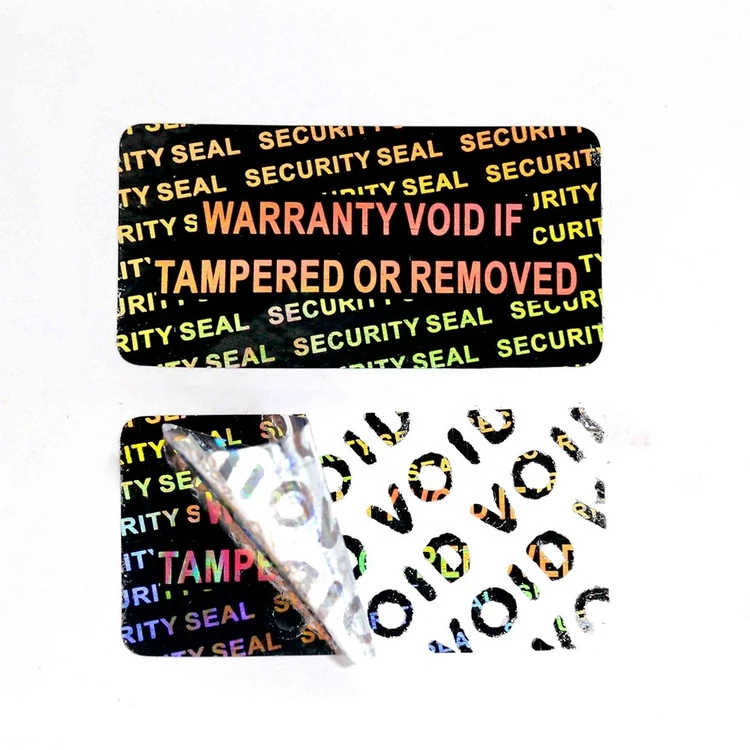
Gently lift one edge with a fingernail (only where you are authorised to test). A genuine security label should not peel off in one clean piece. Destructible stock breaks into fragments, and a VOID label transfers a repeated “VOID” or “OPENED” pattern onto the surface. Clean removal means the construction is wrong — or it was never a security label.
4. Scan — test the digital identity
If the label carries a QR code or serial, scan or enter it against the brand’s verification system. A unique code that resolves to a live “first scan” record, and flags repeats, is what turns a static seal into queryable proof. A code that points to a generic page — or no page — is not authentication. Note that a printed code alone is only as strong as the database behind it; the optical layer is what stops someone simply re-printing the code onto a fake.
What a genuine security hologram is made of
Verification is easier when you know what was specified. A genuine, brand-specific security label is engineered from several independent layers, not a single shiny film:
- Exclusive custom master. The origination artwork that defines the 2D/3D or dot-matrix effect is created for one buyer. Stock patterns (“GENUINE”, globes, “ORIGINAL”) are available to anyone and provide no security. Ask your supplier, in writing, whether your master is exclusive and how it is stored.
- Optical features. 2D/3D depth, kinetic animation, dot-matrix and grating text — hard to re-originate without the laser master.
- Covert features. Micro-text, hidden images, and UV or IR marks that only trained inspectors see.
- Tamper evidence. VOID transfer or destructible film that proves opening.
- Variable data. Sequential numbering or a unique QR/2D code per unit, printed on a variable-data line and verified to ISO/IEC 15415 grading on the substrate.
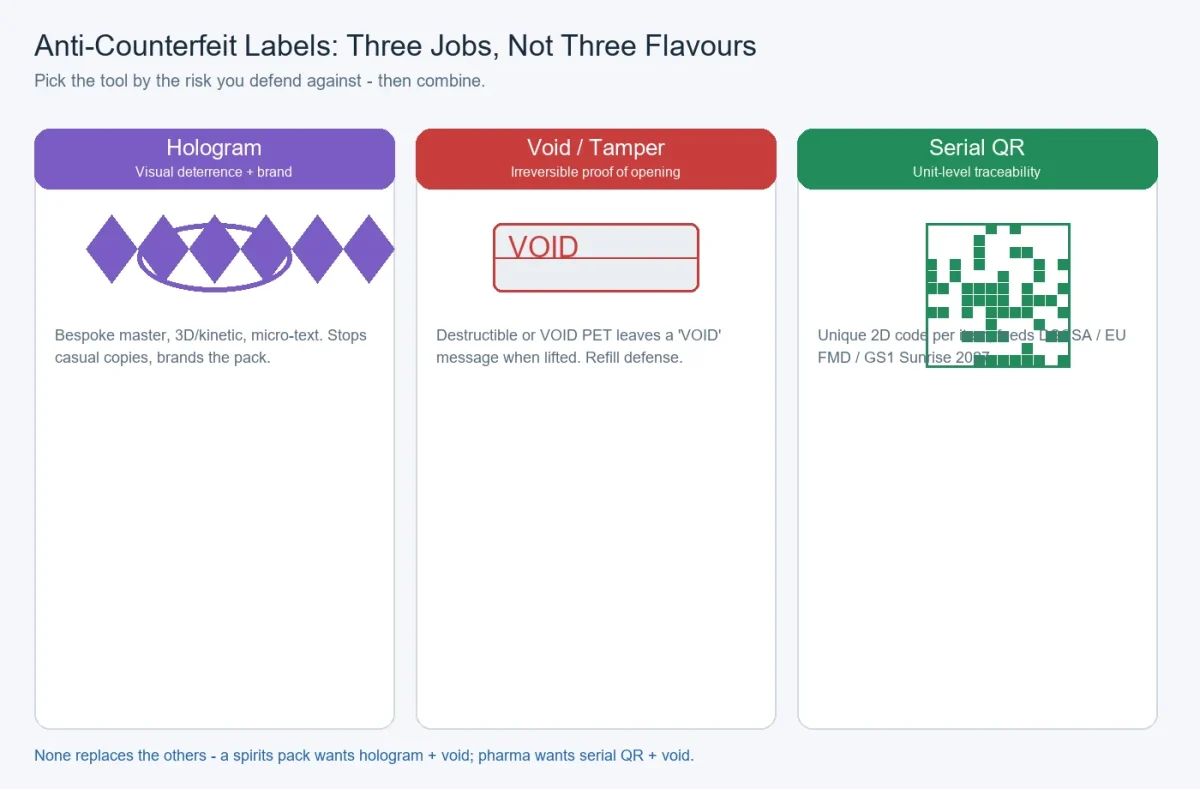
On our lines a certificate-of-authenticity label is typically built in registered passes: the unique QR or serial is printed first, then the hologram or hot-foil layer is stamped on top in precise registration. Because the two layers are independent, copying the hologram does not reproduce the code, and copying the code does not recreate the stamp. We cover the layered logic in our hologram vs void vs serial guide and the smart authentication overview.
Illustrative scenario
The following is a composite example, not a specific customer order. A supplement brand finds near-identical bottles appearing on a marketplace at half price. The genuine bottle carries a custom-master hologram plus a unique QR. The operator at goods-in tilts the suspect label (no depth — flat print), lifts an edge (clean removal — no VOID), and scans the QR (it resolves to a parked domain, not the brand’s verification page). All three checks fail, so the batch is quarantined. The genuine stock passes all four. This is the workflow the four-step method is built for.
Feature checklist
| Check | What “genuine” looks like | What “fake/suspect” looks like |
|---|---|---|
| Tilt (depth) | Foreground/background parallax, kinetic motion | Flat colour shift only |
| Look (detail) | Sharp micro-text, guilloche, grating text under loupe | Blurred or broken fine lines |
| Scratch (tamper) | Breaks apart or leaves VOID/OPENED residue | Peels off cleanly in one piece |
| Scan (identity) | Unique code resolves to live verification, flags repeats | Generic page or no resolve |
| Master | Exclusive custom origination, stored securely | Stock pattern available to anyone |
Downloadable verification checklist
We packaged the four-step method and the feature table above into a one-page inspection sheet you can hand to goods-in, service centres and distributors. It covers the tilt/look/scratch/scan routine, the master-exclusivity question to put to your supplier in writing, and the ISO/IEC 15415 print-grade check for variable data. Pair it with our sequential numbered label guide when specifying serialisation, and with the tamper-evident compliance guide when VOID residue type is the decision.
Frequently asked questions
Can a hologram sticker be faked? A generic stock hologram can be copied easily because the design is public. A custom-master hologram combined with a unique serial and a VOID layer is far harder to clone and, critically, lets anyone verify the specific unit rather than just the look.
How can I tell if a hologram is original by eye? You largely cannot with a stock pattern. The reliable check is the combination: tilt for depth, look for micro-text with a loupe, and scan or enter the serial against the brand’s verification system. The hologram is the first cue; the code is the second.
What is the difference between a hologram and a VOID label? A hologram is an overt visual deterrent; a VOID label is a tamper-evident construction that leaves an irreversible mark when lifted. They solve different problems and are usually combined — the hologram deters, the VOID proves opening. See our comparison guide.
Do QR security labels work without an app? Yes. A standard QR code opens a verification page in any smartphone camera or browser; no app is required. The security lives in the database behind the code, not the printed format — which is why the optical layer must stay part of the design.
Are serialized labels required by law? In some sectors yes — EU pharma under the Falsified Medicines Directive and US pharma under DSCSA carry serialisation duties; food and general consumer goods are moving the same way through digital-product-passport and 2D-code initiatives. For a sector-by-sector view, our 2D code and food/pharma guide maps the current rules.
How are hologram stickers made? They are embossed from a mastered shim onto metallised film, then converted into labels; fine features like micro-text are added in the same pass. A custom master is exclusive to the buyer, while stock patterns are open to anyone.
Want to put the four-step method to a real sample? Request a physical sample of a custom-master hologram with your choice of VOID, micro-text and variable-data options from our security-label manufacturing page, and we will send a comparison set so your team can practise the tilt-look-scratch-scan routine on known-good stock.
Disclaimer: this article is general guidance, not legal advice. Regulatory references (Directive 2011/62/EU, DSCSA, GS1 Sunrise 2027, ISO 12931) are summarised for context; dates and scopes can change with implementing acts. Confirm current text with the official sources — EUR-Lex, the FDA, GS1 and the International Hologram Manufacturers Association (IHMA) — before specifying or procuring.