
Send Your Inquiry Today
Custom Packaging Box Manufacturer
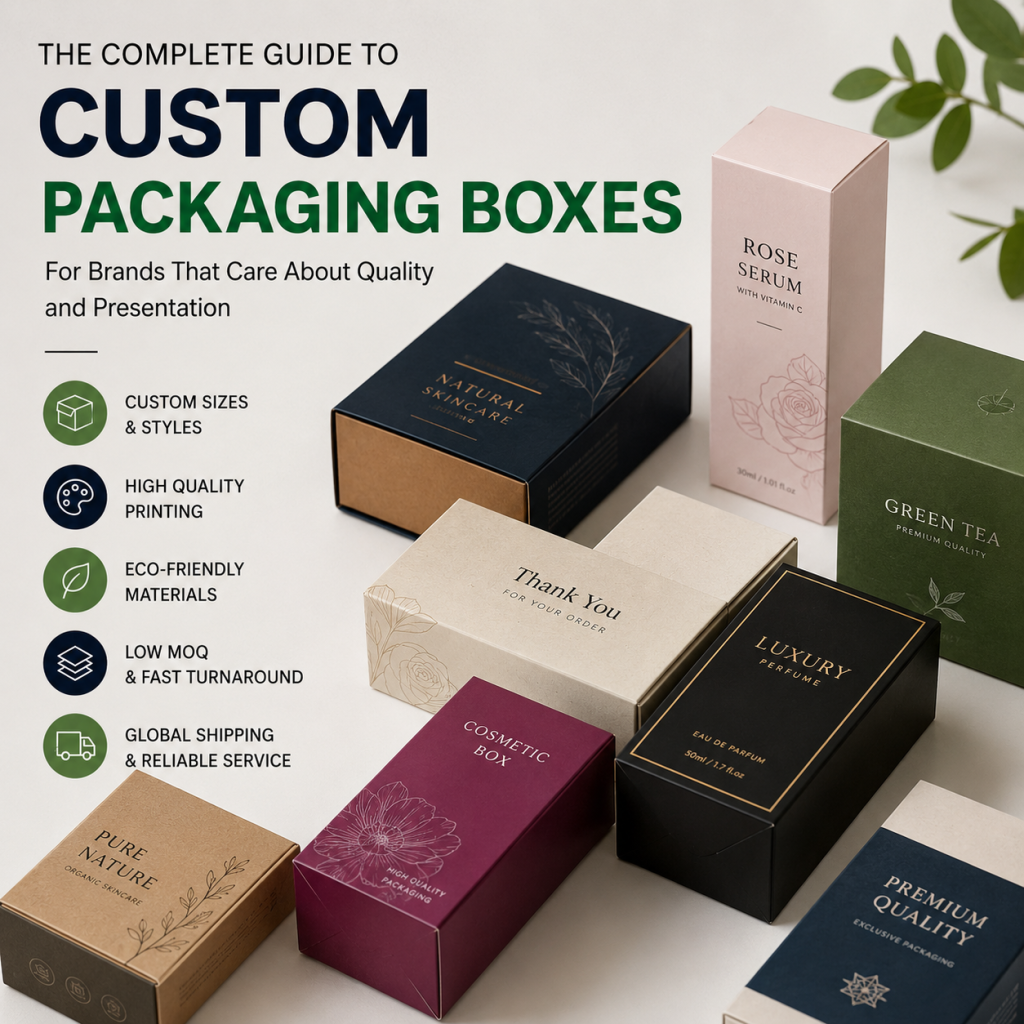
Choosing the right custom packaging box manufacturer is one of the most important decisions for any brand that sells physical products. Packaging does much more than protect an item during shipping. It shapes the first impression, supports retail display, communicates brand value, and affects the overall customer experience.
For B2B buyers, packaging also influences cost control, production efficiency, lead time, inventory planning, and repeat purchasing. A well-made custom box can help your product look more professional, reduce damage, improve shelf appeal, and make your brand easier to recognize in a competitive market.
This guide explains what a custom packaging box manufacturer does, the main types of packaging boxes available, common material choices, printing and finishing options, industry applications, and how to choose the right packaging factory for your business.
Whether you need folding cartons, paper boxes, rigid boxes, corrugated boxes, or custom printed retail packaging, understanding the manufacturing process will help you make better purchasing decisions and avoid costly mistakes.
Image source: Pexels – Close-Up of Boxes
What Is a Custom Packaging Box Manufacturer?
A custom packaging box manufacturer is a factory or production company that designs, prints, cuts, folds, finishes, and assembles packaging boxes according to a buyer’s specific requirements.
Unlike stock packaging suppliers that sell standard sizes and ready-made boxes, a custom packaging manufacturer can produce boxes based on your product dimensions, brand artwork, material preference, printing method, structure, budget, and target market.
A professional packaging box manufacturer usually provides services such as:
- Custom box structure design
- Material recommendation
- Dieline creation
- Artwork checking
- Sample making
- Offset printing or digital printing
- Surface finishing
- Die cutting
- Folding and gluing
- Quality inspection
- Bulk production
- Export packaging and shipping support
For brands, importers, distributors, and retailers, working directly with a packaging factory can offer better control over quality, pricing, customization, and production schedule.
The best manufacturer is not simply the cheapest supplier. It should understand your product, your market, your packaging function, and your commercial goals.
Types of Custom Packaging Boxes
Different products require different packaging structures. The right box type depends on product weight, fragility, display needs, shipping method, price positioning, and customer experience.
Below are the most common types of custom packaging boxes used by B2B buyers.
Image source: Pexels – Stacks of Boxes Ready for Delivery
Folding Cartons
Folding cartons are one of the most widely used packaging formats for retail products. They are usually made from paperboard and shipped flat before being folded into shape.
Folding cartons are popular because they are lightweight, cost-effective, easy to print, and suitable for large-volume production. They are commonly used for cosmetics, skincare products, food items, pharmaceuticals, supplements, small electronics, toys, and consumer goods.
Common folding carton styles include:
- Straight tuck end boxes
- Reverse tuck end boxes
- Auto-lock bottom boxes
- Snap lock bottom boxes
- Sleeve boxes
- Window boxes
- Hang tab boxes
- Display cartons
Folding cartons are ideal when you need attractive custom printed packaging at a reasonable unit cost. They also work well for brands that need flexible sizing, color printing, and retail-ready presentation.
Paper Boxes
Paper boxes are a broad category that includes many types of lightweight and medium-weight packaging made from paperboard, kraft paper, coated paper, or specialty paper.
They are often used for products that require clean branding, custom printing, and a polished appearance without the higher cost of rigid packaging.
Paper boxes can be designed for:
- Retail display
- Gift packaging
- Food packaging
- Beauty packaging
- Apparel packaging
- E-commerce packaging
- Promotional packaging
Depending on the structure, paper boxes can be simple and economical or more premium with special finishes such as foil stamping, embossing, spot UV, or soft-touch lamination.
For many B2B buyers, custom paper boxes offer a good balance between appearance, cost, production speed, and sustainability.
Rigid Boxes
Rigid boxes are premium packaging boxes made from thick greyboard or chipboard wrapped with printed paper, specialty paper, or textured material.
They are much stronger and more luxurious than standard folding cartons. Because they do not usually fold flat, rigid boxes require more material, labor, and shipping space. However, they create a high-end unboxing experience and are often used for products with higher retail value.
Rigid boxes are commonly used for:
- Luxury cosmetics
- Jewelry
- Watches
- Perfume
- Electronics
- Premium gifts
- Chocolate
- Spirits
- Limited-edition products
Common rigid box styles include two-piece boxes, magnetic closure boxes, drawer boxes, shoulder boxes, book-style boxes, and hinged lid boxes.
If your brand needs premium presentation, stronger protection, or gift-ready packaging, rigid boxes are often a strong choice.
Corrugated Boxes
Corrugated boxes are made from corrugated board, which includes fluted paper between liner sheets. This structure gives the box strength and cushioning performance.
Corrugated packaging is widely used for shipping, e-commerce, subscription boxes, retail display, and heavier products. It can be printed with simple one-color logos or full-color brand graphics depending on the printing method and board type.
Common corrugated box types include:
- Mailer boxes
- Shipping cartons
- Display boxes
- Subscription boxes
- Product trays
- Retail-ready packaging
- Heavy-duty export cartons
Corrugated boxes are a practical choice when durability, shipping protection, and cost efficiency matter. They are especially important for e-commerce brands because the shipping box may be the first physical brand touchpoint the customer sees.
Packaging Materials
Material selection affects box strength, printing quality, appearance, sustainability, and cost. A good packaging box manufacturer should help you choose the right material based on your product and market requirements.
SBS Paperboard
SBS paperboard, also known as solid bleached sulfate, is a premium white paperboard with a smooth surface. It is commonly used for cosmetics, skincare, healthcare products, food packaging, and retail boxes.
It offers excellent print quality and a clean appearance, making it suitable for brands that need sharp colors, detailed graphics, and a professional finish.
Kraft Paper
Kraft paper has a natural brown appearance and is often chosen for eco-friendly, organic, handmade, or minimalist packaging styles.
It is popular for food packaging, soap boxes, candle boxes, apparel boxes, and sustainable product lines. Kraft paper can be printed, but colors may appear more muted than on white coated paper.
CCNB Paperboard
CCNB, or clay coated news back paperboard, is often used for economical folding cartons. It has a coated white printing surface and a grey back.
It is suitable for budget-conscious packaging projects where full premium appearance is not required. Many consumer goods and retail products use CCNB because it provides a practical balance between cost and printability.
Corrugated Board
Corrugated board is available in different flute types, including E-flute, B-flute, C-flute, and combinations such as EB flute. Each flute type offers different strength, thickness, and print performance.
E-flute is often used for retail mailer boxes and smaller product packaging because it provides a clean surface and a thinner profile. B-flute and C-flute are more common for shipping cartons and heavier items.
Greyboard
Greyboard is the core material used in many rigid boxes. It provides thickness, strength, and structure. The greyboard is usually wrapped with printed art paper, specialty paper, or textured paper to create a premium outer appearance.
The thickness of greyboard can be adjusted based on box size, product weight, and desired luxury feel.
Printing Options
Printing is one of the main reasons brands choose custom packaging. It turns a plain box into a branded sales tool.
A capable custom packaging supplier should offer several printing methods and help you choose the one that fits your order quantity, artwork, color requirements, and budget.
Offset Printing
Offset printing is widely used for custom packaging because it provides high-quality color output, sharp details, and consistent results for bulk production.
It is suitable for folding cartons, paper boxes, rigid box wrap paper, and many retail packaging projects. Offset printing is especially cost-effective when order quantities are medium to large.
If your packaging design includes detailed graphics, gradients, product images, or precise brand colors, offset printing is often the preferred method.
Digital Printing
Digital printing is useful for short runs, samples, prototypes, seasonal packaging, and test orders. It does not require printing plates, so setup can be faster and more flexible than offset printing.
However, digital printing may have a higher unit cost for large-volume orders. It is often best for small batches or packaging projects that need quick turnaround.
Flexographic Printing
Flexographic printing is commonly used for corrugated boxes, shipping cartons, kraft packaging, and simple logo printing.
It works well for larger areas of color and repeat designs. It is often more economical for high-volume corrugated packaging but may not deliver the same fine detail as offset printing.
Pantone and CMYK Printing
CMYK printing uses four process colors: cyan, magenta, yellow, and black. It is suitable for full-color artwork and images.
Pantone printing is used when a brand needs more accurate color matching. Many companies use Pantone colors to maintain brand consistency across packaging, labels, marketing materials, and retail displays.
For B2B buyers, color accuracy should be confirmed during sampling or proofing before mass production.
Surface Finishing Options
Finishing can improve the appearance, texture, durability, and perceived value of custom packaging boxes.
Common finishing options include:
- Gloss lamination
- Matte lamination
- Soft-touch lamination
- Anti-scratch lamination
- Spot UV
- Foil stamping
- Embossing
- Debossing
- Varnish
- Aqueous coating
- Window patching
Gloss lamination creates a shiny surface and makes colors look more vivid. Matte lamination gives the box a softer and more elegant look. Soft-touch lamination adds a smooth, premium hand feel.
Foil stamping is often used for logos, product names, and decorative details. Gold, silver, rose gold, holographic, and colored foils are common options. Embossing and debossing add physical depth and texture, helping important brand elements stand out.
The right finish should match your product positioning. A luxury skincare brand may choose matte lamination with gold foil and embossing, while an organic food brand may prefer kraft paper with simple one-color printing.
Industry Applications
Custom packaging boxes are used across many industries. Each industry has different requirements for structure, material, printing, compliance, and customer experience.
Cosmetic and Skincare Packaging
Cosmetic packaging needs to look attractive, clean, and premium. Boxes are often designed for creams, serums, masks, lipsticks, perfume, beauty tools, and skincare sets.
Common requirements include accurate color printing, luxury finishing, product inserts, and consistent brand presentation across multiple SKUs.
Food Packaging
Food packaging must consider product safety, freshness, shelf display, and regulatory requirements. Materials may need to be food-grade depending on direct or indirect contact.
Food brands often use folding cartons, kraft boxes, window boxes, sleeves, and corrugated display packaging.
Jewelry Packaging
Jewelry packaging usually requires a premium appearance and strong presentation value. Rigid boxes, drawer boxes, magnetic boxes, and specialty paper boxes are common.
Interior inserts such as foam, velvet, paperboard, or molded trays can help hold products securely and improve the unboxing experience.
Electronics Packaging
Electronics packaging must balance protection and presentation. Products may require inserts, compartments, cushioning, and stronger box structures.
Rigid boxes and corrugated boxes are often used for headphones, smart devices, accessories, chargers, cables, and consumer electronics.
Apparel and Retail Packaging
Apparel packaging includes mailer boxes, folding cartons, gift boxes, paper boxes, and e-commerce shipping boxes. Many fashion and retail brands need packaging that looks good both in-store and online.
Custom printed packaging can help create a consistent customer experience from purchase to delivery.
E-Commerce Packaging
E-commerce packaging must survive shipping while also representing the brand. Mailer boxes, corrugated boxes, shipping cartons, and subscription boxes are common choices.
For online brands, packaging can improve customer retention, social sharing, and repeat purchases.
Custom Packaging Manufacturing Process
Understanding the manufacturing process helps buyers communicate more clearly with a packaging factory and plan projects with fewer delays. Although every box type has its own technical details, most custom packaging projects follow a similar workflow.
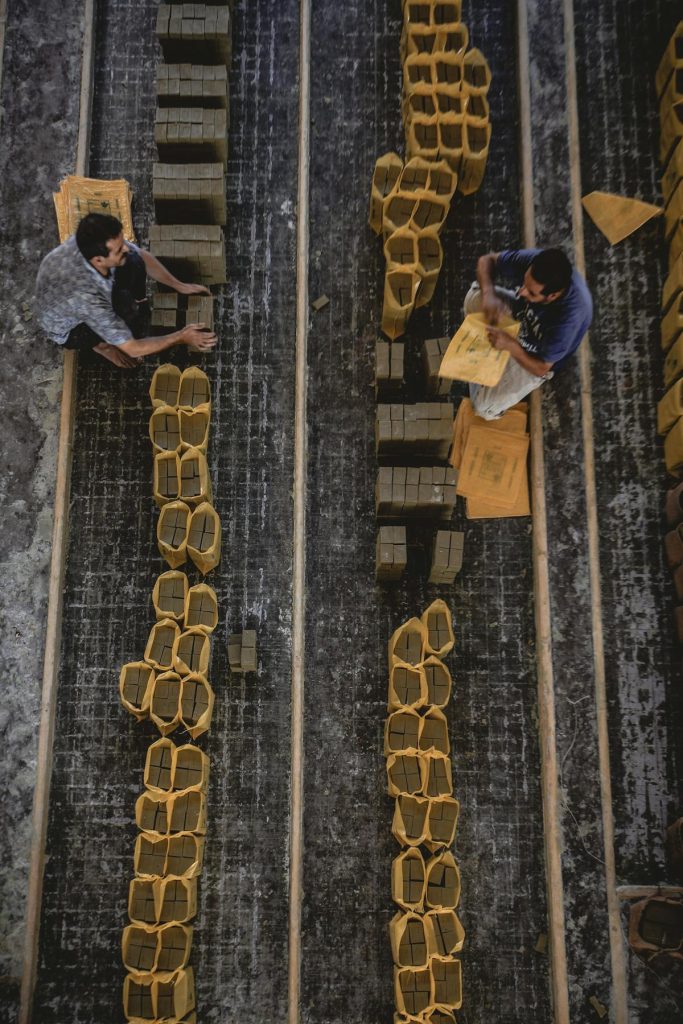
Image source: Pexels – Men Packing Boxes
The process usually begins with product information. The manufacturer needs to understand the product size, weight, shape, fragility, sales channel, target market, and packaging goal. A box for retail shelves may require a different structure from a box designed for international shipping or e-commerce delivery.
After the basic requirements are confirmed, the factory can recommend a box structure and material. This is where experience matters. A professional manufacturer should be able to explain whether your product is better suited for a folding carton, rigid box, corrugated mailer box, sleeve box, or another custom structure.
Next, the factory prepares a dieline. A dieline is the flat template used for packaging design and die cutting. It shows cut lines, fold lines, glue areas, bleed areas, and safe zones for artwork. Accurate dielines are important because even small mistakes can affect box assembly or product fit.
Once the dieline is ready, your design team can place the artwork onto the template. Before printing, the packaging supplier should check the file for common issues such as low-resolution images, missing bleed, incorrect color mode, font problems, wrong Pantone values, and artwork placed too close to cutting or folding lines.
Sampling comes after artwork and structure confirmation. Depending on the project, the sample may be a blank structural sample, a digitally printed sample, or a production-grade pre-production sample. For premium packaging or large orders, a pre-production sample is strongly recommended because it gives a better reference for final material, color, finish, and assembly.
After sample approval, the project moves into mass production. This may include material preparation, printing, lamination, foil stamping, embossing, die cutting, folding, gluing, insert production, assembly, and packing. Each step should be monitored because packaging quality depends on consistency across the whole process.
Final inspection is also important. The factory should check whether the boxes match the approved sample and confirmed specifications. For export orders, outer cartons, pallet packing, moisture protection, and shipping marks should also be reviewed before delivery.
When buyers understand this process, they can prepare files earlier, approve samples faster, and avoid last-minute changes that may affect cost or lead time.
How to Choose a Packaging Manufacturer
Choosing a custom packaging box manufacturer requires more than comparing prices. The wrong supplier can lead to delayed shipments, poor printing, weak structures, inconsistent color, damaged goods, and communication problems.
Here are the most important factors to evaluate.
Manufacturing Capability
Check whether the factory can produce the box type you need. Some suppliers focus on folding cartons, while others specialize in rigid boxes, corrugated boxes, or luxury packaging.
Ask about available materials, printing machines, finishing equipment, die-cutting capability, gluing lines, and quality inspection processes.
Customization Experience
A strong packaging manufacturer should be able to work from product dimensions, artwork files, reference samples, or packaging concepts. It should help you confirm structure, material thickness, printing method, finish, and packing method.
If you are developing a new product line, this experience can save time and reduce sampling mistakes.
Sample Quality
Always review samples before mass production. Samples help you check size, structure, material, color, finish, logo position, insert fit, and overall presentation.
For important projects, request a pre-production sample after final artwork is confirmed. This gives you a clearer idea of what the bulk order will look like.
MOQ Requirements
MOQ, or minimum order quantity, varies by box type, material, printing method, and finishing process.
Simple digital printed boxes may allow smaller quantities, while offset printed folding cartons or custom rigid boxes often require higher MOQs to keep unit cost reasonable.
Before choosing a supplier, confirm MOQ for each box size and design. If your product line includes many SKUs, ask whether the factory can combine similar structures or materials to improve production efficiency.
Pricing Transparency
Packaging price depends on many factors, including size, material, thickness, printing colors, finishing, order quantity, box structure, inserts, sampling, packing method, and shipping terms.
A reliable manufacturer should explain what affects the price and provide a clear quotation. Very low prices may indicate thinner material, lower printing quality, weak glue, poor inspection, or hidden costs.
Lead Time
Lead time is critical for product launches, retail campaigns, seasonal promotions, and reorder planning.
Typical production timelines depend on sampling, artwork confirmation, material availability, printing, finishing, assembly, inspection, and shipping.
Ask the manufacturer for both sample lead time and mass production lead time. Also confirm whether urgent production is possible when needed.
Quality Control
Quality control should cover the full production process, not only the final inspection.
Important inspection points include:
- Material thickness
- Printing color
- Surface finish
- Die-cut accuracy
- Folding lines
- Glue strength
- Box dimensions
- Insert fit
- Packing condition
- Carton strength
For export orders, packaging must also be packed properly to avoid damage during international shipping.
Communication and Support
Good communication reduces risk. Your packaging supplier should respond clearly, understand technical details, confirm specifications in writing, and provide practical suggestions.
For international buyers, English communication, export experience, file checking, shipping document support, and time-zone responsiveness can make the process much smoother.
Common Mistakes to Avoid When Ordering Custom Boxes
Many packaging problems happen before production begins. Avoiding a few common mistakes can save money and prevent delays.
One common mistake is choosing a box only by appearance. A beautiful box still needs the right structure, material thickness, insert design, and shipping protection. If the box cannot protect the product or is difficult to assemble, it may increase damage rates and labor costs.
Another mistake is comparing quotations without checking specifications. Two suppliers may quote very different prices because they are using different paper weights, board thicknesses, printing methods, finishes, packing methods, or quality standards. Always compare quotations based on the same details.
Some buyers also wait too long to prepare artwork. Packaging production cannot move forward smoothly if files are incomplete or not print-ready. It is best to confirm dielines, color requirements, barcode placement, regulatory text, and product information early in the project.
Ignoring logistics is another issue. A rigid box may look excellent, but it can take more shipping space than a folding carton. A low-cost box may become expensive if the packing volume is too large. For export orders, ask your manufacturer to consider carton size, loading efficiency, and shipping protection.
Finally, do not skip sample approval for important orders. Samples help both buyer and factory confirm expectations before bulk production. This step is especially important for new structures, luxury finishes, tight color requirements, and packaging used for major product launches.
Why Choose Our Factory
As a custom packaging box manufacturer, we help brands, importers, retailers, and distributors create packaging that fits their products, market positioning, and budget.
We support a wide range of custom packaging solutions, including folding cartons, paper boxes, rigid boxes, corrugated boxes, mailer boxes, gift boxes, and custom printed retail packaging.
Our factory can assist with:
- Custom size and structure
- Material selection
- Dieline and artwork checking
- Sample development
- Offset and digital printing
- Foil stamping, embossing, spot UV, and lamination
- Inserts and inner trays
- Bulk production
- Quality inspection
- Export packing and shipping support
Whether you need simple product boxes for daily retail sales or premium packaging for a luxury product launch, we can help you develop a solution that balances appearance, protection, cost, and production efficiency.
We understand that B2B buyers care about more than design. You need stable quality, clear communication, competitive pricing, reliable lead time, and packaging that supports your sales goals.
Request a Quote
If you are looking for a custom packaging supplier for your next project, please send us your packaging requirements.
To receive a faster and more accurate quotation, include the following information:
- Box type or reference image
- Product dimensions
- Box size
- Material preference
- Printing requirements
- Surface finish
- Order quantity
- Destination country
- Required delivery time
- Artwork file, if available
If you are not sure which material or structure is best, our team can recommend suitable options based on your product, budget, and market.
Contact us today to request a custom packaging quote, sample, or dieline template.
FAQ
What is the difference between a packaging manufacturer and a packaging supplier?
A packaging manufacturer produces boxes directly in a factory, while a packaging supplier may trade, source, or distribute packaging from different factories. Working with a manufacturer can offer better customization control, pricing transparency, and production communication.
What information do I need for a custom packaging quote?
You should provide box size, product size, material, printing requirements, finish, order quantity, and shipping destination. If you have artwork or a reference sample, the quotation can be more accurate.
Can I get a sample before mass production?
Yes. Most custom packaging manufacturers can provide a sample before bulk production. A sample helps confirm size, structure, material, printing, and finishing details.
What is the MOQ for custom packaging boxes?
MOQ depends on the box type, material, printing method, and finishing process. Folding cartons and rigid boxes often require higher MOQs than simple digitally printed boxes because of setup and production costs.
How long does custom packaging production take?
Lead time depends on the complexity of the project, sample approval, material availability, order quantity, printing, finishing, and assembly. It is best to confirm both sample lead time and mass production lead time before placing an order.
Which box type is best for retail products?
Folding cartons are commonly used for retail products because they are lightweight, printable, and cost-effective. For premium products, rigid boxes may be better. For e-commerce and shipping, corrugated mailer boxes are often preferred.
Can you help with packaging design?
Yes. A packaging manufacturer can usually provide dielines, artwork checking, structure suggestions, and material recommendations. Full graphic design service depends on the supplier’s capability.
Are eco-friendly packaging materials available?
Yes. Options may include kraft paper, recycled paperboard, FSC-certified paper, soy-based ink, water-based coating, and recyclable box structures. The best choice depends on your product and market requirements.