
Send Your Inquiry Today
Custom Printed Packaging Boxes: How They’re Actually Made, From Paper to Finished Product
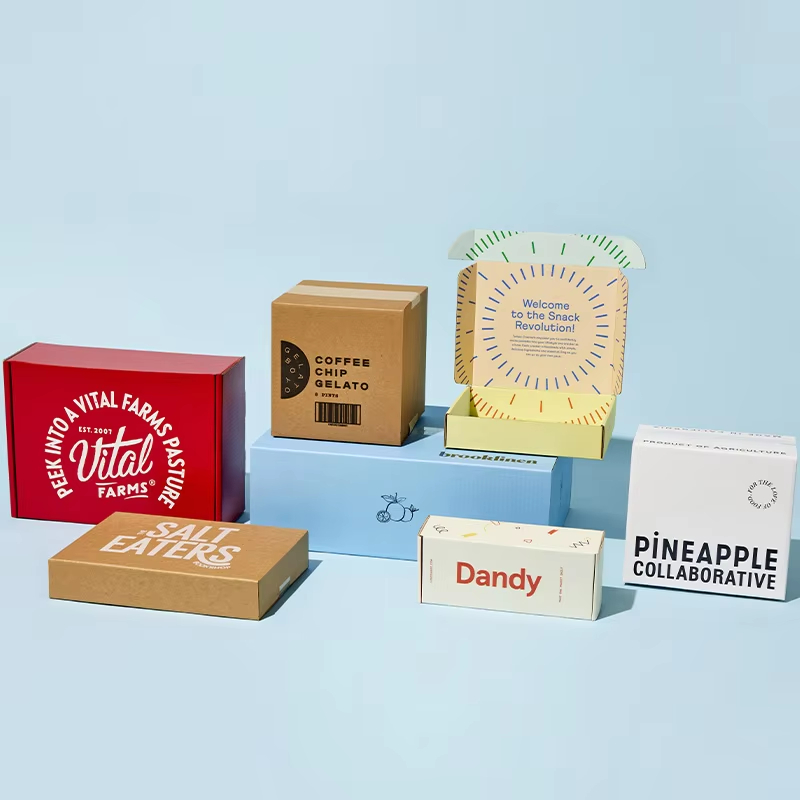
Ask ten packaging suppliers what makes a “good box,” and you’ll get ten different answers. Ask a production manager who’s spent years on the factory floor, and the answer gets a lot more specific: the right paper stock, a structure that’s been proven with real samples, printing that holds color batch after batch, finishing that survives shipping and handling, and clean, accurate die cutting. Skip any one of these and it usually shows up later — as a warped lid, a mismatched Pantone, or a box that arrives crushed.
We build packaging the way a factory should: paper selection first, engineering second, then printing, finishing, cutting, and inspection layered on top of each other. This piece walks through what that process actually looks like, and what to ask your supplier before you commit to a production run.
Picking the Right Paper Isn’t Just a Cost Decision
Every packaging project starts with a material choice, and that choice depends heavily on the product, the retail channel, and how far the box has to travel.
SBS paperboard (Solid Bleached Sulfate) is the go-to for cosmetics, skincare, and other premium retail goods — it has a clean white surface that takes ink well and photographs nicely on shelf.
C1S and C2S paperboard — coated on one side or both — show up constantly in folding cartons and retail boxes where sharp graphics and consistent color matter more than raw strength.
Kraft paper, with its natural brown fiber and visible texture, has become the default for brands leaning into an eco-conscious look, especially in food packaging and organic product lines.
Corrugated board earns its keep on cushioning and compression strength, which is why it dominates e-commerce shipping boxes and anything heavy or fragile.
Then there’s specialty paper — textured stock, metallic finishes, pearl paper, black card — reserved mostly for gift boxes and limited-run luxury packaging where the paper itself is part of the design.
None of this is just about cost per sheet. Thickness affects how sturdy a box feels in the hand; a lid that’s too thin reads as cheap, one that’s too thick can crack at the fold. Stiffness determines whether a box holds its shape on a shelf for months. Burst strength matters if the box is going into a parcel network rather than a retail display. And if the product is food, moisture resistance isn’t optional. Get the material wrong and everything downstream — printing, folding, protection — gets harder to fix.
Structural Engineering Comes Before Anything Gets Printed
A structure has to be validated before it ever touches a press. This is where a lot of custom packaging projects run into trouble — a design that looks perfect in a rendering can turn out to be impossible to fold consistently at scale, or leave a product rattling around inside.
Our engineering team works through CAD design, die-line development, and folding-structure optimization before quoting a job, checking for the things that actually break in production: Does the product sit securely without shifting? Can the box be assembled by hand or machine without extra labor? Will it survive a drop test on the way to a customer’s door? Does the unboxing moment match what the brand is trying to say?
The requirements shift a lot by category. Cosmetic packaging often needs a tight insert to hold a bottle in place. Electronics need cushioning space engineered around the actual component, not a generic foam block. Food packaging brings its own list — easy-open features, oil resistance, folding patterns built for display as much as protection.
Before any of that goes to mass production, we run it through sampling: a white dummy sample to confirm size, fold, and fit; a digital sample to check artwork placement and color direction; a printed sample that’s as close as possible to the final product; then fit and assembly testing to make sure the box works the way it’s supposed to, not just the way it looks on screen.
Printing: Where Color Consistency Either Holds or Falls Apart
Printing is the part customers actually see, and it’s where a lot of the brand’s visual identity lives or dies.
For international brands especially, keeping a color stable across production batches — and across different countries’ print runs — is non-negotiable. That means CMYK control, Pantone matching, ICC color profiles, and spectrophotometer checks at the press, not just an operator eyeballing a swatch. The Pantone Matching System is the industry-standard reference here; matching against a physical Pantone book, rather than relying on a screen, is still the most reliable way to keep a logo color consistent from one production run to the next.
We rely on offset printing for most paper packaging because it holds fine detail, smooth gradients, and accurate color better than most alternatives — think cosmetic boxes, retail folding cartons, gift packaging, and anything with complex illustrations or multiple ink layers. Heidelberg presses in particular let us run at speed without losing registration accuracy, which matters when a design has small text or fine linework that can’t afford to drift even half a millimeter.
None of this is a “set it and forget it” process. Operators check color consistency, ink density, registration, and image clarity continuously through the run, sampling sheets as they come off press. Catching a color drift or a registration slip early saves an entire batch — waiting until the end of a run to notice is how factories end up reprinting jobs.
Finishing Is What Makes a Box Feel Premium (or Not)
Finishing is where a box goes from “printed” to “designed.” It’s also where a lot of custom packaging boxes with logo detailing get their punch — a logo alone rarely reads as premium, but the same logo in foil or with a Spot UV highlight usually does.
Lamination — matte or gloss — adds a protective film over the printed surface. Matte gives a soft, low-glare look that’s become the default for a lot of premium skincare and gift packaging; gloss pushes color saturation and shine. Either way, it adds scratch resistance and a bit of moisture protection along the way.
Spot UV puts a glossy coating over just part of the design — a logo, a pattern, a product name — so it catches light against a matte background. It’s subtle, but it’s one of the cheapest ways to make a box look considerably more expensive than it cost to make.
Hot foil stamping — gold, silver, rose gold, holographic, or custom colors — is the finishing technique most associated with luxury: jewelry boxes, perfume packaging, high-end gift sets. It’s a heat-and-pressure process, so it needs the right paper stock underneath or the foil won’t adhere cleanly.
Embossing and debossing raise or press design elements into the paper itself, adding a tactile layer that photographs well and feels deliberate in hand. They’re often paired with foil or Spot UV rather than used alone.
Soft-touch coating gives the surface a velvety texture — increasingly common on high-end cosmetics and electronics packaging, where how the box feels matters almost as much as how it looks.
https://www.gv-printing.com/products/
Die Cutting, Folding, and Assembly: Turning Flat Sheets Into Boxes
Once a sheet is printed and finished, it still has to become a box — and this stage is less forgiving of small errors than people expect.
Die cutting sets the final shape: cut lines, crease lines, slots, windows, locking tabs. A die that’s slightly off will show up as a fold that won’t sit flat or an edge that looks rough under a magnifying glass, and there’s no fixing that after the fact — it has to be right in the tooling.
For folding cartons and most retail boxes, automatic folder-gluing handles the volume: folding precision, glue placement, glue volume, and press time all get controlled through the line. Weak or misplaced glue is one of the more common — and more avoidable — reasons a box opens up mid-shipment.
Rigid boxes, drawer boxes, and anything with magnetic closures or complex inserts usually still need manual assembly. Wrapped paperboard, ribbon handles, magnets, multi-piece structures — these don’t hand off well to automated lines, and forcing them through one usually shows in the finished product. It costs more in labor, but it’s the difference between a box that looks handmade-premium and one that looks assembly-line-generic.
Quality Control Runs the Whole Way Through, Not Just at the End
Treating quality control as a final checkpoint is how defects slip through. It has to be built into every stage.
Before production starts, incoming paper gets checked for weight, thickness, moisture content, surface quality, and flatness. A roll of paper that’s slightly out of spec on moisture content can cause warping days later, long after it’s already been printed and cut — so catching it before it hits the press matters more than catching it after.
During production, we’re watching color consistency, registration, lamination adhesion, foil placement, crease performance, and glue strength as the job runs — not just at handoff points between departments, since a small drift in one process (say, ink density) tends to compound by the time it reaches finishing.
Before shipment, finished boxes get checked against the approved sample: dimensions, print appearance, surface defects, adhesion, folding, compression, and — when the project calls for it — a drop test. For projects shipping through parcel networks, we test against ISTA (International Safe Transit Association) protocols, which are the standard most retailers and carriers actually reference when they talk about “safe transit” packaging. It’s a more useful benchmark than an internal drop test, because it’s the same standard your customer’s logistics team is probably checking against too.
Export shipments add another layer — protective inner packaging, correctly rated export cartons, moisture protection, palletizing, and container loading planned around how the boxes will actually sit and shift over a multi-week ocean transit.
What Different Industries Actually Need
Food packaging has its own priorities: food-safe paper, appropriate coatings, oil resistance, and a structure that holds up through handling and display — used across bakery, snacks, frozen food, takeaway, tea, and coffee packaging.
Gift box packaging is mostly about the unboxing moment: premium paper, foil stamping, embossing, rigid structure, magnetic closures, and inserts that make a product feel considered rather than just contained.
General product packaging — electronics, personal care, toys, household goods — has to balance protection with shelf presence, which usually means clear printing and consistent quality matter more than any single finishing flourish.
Corrugated packaging is built for one job: surviving the trip. It’s the default for e-commerce, subscription boxes, and anything heavy or fragile, though it can still be printed and finished well enough to double as part of the unboxing experience.
Rigid box packaging shows up wherever the retail price point is high — jewelry, perfume, watches, premium electronics — usually paired with specialty paper, foil, embossing, and magnetic closures to justify the shelf price.
Kraft and other FSC-certified papers have become a common request across nearly all of these categories as brands respond to buyer demand for traceable, responsibly sourced materials — FSC certification is the most widely recognized standard for that, and we can source FSC-certified stock on request.
https://www.gv-printing.com/products/
Why Working Directly With the Factory Actually Changes the Outcome
Cutting out the middleman isn’t just a cost argument, though it usually does help the budget. The bigger difference is communication speed and technical control.
When a brand talks directly to the people running the press and the die-cutting line, engineers can flag structural or material problems before a design is locked in — problems that a sales-only intermediary often can’t catch, because they’re not the ones who’ll be fixing the tooling later. It also means sampling turns around faster, since there’s no round-trip through a third party every time an adjustment is needed. And because the same team handles both the sample and the mass-production run, what you approve is much closer to what you actually get at scale — which matters more than people expect, since drift between sample and bulk order is one of the most common complaints in custom packaging.
For brands working against a product launch date or a seasonal retail window, that speed and consistency tends to matter more than a marginal price difference.
Where We Fit In
We’re not just running presses. Our job is helping brands turn a packaging idea into something that’s actually manufacturable — improving performance, catching production risks early, choosing the right paper for the budget, and keeping quality consistent across repeat orders rather than just the first one.
https://www.gv-printing.com/contact-us/
A Few Common Questions
What’s the difference between custom printed packaging and stock boxes? Custom printed packaging is built to your product’s exact size, structure, material, and branding — stock boxes are pre-made in standard sizes with limited customization.
Which material should I choose? It depends on the product and how it ships. SBS and C1S/C2S suit retail-facing boxes that need sharp printing; kraft suits an eco-forward brand look; corrugated suits anything shipping direct-to-consumer; rigid board suits high-end retail.
Can you match our exact brand color? Yes — via Pantone matching, with proofing and press-side checks against the physical swatch, not just a screen comparison.
What finishing works best for a “luxury” feel? Foil stamping and embossing tend to do the most work for the least added cost, especially paired with matte lamination and a Spot UV highlight on the logo.
What’s your MOQ? It varies by structure — a simple folding carton has a much lower minimum than a rigid box with magnetic closure and custom inserts. Ask us for your specific spec.
Do you test packaging for shipping durability? Yes, including ISTA-standard testing for parcel and e-commerce shipments when the project requires it.
Do you ship internationally? Yes — by sea, air, or courier depending on order size and timeline, with export cartons and palletizing handled in-house.
Buyer Questions About Custom Box Production
Ask where quality gates occur: paper inspection, color proof, die-cut accuracy, folding, glue strength and final packing. Defined checkpoints reduce rework.
What information should be included in the quote?
Provide finished size, material, quantity, artwork status, application surface, destination and required delivery date. For security products, also specify the verification method and whether serialized data is needed.
How are MOQ, price and lead time determined?
Quantity, print process, tooling, finishes, testing and freight all affect the total. Approving artwork and material early is the fastest way to protect the requested ship date.
Can you supply samples and help with compliance?
Request a physical pre-production sample on the intended substrate. Confirm applicable food-contact, recycling, barcode or market requirements for the US and EU before mass production.
Buyer Questions About Custom Box Production
Ask where quality gates occur: paper inspection, color proof, die-cut accuracy, folding, glue strength and final packing. Defined checkpoints reduce rework.
What information should be included in the quote?
Provide finished size, material, quantity, artwork status, application surface, destination and required delivery date. For security products, also specify the verification method and whether serialized data is needed.
How are MOQ, price and lead time determined?
Quantity, print process, tooling, finishes, testing and freight all affect the total. Approving artwork and material early is the fastest way to protect the requested ship date.
Can you supply samples and help with compliance?
Request a physical pre-production sample on the intended substrate. Confirm applicable food-contact, recycling, barcode or market requirements for the US and EU before mass production.