
Send Your Inquiry Today
Food Packaging Solutions: Custom Printed Boxes for Food Brands, Restaurants & Takeaway Businesses
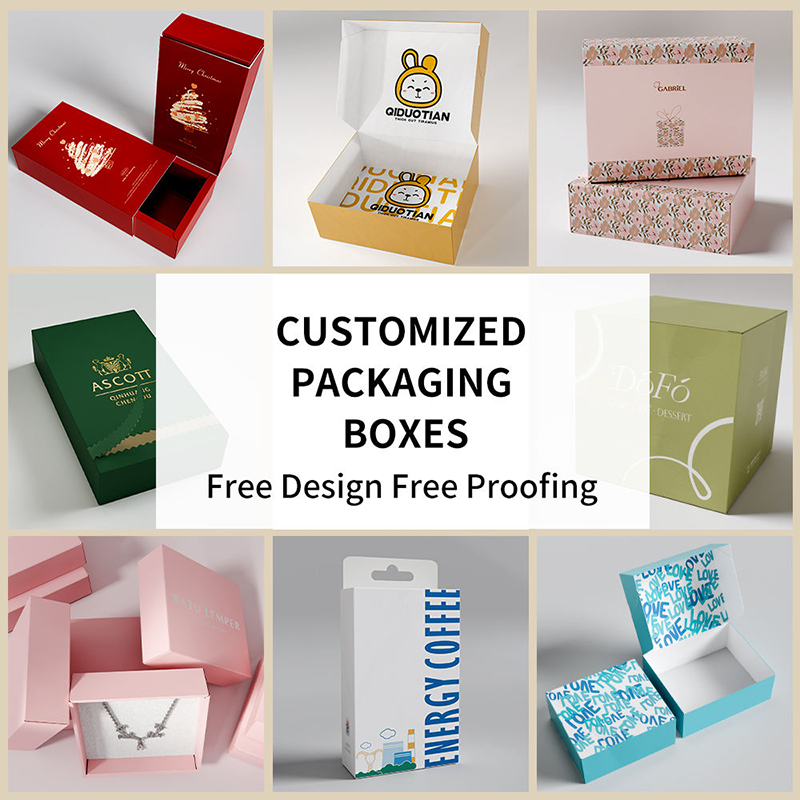
Food packaging is not a design category — it is a regulated food-contact material. A takeaway box that leaks, a bakery carton that transfers ink to a croissant, or a coffee bag without a compliant liner are all compliance failures, not just product failures. This guide covers what regulators on both sides of the Atlantic actually require from printed food packaging, the documents you must collect from your supplier, and the material decisions that keep food brands, restaurants, and takeaway businesses out of trouble.
If your buyer is asking for FSC-certified board, read our EUDR-ready buyer’s guide to custom packaging boxes — it separates what the regulation actually requires from what a certificate can and cannot promise.
The Two Regulatory Frameworks
United States (FDA): food-contact papers and boards fall under 21 CFR (notably §176.170 for paper contacting aqueous and fatty foods, §176.180 for dry food contact). Compliance rests on the components — pulp, sizing agents, coatings, inks — each being an accepted substance or used within limits. There is no “FDA certification” stamp for the finished box; what you need is a letter of guarantee / declaration of compliance from the manufacturer stating the construction meets the applicable sections.
European Union: Framework Regulation (EC) 1935/2004 requires all food-contact materials to be manufactured so they do not transfer substances to food in quantities endangering health. Paper and board have no harmonized EU-wide measure yet, so national regimes — Germany’s BfR Recommendations, Italy’s MoH decrees, France’s DGCCRF checks — set the practical bar. A declaration of compliance plus BfR-aligned specifications is the standard evidence set importers ask for.
Grease Barriers and the PFAS-Free Shift
Grease resistance is the core engineering problem of food packaging — and its traditional solution, PFAS-based coatings, PFAS is being banned in food packaging across a growing list of US states (California, New York and others) with EU restriction moving the same direction. Specify PFAS-free barriers now: alternatives include dispersion barrier coatings, bio-waxes, and heavier internal sizing. They cost slightly more per unit and occasionally under-perform old PFAS coatings on long oil contact — so test against your actual food (30 minutes of hot fries oil is a different spec from a dry pastry). Buyers searching “FDA approved food packaging” today are increasingly actually asking for PFAS-free food-contact compliance.
Inks and Migration: Printing Rules for Food Contact
The governing principle: functional barrier or not, inks belong on the outside. Low-migration ink systems and print layouts that avoid set-off (ink transferring from the printed outer surface to the food-contact inner surface in the stack or roll) are standard practice — specify them explicitly. Full wrap designs where ink sits directly behind food require barrier layers. This is also why “food-safe” and “pretty” occasionally conflict: a flood-coverage matte print on the inside of a bakery box is a migration risk no compliance officer will sign.
The Document Checklist for Food Brands
| Document | What it proves |
|---|---|
| Declaration of compliance (DoC) | The construction meets FDA 21 CFR / EU 1935/2004 as applicable |
| Material specification sheet | Board, coating, ink system, barrier type per SKU |
| Migration test reports (where required) | Overall and specific migration limits respected under intended use |
| PFAS-free statement | No intentionally added PFAS in coatings — increasingly demanded by US retailers |
| Traceability / lot records | Recall readiness: which lots shipped to whom |
A food packaging supplier who produces this set on request is production-grade; one who responds with silence is a liability regardless of price. The same document discipline now extends to sustainability claims under PPWR and EPR — the timeline is in the regulation guide.
Takeaway-Specific Engineering
Restaurant and takeaway packaging adds four practical requirements beyond compliance: leak resistance (locked corners or coated seams for sauced dishes), venting (steam release so fried food arrives crisp), stackability (delivery bags carry multiple containers), and microwave tolerance where customers reheat. Each is a structural specification, not a board-grade afterthought. For the structural vocabulary across categories — from burger clamshells to salad bowls — see corrugated solutions by industry.
Frequently Asked Questions
What does “FDA approved food packaging” actually mean?
The FDA does not approve finished boxes. Compliance means every component — board, coatings, inks — is used per 21 CFR food-contact regulations, evidenced by a supplier’s declaration or letter of guarantee. When a manufacturer tells you their packaging is “FDA approved,” ask for that declaration; the paperwork is the approval.
Is PFAS-free packaging required now?
Multiple US states have banned intentionally added PFAS in food packaging with effective dates already passed or phasing in, and major chains mandate PFAS-free supply chains regardless of local law. The EU’s universal PFAS restriction proposal covers food contact too. The practical answer for any food brand: the market has already decided — specify PFAS-free barriers today.
Can I print on the inside of a food box?
Only with a functional barrier (coating or liner) between print and food, or with an approved low-migration ink system intended for direct contact. For most takeaway programs, the safe and economical answer is print outside only — see the structural options in our food, pizza and candle box guide.