
Send Your Inquiry Today
Packaging Box Supplier in China: Sourcing Custom Printed Boxes from Factory to Door
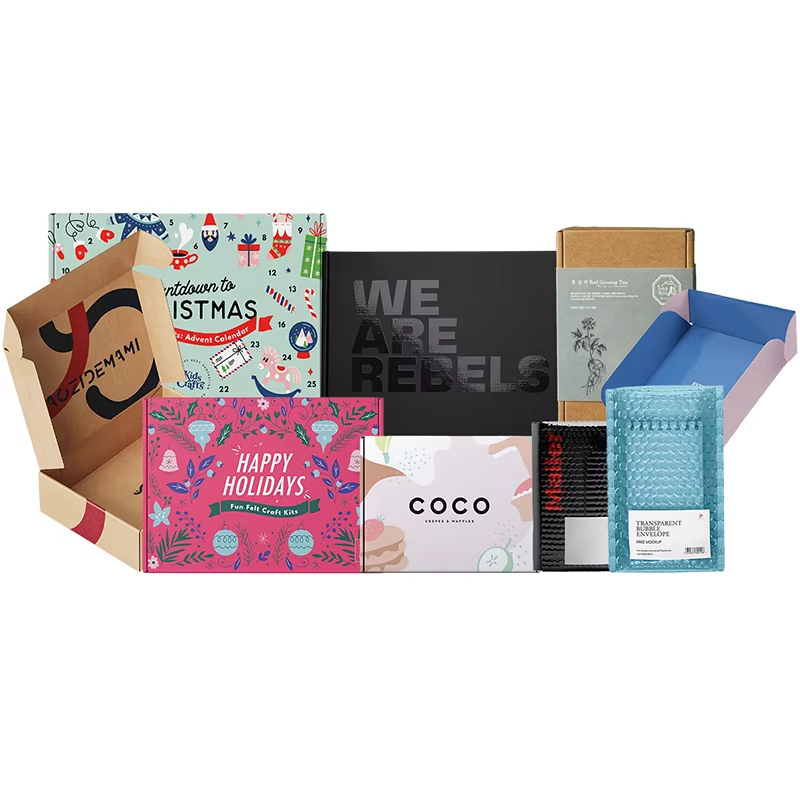
Why Choosing the Right Packaging Box Supplier Matters
Finding a good packaging box supplier used to be a simple price comparison. That’s changed. Packaging now sits at the intersection of branding, logistics, compliance and customer experience, and for many products it’s the first physical thing a customer actually touches. If you sell cosmetics, food, electronics, retail goods, gifts or subscription boxes, the box is doing marketing work whether you planned for it or not.
For beauty and cosmetics SKUs, our custom cosmetic boxes buyer’s guide breaks down real MOQ floors, per-unit cost at 250-5,000 units and the QC checks that stop a bad run before it ships.
A good partner gets your presentation right, protects the product in transit, meets whatever a retailer or marketplace demands, and keeps your look consistent across channels. A bad one costs you in ways that don’t show up on the quote — color that drifts batch to batch, structures that collapse under normal handling, shipments that slip, dielines that don’t match reality.
The Growing Demand for Reliable Packaging Box Suppliers
Brands are asking for more than a factory that can cut and glue a box. They want a partner who understands structural engineering, paperboard selection, color management on press, finishing, and the practicalities of export — customs paperwork, shipping marks, the works.
If your buyer is asking for FSC-certified board, read our EUDR-ready buyer’s guide to custom packaging boxes — it separates what the regulation actually requires from what a certificate can and cannot promise.
Part of this comes down to fit. Generic stock boxes waste material and rarely flatter the product, so more companies are moving toward packaging built around their actual dimensions and their own visual identity. That shift is most visible in e-commerce, cosmetics, food, apparel, luxury goods and electronics — categories where the unboxing moment matters and where large production runs need to come out looking the same every time.
What Global Brands Expect from a Packaging Box Supplier
A supplier worth working with should be able to carry a project from a rough idea through to a finished shipment: consultation, material recommendation, structural design, dieline work, sampling, printing, finishing, die-cutting, folding, gluing, inspection, and export.
What buyers usually care about, in practice:
- Production capacity that doesn’t buckle under a real order
- Color that matches, run after run
- Genuine structural design capability, not just template resizing
- OEM and ODM support
- Low defect rates
- Clear, responsive communication
- Wholesale pricing that reflects volume
- Lead times you can plan around
- Sustainable material options
- Real export experience, not just a willingness to try
Put simply: the supplier should function as a manufacturing partner, not a vendor you have to chase.
Packaging Box Manufacturer vs Packaging Box Supplier: What’s the Difference?
Buyers often use “manufacturer” and “supplier” as if they mean the same thing. They don’t always, and the distinction matters when you’re choosing who to work with.
When You Need a Packaging Box Manufacturer
A manufacturer owns the equipment — printing presses, laminators, die-cutters, folder-gluers, inspection lines. If your project needs custom structures, tight color control, unusual materials or serious volume, going straight to a manufacturer usually serves you better, because the people you’re talking to actually understand how a design behaves once it hits the production floor.
Take a box with a magnetic closure, embossing, foil stamping, spot UV and a custom insert. A manufacturer can flag paper thickness, folding tolerance, glue coverage and assembly speed before mass production starts — a trading company relaying messages back and forth usually can’t.
When Working with a Packaging Box Supplier Makes More Sense
A supplier might be a manufacturer, a trading company, or a sourcing agent managing several factories at once — paper boxes, corrugated mailers, rigid boxes, bags, labels, inserts, all under one roof of communication.
That’s genuinely useful if you need several packaging categories and want one point of contact. But it’s worth asking directly whether the supplier controls production themselves. If they’re purely a middleman, quality control and problem-solving tend to move slower, simply because there’s another link in the chain.
The strongest position, honestly, is a supplier with its own factory and a broader sourcing network — you get production control where it counts and flexibility where you need it.
Why Choose a Custom Packaging Box Manufacturer Instead of Standard Suppliers
Standard suppliers work fine if your needs are simple — stock sizes, basic printing. But once presentation, protection or shelf differentiation start to matter, a custom packaging box manufacturer is usually the better call.
Benefits of Fully Customized Packaging Solutions
Custom packaging puts every variable in your hands: size, shape, material, print, finish, insert design, even how the box opens.
A cosmetic brand might need a folding carton with a paperboard insert so a serum bottle can’t shift in transit. A gift brand might want a rigid drawer box with a ribbon pull. A food company might need food-grade board with grease resistance. None of that comes off the shelf — it has to be built, and the payoff shows up as better protection, less wasted shipping volume, stronger brand recall, and packaging that actually holds up through seasonal campaigns and retail handling.
OEM Production Capabilities for Global Brands
OEM packaging boxes are built to the buyer’s brand, artwork, structure and technical spec. A capable OEM manufacturer takes a concept and turns it into something that can actually run at scale — measuring the product, recommending materials and structure, building the dieline, placing artwork, sampling (digital or physical), confirming proofs, running mass production, inspecting, and packing for export.
For brands selling into multiple markets, that OEM capability isn’t a nice-to-have — different languages, different product lines, different retailer rules all need to be handled without starting from zero each time.
How a Custom Printed Box Manufacturer Brings Your Brand to Life
A good custom printed box manufacturer does more than drop a logo onto a template. Color, texture, structure and finish are what actually carry the brand experience.
Offset, Digital and Flexographic Printing Options
Which printing method makes sense depends on what you’re printing and how many you need.
Offset printing is the default for folding cartons, rigid boxes, gift boxes and cosmetic packaging where color accuracy and gradient smoothness matter. At volume, it’s also the most cost-effective option.
Digital printing suits short runs, samples, seasonal designs or anything with variable artwork — lower setup cost, faster turnaround, ideal for testing before committing to a bigger order.
Flexographic printing dominates corrugated boxes, mailers and shipping cartons, where simpler graphics at high volume are the norm.
A supplier worth their salt will steer you toward the right method based on quantity, artwork complexity, material and budget — not just quote whatever they happen to run most of.
Premium Finishing for Luxury Packaging
Finishing is where perceived value gets built. The usual toolkit: matte, gloss, soft-touch and anti-scratch lamination; spot UV; hot foil stamping; embossing and debossing; metallic ink; varnishing; textured paper wraps.
These need to be planned at the design stage, not bolted on afterward. Foil stamping needs a metal plate. Embossing and debossing need molds. Spot UV has to register precisely against the printed artwork — get any of this wrong and the finished box looks amateurish no matter how good the concept was. That’s why custom box printing is really a prepress and production discipline as much as a design one.
How to Evaluate a Custom Packaging Box Supplier
Comparing quotes tells you very little. Evaluating a custom packaging box supplier properly means looking at technical ability, quality systems, and how reliably they actually deliver.
Manufacturing Experience and Quality Control
Packaging production is a chain of connected steps — paperboard selection, artwork checking, color proofing, plate making, printing, lamination or coating, foil stamping or UV, die-cutting, creasing, folding, gluing, assembly, inspection, carton packing. A mistake early in that chain tends to show up, expensively, at the end of it.
Quality control needs to happen throughout, not just as a final check. Paper thickness gets verified before printing starts. Color gets checked during the run, not after. Die-cutting accuracy gets confirmed before the full batch goes through. Glue strength gets tested before packing. The usual failure points to watch for: color drift, surface scratches, cracking along fold lines, glue overflow, cutting inaccuracy, weak structure, wrong sizing, print defects, and damage in transit.
Certifications Buyers Should Look For
Certifications give you a way to check whether a supplier actually meets the environmental, quality or safety bar you need — FSC-certified paper, ISO 9001 quality management certification, food-contact material documentation, or social compliance audits, depending on what you’re selling.
For paper packaging, FSC certification is the most common way brands demonstrate responsible sourcing — the Forest Stewardship Council runs the certification and licensing system behind that label, so it’s worth confirming the license is current and actually covers your product rather than taking the claim at face value.
For food packaging, you’ll also want to confirm the materials and inks are cleared for direct or indirect food contact — the FDA’s food contact substance program is the reference point in the US, and other markets have their own equivalents.
Why More Brands Buy Custom Packaging Boxes Wholesale
Custom packaging boxes wholesale is a practical lever for cutting unit cost and keeping supply predictable.
Cost Advantages of Custom Packaging Boxes Wholesale
Every custom project carries setup costs — printing plates, molds, machine changeovers, color proofing, finishing tools. On a small order, those costs get spread across very few units, so each box ends up expensive. Scale the order up and the same setup cost gets divided across far more units, plus materials get bought more efficiently and machines run longer without switching jobs. That’s the whole reason wholesale pricing looks so different from small-batch pricing — it’s not a discount, it’s math.
How Wholesale Custom Printed Boxes Improve Supply Chain Efficiency
There’s a planning benefit too. Buying in bulk means you’re not scrambling for an emergency reorder mid-season, and stockouts during a launch or a holiday push become far less likely. A supplier who’s done this before can help forecast the schedule, split shipments, and set up repeat orders against specs you’ve already approved — which matters most exactly when you can least afford a delay.
Custom Packaging Boxes Bulk Orders: What Buyers Should Know
Placing a custom packaging boxes bulk order goes smoother if the technical specs, timeline, quality standards and shipping plan are nailed down before mass production starts.
Minimum Order Quantity (MOQ)
MOQ depends heavily on the box type. A simple folding carton can have a fairly low minimum; a rigid box, a magnetic gift box, or anything with heavy finishing usually needs a higher volume just to justify the setup and manual labor involved. Paperboard type, printing method, structure complexity, mold cost, assembly work and material availability all push that number around. Some manufacturers will run digital printing or sample batches at low MOQ, but the real pricing advantage only shows up once volume increases.
Lead Time, Sampling and Shipping
The typical project runs like this: confirm size and structure, build the dieline, place the artwork, produce a sample, revise if needed, confirm the pre-production sample, run mass production, inspect the finished goods, pack for export, then ship by sea, air or express.
Sampling can take anywhere from a few days depending on complexity; mass production usually runs two to six weeks depending on order size, materials and finishing. For international buyers, shipping time needs to be built into the schedule from day one — sea freight is cheap but slow, air freight is fast but costs more, and the right call depends on how tight your launch date actually is.
OEM Packaging Boxes for Retail, Cosmetics and Food Brands
OEM packaging boxes show up across retail, cosmetics, food, beverage, electronics, apparel and gifts, and each category brings its own requirements.
OEM Packaging Solutions for Retail Brands
Retail packaging has to catch attention, carry product information, and survive the shelf. Folding cartons, display boxes, sleeves and rigid boxes cover most of this territory. Barcodes, product descriptions, warning labels and multilingual text all need to be accurate and legible, and color needs to stay consistent across an entire product line — a mismatch between two SKUs on the same shelf is the kind of thing customers notice even if they can’t say why. Structural strength matters just as much: a box that survives transit and stacking without deforming is doing its job before the customer even sees it.
OEM Packaging Boxes for Food and Beverage Companies
Food packaging carries extra weight around material safety, odor and regulatory compliance. The right paperboard, coating and ink system depends on whether the packaging touches food directly or not — paperboard cartons, corrugated boxes, takeaway boxes, sleeves, and gift packaging for chocolate, tea, coffee or bakery goods all have different answers. Ask specifically about food-grade materials, migration testing, grease resistance, moisture protection and compatibility with any inner bag or liner you’re using.
Private Label Packaging Boxes: Helping Brands Build a Unique Identity
Private label packaging boxes matter for any brand selling under its own name rather than generic packaging — they’re often the difference between looking like a real brand and looking like a reseller.
Custom Structural Design
Structure carries as much weight as the graphics. Common options include tuck-end boxes, mailer boxes, drawer boxes, lid-and-base boxes, magnetic closure boxes, sleeve boxes, window boxes, display boxes, corrugated shipping boxes and custom insert boxes — and which one fits depends on product weight, fragility, how it’s displayed at retail, the unboxing experience you want, and how it ships.
Private Label Packaging from Concept to Production
A solid supplier can carry private label packaging all the way from a rough idea to a finished product — helping choose materials, build dielines, adjust artwork, produce prototypes and manage the run. That support matters most for a startup, where a packaging mistake can be genuinely expensive, but it’s just as valuable for an established brand trying to keep several product lines looking like they belong together.
Why Work with a Custom Packaging Manufacturer
A custom packaging manufacturer gives you more direct control over design, production and quality than working through layers of middlemen.
One-Stop Design, Printing and Manufacturing
Managing the whole process internally, or through a tightly controlled supply chain, cuts down on the communication errors that creep in when a project passes through too many hands. That can mean structural design, graphic adaptation, material sourcing, printing, finishing, die-cutting, folding and gluing, inserts, labels, paper bags and export cartons all under one roof — genuinely useful when you need a matching set: a rigid box, a paper bag, a thank-you card, a product insert and a shipping carton that all look like they came from the same brand.
Sustainable Materials and Smart Production
Sustainability isn’t a side conversation anymore. Recyclable paperboard, FSC-certified paper, soy-based inks, water-based coatings and plastic-free structures are showing up as standard requests rather than special ones. On the production side, waste gets cut through better dieline design, more efficient sheet layout, digital proofing and tighter production planning — small decisions that add up across a large run.
Why a Printed Packaging Manufacturer Adds More Value Than a Trading Company
A printed packaging manufacturer generally gives you tighter control over quality, cost and lead time than a trading company can.
Better Quality Control
Because the manufacturer runs production directly, they can catch problems as they happen. If color starts drifting mid-run, the press operator adjusts ink density on the spot. If cracking shows up along a fold line, the production team can check paper grain direction, creasing depth and lamination thickness immediately. A trading company, by contrast, has to relay the problem back to a factory and wait for a response — and that lag costs you time you may not have.
Faster Communication and Competitive Pricing
Talking directly to the people running the machines also gets you better cost advice. A manufacturer might suggest swapping a complex rigid box for a reinforced folding carton if you want a premium look without the shipping volume penalty, or replacing full foil coverage with selective foil stamping to keep the luxury effect while trimming cost. That kind of suggestion rarely survives being passed through a middleman.
2026 Packaging Trends Every Buyer Should Know
Packaging in 2026 is being shaped by sustainability pressure, digital printing, AI-assisted design, EPR regulation, tighter scrutiny of environmental claims, and smart packaging technology.
Sustainable Packaging and FSC-Certified Materials
Sustainable packaging has stopped being optional for a lot of brands. Recyclable materials, responsible sourcing and reduced plastic use are now baseline expectations rather than differentiators. FSC-certified paper remains the most common way to back that up — but the certification and license need to actually be valid and specific to the product, not just referenced loosely on the box.
AI-Assisted Packaging Design
AI tools are speeding up the early creative stages — generating visual directions, color palettes, layout ideas, mockups. What they don’t replace is packaging engineering. A striking concept still needs a correct dieline, a material that can actually be printed on, proper bleed, a safe text area, and files that are genuinely production-ready — none of which an AI-generated mockup guarantees on its own.
Smart Packaging with QR Codes
QR codes on packaging are becoming routine — linking to product information, authentication pages, recycling instructions, loyalty programs or brand storytelling. For exporters specifically, they’re a way to offer multilingual information without cluttering the box with six languages of small print.
EPR and Packaging Compliance in Europe and North America
Extended Producer Responsibility (EPR) is reshaping packaging compliance globally, generally shifting the cost and responsibility for packaging waste onto the producers and brands putting it on the market.
In the EU, the Packaging and Packaging Waste Regulation (PPWR) entered into force in 2025 and applies from August 12, 2026, with requirements around waste reduction, recyclability, labeling and circular-economy design.
In the US, packaging EPR is moving fast at the state level rather than federally — seven states have enacted packaging EPR laws so far, each with its own covered materials, timelines and reporting obligations, so a brand selling across state lines needs to check compliance state by state rather than assuming one national standard applies.
Vague environmental claims are also drawing more scrutiny than they used to. Calling something “eco-friendly” without material data or certification behind it is increasingly a liability, not a selling point.
Why Choose Us as Your Packaging Box Supplier
As a professional packaging box supplier, we work with global brands on custom printed packaging, OEM production, private label packaging and wholesale custom boxes.
OEM & ODM Manufacturing
We handle OEM and ODM packaging based on your product size, brand identity and market requirements — folding cartons, rigid boxes, corrugated mailer boxes, gift boxes or retail packaging, built from concept through to production-ready files.
Strict Quality Inspection
Our quality control runs through materials, printing, finishing, die-cutting, gluing, assembly and final packing — checking color accuracy, structure, surface quality, size, fold performance and carton condition before anything ships.
Low MOQ & Fast Sampling
We keep order quantities flexible and sampling fast, so you can confirm structure, material, size, print and finish before committing to a full production run.
Global Export Experience
We handle what international shipping actually requires — export packing, shipping marks, carton strength, palletizing, documentation — and support express, air or sea freight worldwide.
One-Stop Packaging Solutions
From design support through printing and manufacturing, we offer one-stop packaging solutions for retail, cosmetics, food, gifts, apparel and e-commerce brands.
Choosing Board and Paper at Wholesale Volume: Materials Compared
At wholesale volume, material choice is the biggest single cost lever after quantity. The same box size can vary several-fold in unit price purely on substrate. The comparison below covers the four workhorses of custom packaging:
| Material | Typical structures | Best for | Cost level | Recyclability |
|---|---|---|---|---|
| Kraft paper | Paper bags, wrap, flat mailers | Boutique retail, food service, eco positioning | Low | Widely recyclable |
| Corrugated board | Mailer boxes, shipping cartons, E/B flute retail | E-commerce, shipping, food delivery | Low–medium | Widely recyclable, high recycled content |
| Folding carton (SBS / GC1) | Retail boxes, sleeves, inserts | Cosmetics, food, candle, pharma retail | Medium | Recyclable where laminates allow |
| Rigid greyboard | Wrapped rigid boxes, gift boxes | Jewelry, perfume, luxury gifting | High | Recyclable, heavier freight footprint |
FSC-certified and recycled-content grades are available from chain-of-custody mills in every category (we pass the mill’s certificate number through; applying the FSC trademark needs your own licence), and under the EU’s PPWR they are moving from nice-to-have to commercially relevant — eco-modulated fees increasingly reward fiber-based, recyclable constructions. For paper bags specifically, our wholesale paper bag guide and boutique kraft bag guide cover GSM logic, handle styles and cost-per-bag math in detail.
Printing and Finishing Options That Change Unit Cost
Printing method should follow quantity, not preference. Flexo wins on large runs of simple graphics (pizza boxes, shipping cartons). Offset is the quality benchmark for folding cartons and laminated bags at medium-to-large volume. Digital eliminates plate costs and wins below roughly 500–1,000 units — which is exactly why low-MOQ programs work, as explained in our MOQ 500 guide.
Finishing is where budgets quietly expand. Foil stamping, embossing, spot UV and soft-touch lamination each add a setup and per-unit cost, and on rigid boxes they compound with the wrap material. Our rule for wholesale buyers: specify one hero finish per product line, not four. The candle, cosmetics and chocolate categories justify premium finishes because the box is part of the gift; shipping cartons rarely do — see corrugated boxes by industry for where simple print is the right call.
Custom Candle Boxes and Candle Packaging Bags
Candles are highly dependent on packaging because they are often purchased as gifts, home decor items, or premium lifestyle products. The right packaging should protect the candle, support the brand image, and make the product feel gift-ready.
Matching Packaging to Candle Type
Glass jar candles usually require strong boxes with inserts or internal protection. Rigid boxes, corrugated mailers, and folding cartons with paperboard inserts are common options. If candles are shipped through e-commerce channels, an outer corrugated shipping box may also be required.
Pillar candles and taper candles often use folding cartons, sleeve boxes, or window boxes. A die-cut window can help customers see the color, texture, or shape of the candle without opening the package.
Travel tins and votive candles can be packed in small kraft boxes, paper bags, gusset bags, or gift sets. For artisan brands and local retail, kraft paper bags with custom printing can be an affordable and attractive option.
Technical Considerations for Candle Packaging
When sourcing candle packaging, consider:
- Product weight and breakage risk
- Heat and moisture conditions during storage
- Insert design for glass jars
- Print durability and surface protection
- Compatibility with labels, barcodes, and retail display
- Sustainability claims and material certifications
For higher-value candles, finishes such as foil stamping, embossing, textured paper, and soft-touch lamination can help justify a premium price point.
Custom Pizza Boxes for Food Service
Custom pizza boxes are one of the most common forms of food-service packaging. They must balance strength, food safety, heat retention, ventilation, print quality, and cost.
Most pizza boxes use corrugated board, often B-flute, because it provides stacking strength and insulation. Vent holes or side openings are commonly included to reduce steam buildup and help maintain crust texture.
For printed pizza boxes, food-safe materials and suitable inks are important. In many cases, printing is applied to the outside surface, while the inner liner remains suitable for indirect food contact. Brands should request relevant material and ink documentation from suppliers when packaging will be used for food.
Common pizza box sizes include 9-inch, 12-inch, 14-inch, 16-inch, and 18-inch formats. At higher volumes, custom sizing, full-color printing, and multi-location supply programs may be available from factory partners.
Printed Mailer Boxes for E-Commerce
Mailer boxes have become a major packaging format for direct-to-consumer brands. A good mailer box protects the product, presents the brand clearly, and creates a more memorable unboxing experience.
The most common structure is a self-locking corrugated mailer with a tuck-top lid. This design is easy to assemble and does not always require tape. E-flute corrugated board is often used because it offers a smooth printing surface and enough strength for many lightweight or midweight products.
Brands can print the outside, inside, or both sides of the mailer. Interior printing, branded tissue paper, thank-you cards, stickers, and product inserts can make the unboxing experience feel more complete.
For e-commerce, the box should be tested not only for appearance but also for shipping performance. Product fit, empty space, corner strength, closure strength, and drop resistance should all be reviewed before production.
Gift Paper Bags: Materials, Handles, and Design
Gift paper bags are used across retail, gifting, fashion, cosmetics, jewelry, candles, food, and event packaging. They are relatively simple products, but small specification choices can strongly affect durability and perceived quality.
Common materials include:
- Coated art paper: Smooth, bright, and suitable for detailed color printing.
- Kraft paper: Natural, recyclable, and popular for eco-conscious brands.
- SBS paperboard: Clean white surface with good print quality.
- Duplex board: A cost-effective option for sturdy retail bags.
Handle options include twisted paper handles, flat paper handles, cotton rope handles, ribbon handles, and die-cut handles. For heavier products, reinforced handle areas and stronger glue are important.
A good paper bag design should consider bag size, bottom gusset, handle strength, paper weight, logo placement, and print coverage. For retail use, the bag should stand upright, hold the product securely, and remain comfortable to carry.
Sustainability Standards and Certifications
Sustainability is now a central part of packaging procurement. Many brands and retailers prefer packaging that is recyclable, responsibly sourced, lightweight, and produced with lower environmental impact.
Common standards and certifications to consider include:
- FSC certification: Supports responsible forest sourcing for paper and paperboard.
- PEFC certification: Another widely recognized forest certification system.
- ISO 9001: Indicates a factory has a quality management system.
- ISO 14001: Indicates an environmental management system.
- SGS or Bureau Veritas testing: Often used for material, ink, and safety verification.
- Food-contact documentation: Important for food packaging, bakery boxes, pizza boxes, and takeaway containers.
For food-related packaging, ask whether inks and coatings are suitable for the intended use. Instead of assuming a product is food-safe, request test reports or compliance documentation from the supplier. In the US, paper and paperboard components are addressed under FDA 21 CFR Part 176; in the EU, the framework is Regulation (EC) No 1935/2004.
For paper packaging, recycled content, water-based coatings, plastic-free lamination alternatives, and right-sized structures can all help reduce environmental impact.
Wholesale Specification Reference: What to Put on Paper Before Ordering
The fastest way to get an accurate factory quotation — and the slowest way is to omit any of these — is a one-page specification sheet covering: finished size (open and folded), board weight and flute, print method and number of colors, finishes, structural style (link to our box types comparison for names), packing method and units per export carton, and Incoterms with destination port. Add food-contact declarations where applicable — requirements are summarized in our food packaging guide — and request a pre-production sample approval step before mass production; the checklist lives in our sample approval guide.
Brands sourcing boxes and bags together should treat them as one program, not two orders: matched board colors, one print file standard and one consolidated shipment. That is precisely how the factory-direct model in this guide pays off twice.
Frequently Asked Questions About Packaging Box Suppliers
How do I choose the right packaging box supplier? Look for proven manufacturing experience, real quality control, clear communication, genuine custom design capability and export experience. Ask for samples, production photos and material options before committing to a bulk order.
What is the MOQ for custom packaging boxes? It depends on box type, material, printing method and finishing. Simple printed cartons tend to have lower minimums; rigid boxes or anything with heavy finishing usually need higher volume.
Can you produce OEM and private label packaging boxes? Yes — with your own logo, artwork, structure, color, finishing and product information.
What printing options do you offer? Offset, digital and flexographic printing, plus finishing like matte or gloss lamination, soft-touch coating, spot UV, foil stamping, embossing and debossing.
How long does production take? Sampling usually takes a few days; mass production typically runs two to six weeks depending on quantity, materials and finishing complexity.
Do you provide FSC-certified materials? Yes, on request — confirm certification requirements early so the right material and documentation get arranged from the start.
Can you ship worldwide? Yes, by express, air or sea freight, depending on volume, timeline and budget.
Buyer Questions When Choosing a Packaging Box Supplier
Compare suppliers on repeatability, communication, tooling ownership, inspection records, MOQ flexibility and export packing, not only the first unit price.
What information should be included in the quote?
Provide finished size, material, quantity, artwork status, application surface, destination and required delivery date. For security products, also specify the verification method and whether serialized data is needed.
How are MOQ, price and lead time determined?
Quantity, print process, tooling, finishes, testing and freight all affect the total. Approving artwork and material early is the fastest way to protect the requested ship date.
Can you supply samples and help with compliance?
Request a physical pre-production sample on the intended substrate. Confirm applicable food-contact, recycling, barcode or market requirements for the US and EU before mass production.