
Send Your Inquiry Today
Custom Paper Bags for Small Business: Low MOQ & Cost Guide
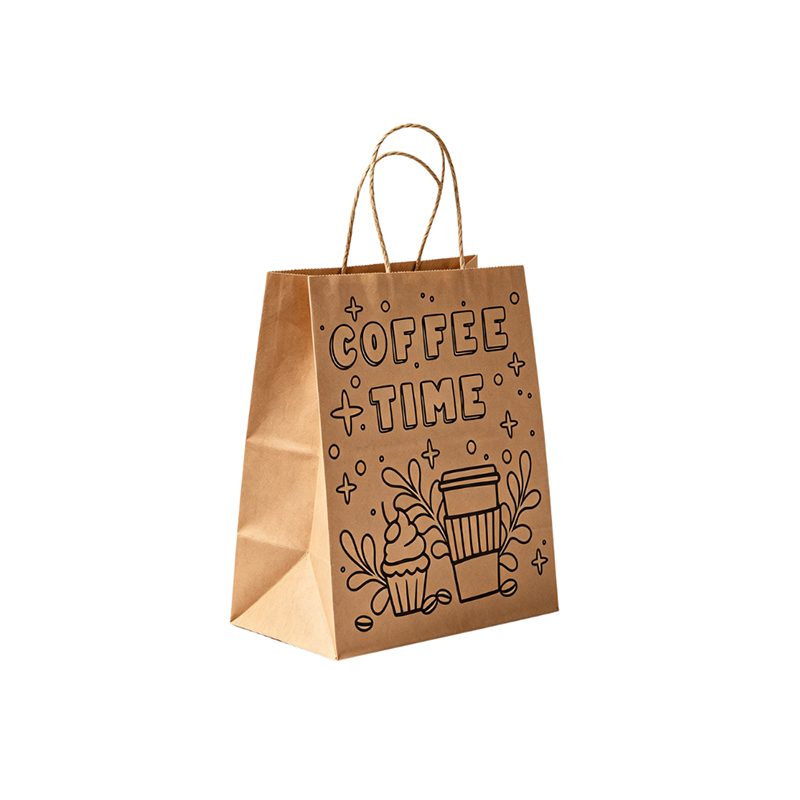
Sourcing custom paper bags for small business usually starts smaller than owners expect: a digitally printed kraft bag in the low hundreds from a small shop, a home-based brand, or an early-stage e-commerce seller. For very small test orders, a stock bag with a custom sticker can keep upfront cash even lower.
This guide explains what “low MOQ” means for custom paper bags, what drives pricing at small volumes, and how to choose a specification that fits your sales volume without tying up cash in unused packaging.
One framing helps before the details: at this stage packaging is a cash-flow decision, not only a unit-cost decision. A bag that is 30% cheaper per piece but forces a 5,000-unit commitment can be worse for your business than a bag that costs more per piece and lets you reorder monthly.
Why MOQ Is the Real Barrier, Not Design
Most small business owners assume custom packaging is out of reach because of cost. In practice, the bigger obstacle is often order quantity. A factory that requires 10,000+ units is structured for a different buyer. The practical questions are whether you can match the order to monthly sales, test a design before committing, and keep the unit cost reasonable.
Every custom print job carries fixed setup work regardless of how many bags you order: plate or digital file setup, press make-ready, die-cut tooling, and a physical sample for approval. At 5,000 units those costs spread thin. At 300 units the same work spreads across roughly six percent of the volume, which is why unit price climbs steeply as quantity falls. That is arithmetic, not a pricing trick.
A supplier asking for 10,000 units is not being difficult either. Production scheduling, paper purchasing, and minimum roll consumption are all built around that order size. The workable move for a small buyer is to find a converter with a genuine short-run or digital line, or to start on a stock-plus-sticker program and graduate to full custom once monthly volume is proven.
Can You Order Custom Paper Bags With No Minimum?
Sometimes. “No minimum” usually means a stock bag customized with a sticker, stamp or label rather than a fully manufactured bag printed from scratch. Digital printing is normally the lowest-MOQ route for a genuinely custom bag. Offset and gravure printing require more volume because plate and setup costs must be spread across more units.
In practice the no-minimum route looks like this: you buy an unprinted kraft bag in a standard size, then apply a printed label, a rubber stamp, or a full-colour sticker. The result reads as branded enough for markets, pop-ups and early e-commerce shipments, and it lets you test two or three sizes before committing to a manufactured run. The trade-off is finish: a sticker on a stock bag rarely looks as considered as ink printed directly onto the paper, and the sticker edge is a visible seam on a premium product.
A genuinely custom bag at low quantity is possible when the print method matches the run length. Digital presses image straight from file with no plates, so setup cost is low and short runs stay economical. Offset and flexographic printing need plates plus make-ready, and only become cost-effective once quantity amortizes that setup. If a quote for 300 custom bags looks surprisingly high, the reason is almost always that the job was priced on an offset line.
What Counts as Low MOQ?
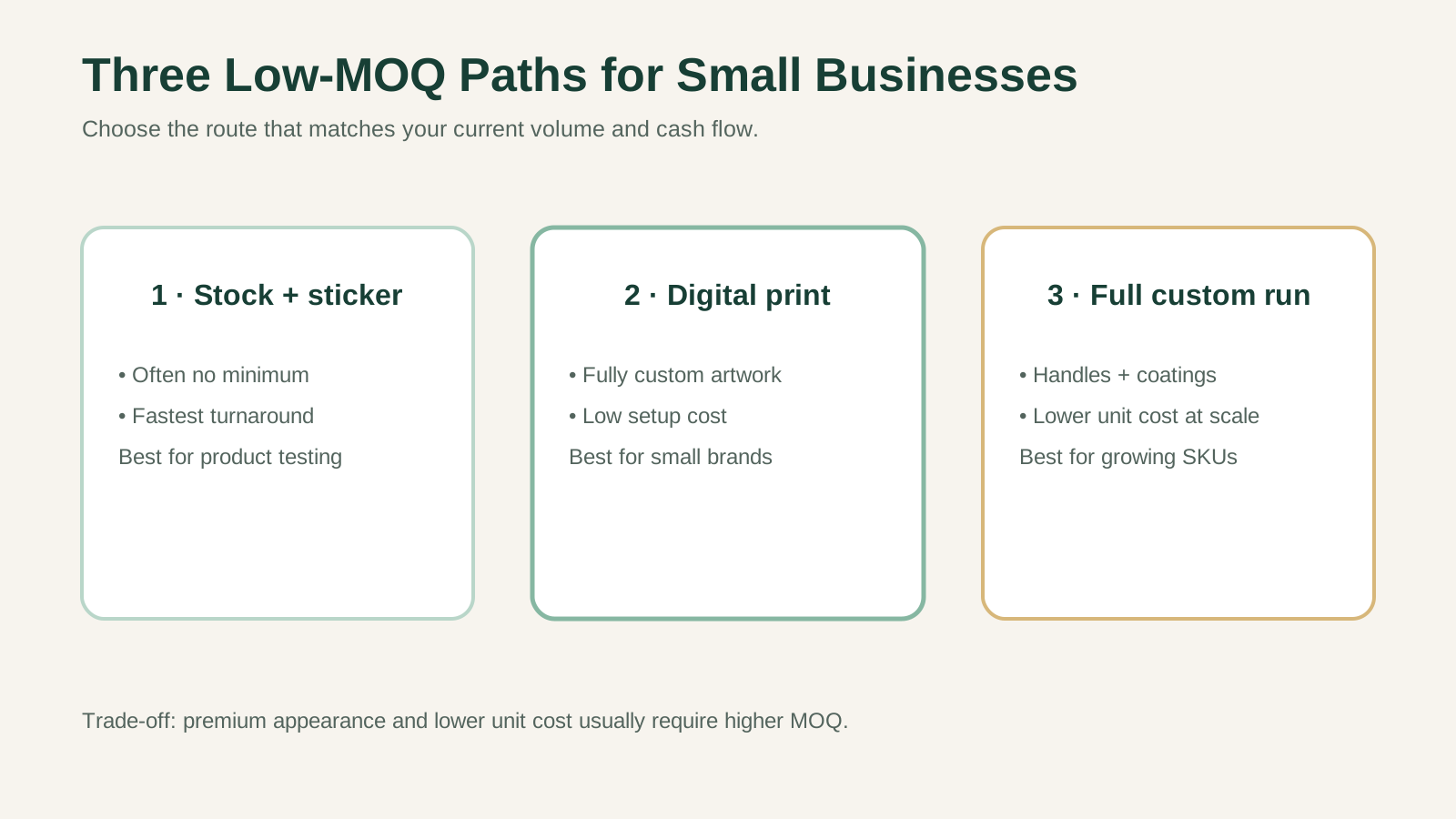
- Stock bag + custom sticker or stamp: often no minimum or a very low minimum.
- Digital printing: usually the lowest MOQ for a fully custom bag.
- Offset or gravure printing: higher MOQ, but lower unit cost at scale.
Treat these as bands rather than fixed rules. The same bag can quote at two very different minimums depending on whether the converter runs digital or offset, whether the size matches a stock die, and how many print colours the artwork needs. Asking “what is your minimum for a digitally printed kraft bag in this size?” gets a far more useful answer than asking for a minimum in the abstract.
What Actually Drives the Price at Small Quantities?
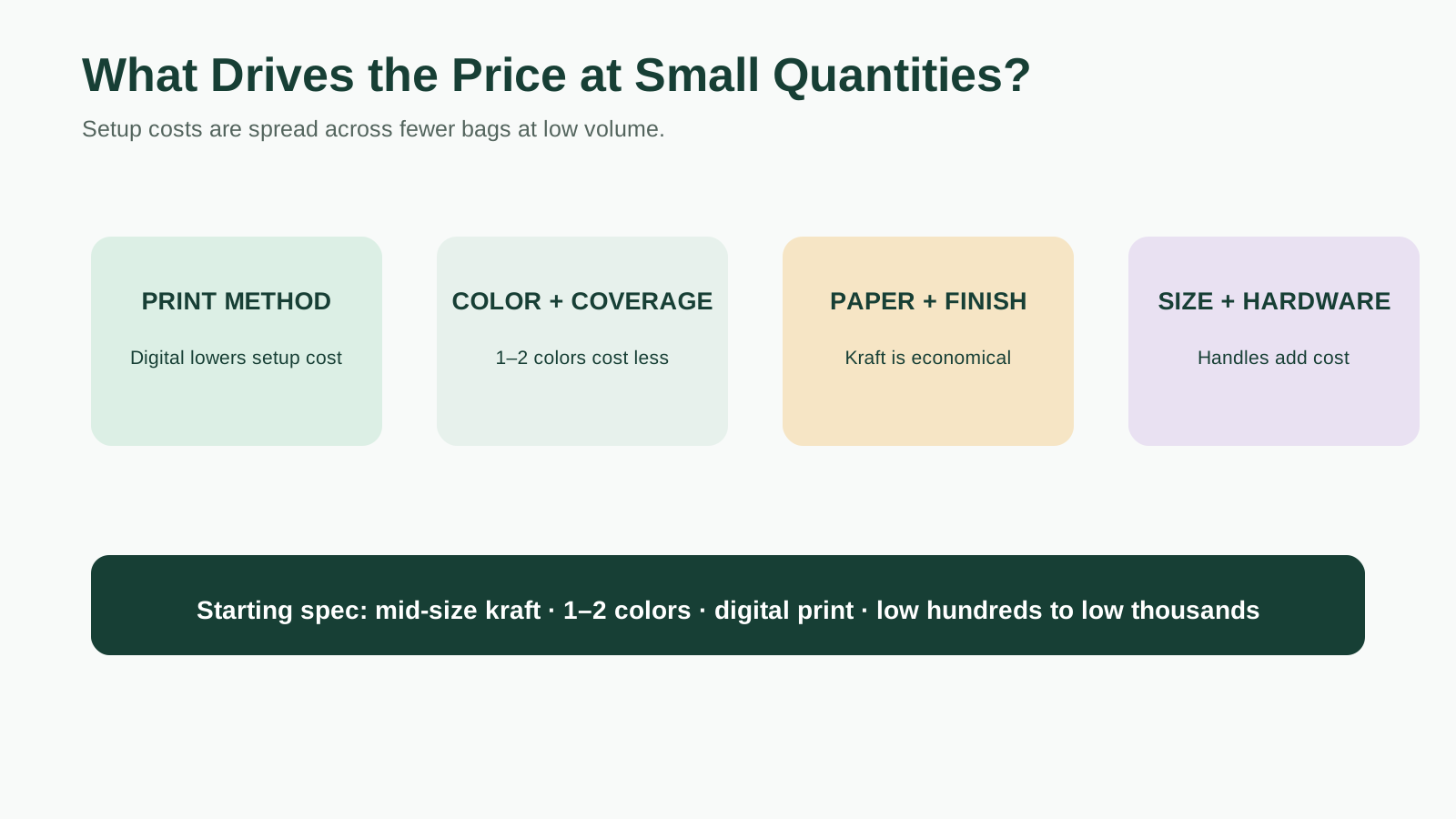
At low volume, price per bag is shaped less by paper alone and more by setup costs being spread across fewer units.
- Printing method: digital printing has low setup cost; offset becomes more efficient at higher quantities.
- Color and coverage: one- or two-color designs on kraft paper are usually more economical than edge-to-edge full-color graphics.
- Paper weight and finish: lamination, coatings and rope handles add cost.
- Bag size: larger bags use more material.
Two of these deserve more attention than buyers usually give them. Colour coverage is the most controllable lever: a one-colour logo on natural kraft uses less ink, fewer print units and a simpler make-ready than a full-bleed photograph, and on kraft the restrained version often looks better. Size is the second lever, because a stock die already exists for common retail sizes. Moving 20 mm in any direction usually means a new cutting die, and on a small order that tooling cost can exceed the cost of the paper.
Three Common Paths Compared
| Option | Typical MOQ | Best for | Main trade-off |
|---|---|---|---|
| Stock bag + sticker | None or very low | Product testing | Less premium |
| Digital printing | Low hundreds | Small brands | Higher unit cost |
| Offset / gravure | Higher volume | Scaled products | More setup and inventory |
The middle row is where most small brands should start. Digital printing gives you a bag that is genuinely yours—your logo, your colours, your size—at a quantity that matches a few months of sales rather than a year of it. Once a single SKU consistently clears a few thousand bags per order, the same artwork can move to offset and the unit price drops noticeably without any change to the design.
The top row is underrated as a stepping stone. Running stock bags with a printed sticker for one season tells you which size customers actually carry, how many you get through in a month, and whether your logo reads at bag scale. That information is worth more than the unit-cost saving you would get by guessing at 5,000 units.
A Simple Way to Decide
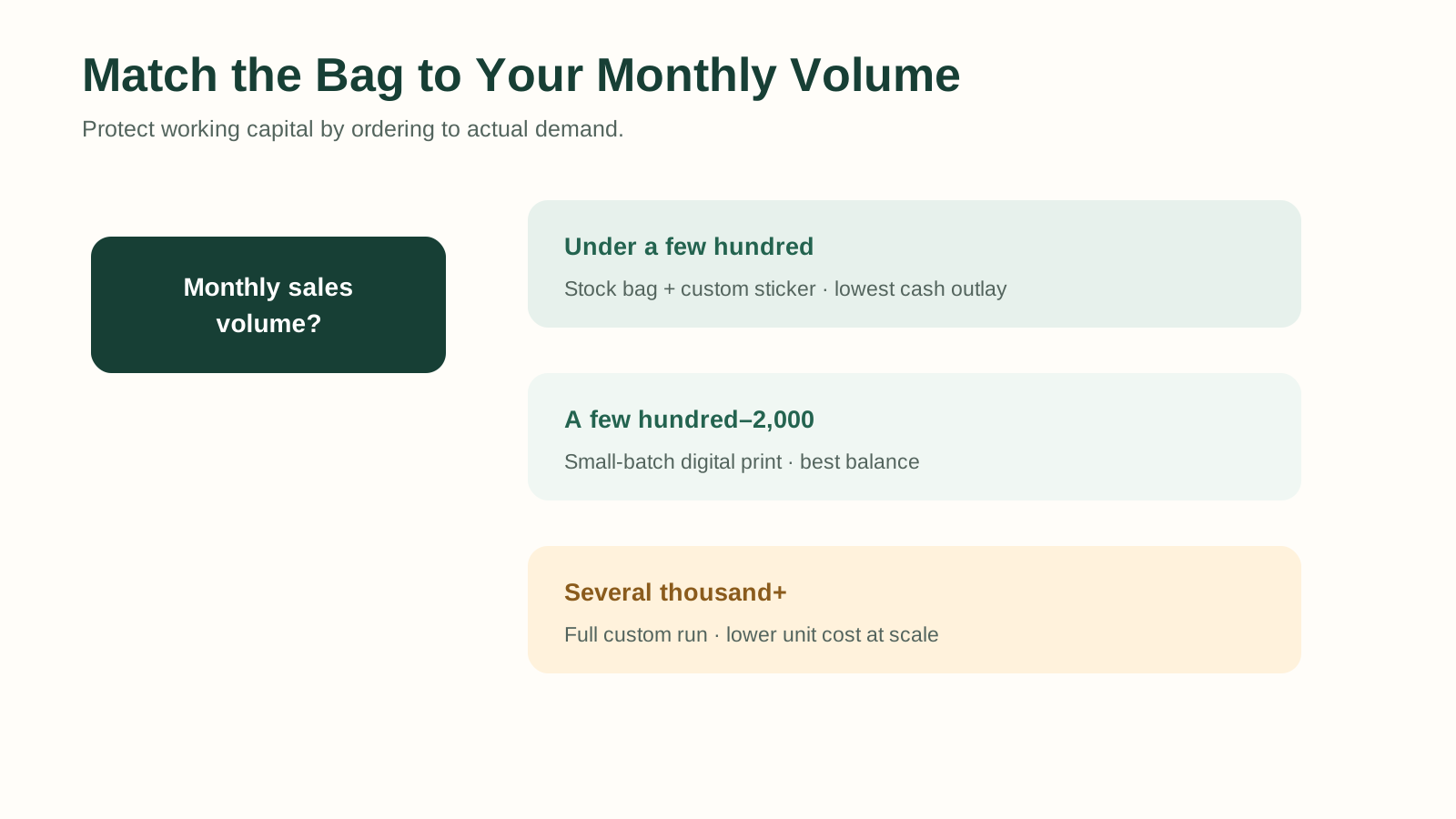
Match the bag to actual monthly volume rather than ordering far ahead of demand:
- Under a few hundred units a month: stock bag with custom sticker.
- A few hundred to a couple thousand: small-batch digital print.
- Several thousand or a flagship SKU: full custom run.
Add one more filter on top of volume: how often does your artwork change? If you are still iterating on logo, size or product range, buy flexibility and accept a higher unit cost. If the artwork has been stable for two reorder cycles, the design risk is gone and the case for a larger run is much stronger.
Reorder cadence matters as much as order size. A 500-bag order that you repeat every six weeks keeps packaging spend proportional to sales and lets you correct mistakes cheaply. A 5,000-bag order at a better price locks cash into a warehouse and locks you into a design you may still want to change.
Paper Weight, Handles and Finishes
Specification is where small orders quietly get expensive. Three choices drive both cost and how the bag feels in a customer’s hand.
Paper weight. Natural kraft shopping bags commonly run in the 100–150 gsm range for light retail use, moving up to 180 gsm or more when the bag has to carry weight without creasing. White card and coated art paper start heavier, typically 190–250 gsm, and are the usual choice for cosmetics and gift packaging where rigidity is part of the impression. Heavier paper costs more per bag and may push the job past the weight limit of a digital press, so confirm the press capability before you fall in love with a weight.
Handles. Twisted paper handles are the default for retail kraft bags and the most economical reinforced option. Flat paper handles sit flatter for packing and shipping. Cotton or rope handles read as premium but add both material and labour cost, and they are usually the first thing to cut when a quote comes in high. Die-cut handles keep the bag cheap and clean but concentrate load on a small area, so they suit light products only.
Finishes. Matte or gloss lamination, spot UV and foil accents all add a process step, and each step has its own minimum. On a short run, a single well-chosen finish—a matte laminate, or a foil logo—usually delivers more perceived value than two or three applied at low quality. If you want the premium look on a small quantity, spend it on the handle and the paper weight first; those are noticed before the coating is.
Artwork and File Setup
Most delays on small orders come from files, not presses. Send vector artwork—AI, PDF or SVG—with text converted to outlines, and supply raster images at 300 dpi at final size. Include 3 mm of bleed on any element that reaches the edge, and confirm the dieline before approving, because the fold, the gusset and the handle position all sit in fixed places that do not move for artwork.
Two design choices save money without hurting the result. Printing one or two spot colours on kraft is cheaper and usually more legible than a full-colour image, because kraft’s brown base shifts CMYK colours and forces heavier ink coverage to compensate. And keeping critical text clear of folds and gussets avoids the visual breaks that make a small-run bag look cheap even when the print quality is good.
Food-Contact Materials: Confirm the Documentation
Food-contact-safe kraft paper may be available at small-business volumes, but compliance depends on the complete packaging system and intended use. Ask the supplier for documentation for your specific application. In the US, paper and paperboard components are addressed under FDA 21 CFR Part 176; in the EU, the framework is Regulation (EC) No 1935/2004, supplemented by national rules for paper and board.
Documentation is a supplier question, not a paperwork detail. A converter should be able to state which components in the bag are food-contact compliant and which are not—ink, coating, adhesive and handle cord are separate items, and a compliant paper does not make the finished bag compliant. Ask before sampling, especially if the bag will carry baked goods, coffee or anything greasy.
If sustainability claims matter to your brand, ask for chain-of-custody certification on the paper rather than accepting a generic “recyclable” statement. The Forest Stewardship Council publishes the certification scheme most buyers recognise, and a supplier holding it can usually provide a certificate number you can verify.
Five Mistakes That Make Small Runs Expensive
- Ordering a year of packaging to reach a price break. Storage, obsolescence and design lock-in usually cost more than the unit saving.
- Specifying full-bleed full-colour on kraft. Heavy coverage raises cost and fights the brown substrate; one or two colours often look better.
- Changing the size after the cutting die is made. Tooling is a one-time cost you pay twice.
- Never asking whether a stock size fits. Stock dies remove tooling cost entirely, which is the single biggest saving available on a small run.
- Approving from a screen instead of a physical sample. Handle feel, fold behaviour and print coverage on kraft are hard to judge on a monitor.
Getting Started
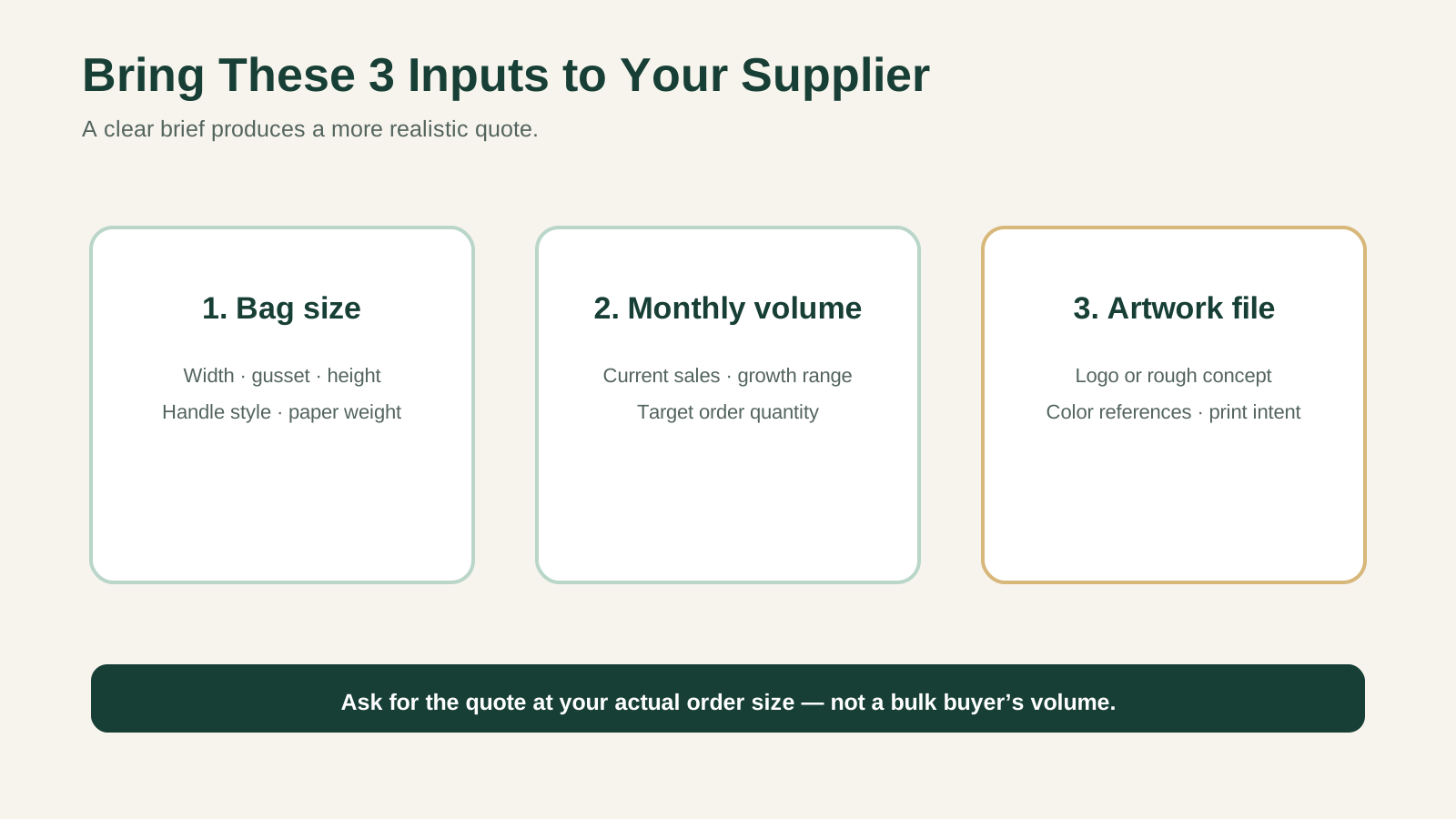
Bring three things to a supplier conversation: your target bag size, your monthly volume estimate, and your logo or design file. Ask for a quote at your actual order size, not a bulk buyer’s volume.
It also helps to state your constraints up front rather than after the first quote: the quantity you can realistically commit to, the date you need bags in hand, and which parts of the specification are fixed and which are open. A converter that knows you can flex on paper weight or handle type can usually find a cheaper route to the same look. If you are comparing options across print methods, our custom paper bag printing category shows the constructions available, and the eco-luxury paper bag guide covers what changes when you move upmarket.
For related packaging options, see our custom paper bag printing category, custom kraft paper bags, eco-luxury paper bag packaging, and custom packaging boxes with MOQ 500.