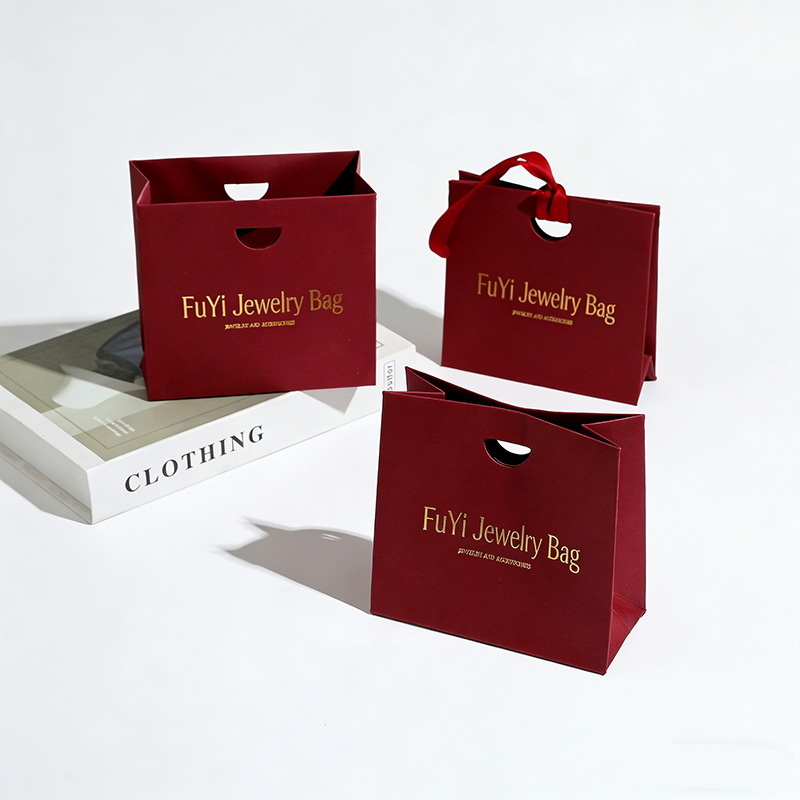
Sustainable Doesn’t Have to Look Sustainable: Rethinking Eco-Luxury Paper Bag Packaging in 2026
The old equation — luxury equals glossy plastic lamination, saturated metallics, and heavy coatings — is being rewritten by brands whose customers read sustainability labels. The new eco-luxury formula is tactile: uncoated textured stocks, deep debossing, cotton handles, and one restrained foil accent. Done right, a bag made entirely of recyclable materials signals more wealth than a laminated one, because restraint is expensive taste. This guide covers how premium paper bags achieve luxury effects on sustainable specifications.
The Eco-Luxury Material Palette
Element
Eco-luxury choice
What it replaces
Stock
Textured uncoated kraft or recycled art paper, 210–250 GSM
PET-laminated glossy board
Handle
Cotton rope, braided paper cord, grosgrain ribbon (sewn, no eyelets)
Plastic ribbon + metal eyelets
Primary effect
Deep deboss or blind emboss
Foil flood coverage
Accent
Small hot-foil logo (gold/copper)
Full metallic lamination
Coating
Uncoated or water-based matte varnish
Plastic film lamination
Why Tactile Beats Glossy
Luxury perception research points to haptics: people judge quality by touch within seconds — the weight of the stock, the give of the handle, the relief of a debossed logo under the thumb. An uncoated textured bag at 230 GSM with a deep blind deboss outperforms a glossy laminated bag in perceived value at similar cost, because the glossy signal has been democratized (every takeaway bag is laminated now) while tactile craft has not. Debossing and embossing require only a die, no ongoing material cost — premium perception amortizes into tooling.
Telling the Sustainability Story Quietly
Eco-luxury branding fails when it shouts. The working patterns: a small FSC or recycled-content mark on the back face or bottom card, not a frontal badge; the material story printed inside the bag where only the customer looks (“This bag is made from 100% recycled uncoated kraft. Keep it, or recycle it.”); and handle attachment sewn rather than eyeletted, visible on close inspection — the kind of detail luxury customers notice precisely because nothing else is decorated. Under the EU’s tightening green-claims rules, specific small statements (“100% recycled kraft, paper handles, plastic-free”) are both compliant and more premium than nature-washed graphics; the claims framework is covered in the sustainable packaging guide.
Category Playbooks
Boutique fashion: black or natural uncoated stock, single foil logo, cotton rope handles, no window — the bag itself is the packaging. Cosmetics & fragrance: smaller formats (mini and midi sizes), blind emboss plus one accent, ribbon handles in brand color; pairs with a matching premium carton program. Wine & spirits: single-bottle kraft with divider, debossed crest, flat tape handles for strength; wine gifting peaks seasonally, so order discipline matters — the buying mechanics are in the wholesale bag guide. Jewellery: micro sizes with magnetic or ribbon closure that survive as keepsake storage — the one category where the bag outlives the purchase, making premium construction genuinely worth it.
The Cost Reality
Eco-luxury construction costs roughly the same as conventional premium lamination: textured recycled stocks price near coated art paper, debossing trades evenly against spot UV, cotton handles cost more than twisted paper but less than the perception they create, and removing lamination removes a cost line. The savings that matter are regulatory: mono-material bags grade well under PPWR recyclability assessment and sit in the lowest eco-modulated EPR fee tiers in the US — the compliance timeline is summarized in the 2026–2027 regulation guide.
Frequently Asked Questions
Are ribbon handles recyclable?
Paper cord and cotton rope handles stay with the bag through recycling; synthetic ribbon and metal eyelets should be removed first. Sewn paper-cord handles deliver the ribbon aesthetic with mono-material recyclability — it is the standard eco-luxury compromise.
Does eco-luxury packaging cost more than conventional luxury?
At the same GSM and size, roughly parity: you trade lamination cost for tactile tooling (dies amortize across the run) and pay a premium only on natural-fiber handles. Where eco-luxury wins outright is downstream — lower EPR fees, cleaner PPWR grading, and no reformulation risk as plastic-restriction rules tighten.
Can a kraft bag look premium enough for a luxury brand?
Yes — the formula is contrast: heavy textured stock, deep blind deboss, one metallic accent, and impeccable handle attachment. Luxury reads from craft and weight, not gloss; some of the strongest premium bag programs in fashion today ship in unbleached kraft. For construction details, start from the paper bag printing guide.
Eco-Luxury Under the Green Claims Directive: What You Can Still Say
Luxury packaging has always sold on implication — a heavy uncoated board, a subtle emboss, a muted palette that reads as restraint. The problem in 2026 is that implication has become a regulated claim.
The rule is substantiation, not silence. The EU’s Green Claims Directive requires environmental claims to be specific, evidenced and independently verified before they are made. “Eco-friendly”, “green” and “sustainable” as unqualified adjectives are the claims most likely to be challenged, because they assert nothing measurable and therefore cannot be substantiated. What survives is the specific and documented: “100% recycled content”, “FSC-certified fibre”, “kerbside recyclable in [market]”.
Implicit claims count too. A kraft-coloured board, a leaf icon or an unbleached finish communicates environmental benefit without saying a word. Under the same framework, that is still a claim — and it has to be defensible. If the board is virgin fibre dyed to look recycled, the visual signal is misleading, and the exposure is the same as for a written claim.
What you need on file. For each claim: the measurement basis (recycled percentage by weight, and whether pre- or post-consumer), the certificate number if certification is claimed, and the end-of-life evidence if recyclability is claimed. FSC certificate numbers are publicly searchable, so certification claims are trivially verifiable by anyone — including a competitor.
The luxury-safe way to say less. The strongest eco-luxury packaging tends to make no claim at all and instead shows the material: an unbleached board with visible fibre, a paper cord handle, a single-colour blind emboss. It reads as considered rather than as certified, and there is nothing to substantiate because nothing is asserted.
Mono-Material Design: The Eco-Luxury Answer to Recyclability
The most effective sustainability decision in packaging is not a material swap. It is removing the second material.
Why mixed materials fail. A kraft bag with a plastic lamination is two materials bonded together; a carton with a PET window and a magnet closure is three. Recycling infrastructure separates materials, and bonded ones cannot be separated. The article ends up rejected or downcycled regardless of how sustainable the base material was. Under the EU Packaging and Packaging Waste Regulation, recyclability is assessed on the finished article, which puts mixed-material luxury packaging at a structural disadvantage.
The mono-material premium look. The assumption that sustainable means rustic is wrong. Uncoated board with a deep blind emboss, a paper-based soft-touch coating, a water-based matt varnish, a paper cord or flat paper handle — all single-material, all capable of reading as expensive. The tactile cues that signal luxury (weight, texture, restraint) come from the board and the finish, not from lamination.
Sequence the removals. Do not attempt a full redesign in one step. The usual order is: replace the film laminate with a water-based coating, replace the plastic or ribbon handle with a paper equivalent, remove the plastic window or switch to a cellulose film, then move any remaining plastic closure to paper or metal-free board engineering. Each step can be sampled and costed independently.
Where mono-material genuinely costs more. A paper-based barrier or a cellulose film costs more per unit than PE, and paper cord handles cost more than twisted paper. The premium is real but small relative to the alternative — being unable to make a recyclability claim at all. For material options and finishes, see our sustainable printed packaging and custom paper bags ranges.
Designing the Opening Sequence
Luxury packaging is judged twice: once on a shelf and once in the customer’s hands. Most brands engineer the first and improvise the second. The opening is the part that gets photographed, remembered and — increasingly — posted.
Choreograph the reveal. Decide what the customer sees first, second and third. A rigid lid that lifts with slight resistance, a tissue layer that has to be moved aside, and the product centred in a fitment is a sequence. Three boxes with the same contents deliver completely different experiences depending on that order.
Resistance is a signal. A lid that is too tight feels cheap because the customer has to fight it; too loose and it feels unconsidered. The target is a fit that releases with a little weight and no force. This is a sample-stage judgement — it cannot be specified as a number, which is why it needs physical approval.
Design for the second opening too. Most premium packaging is a keepsake: the customer will open it again tomorrow, and possibly for years. A closure that cannot be reclosed, or a seal that visibly destroys the box, is fine for a security application and wrong for a luxury one. If you need tamper evidence and reusability, put the evidence on a removable element rather than on the box.
Keep the material story consistent through the opening. If the outer reads as considered and natural, a plastic-laminated insert or a foam bed underneath breaks the spell — and under the EU’s whole-article recyclability logic it also breaks the claim. Moulded pulp, die-cut corrugated or a paper-based fitment keeps the story intact from the first touch to the last. For options see our eco-luxury packaging range.
Related Solutions
Explore more custom-printing guides from our team: