
Send Your Inquiry Today
Anti-Counterfeit Labels in 2026: How Smart Authentication Is Replacing the Security Seal
On this page
- Why counterfeit threats spike in Q4 2026
- What changed: smartphone authentication went mainstream
- Who needs anti-counterfeit labels now
- What it means for your label and box
- How we produce multi-layer security labels
- Anti-counterfeit label options compared
- Your 5-point brand-protection checklist
- Frequently asked questions
Counterfeit goods do not take holidays, but the people who buy fakes do. The fourth quarter is peak season for premium cosmetics, spirits, supplements and electronics — and it is also when fake listings flood marketplaces and pop-up stores. Three packaging events held in October 2026 show where brand protection is heading: authentication that lives in the buyer’s phone, not in a seal a forger can copy. This article breaks down what changed, who it hits, and how to build an anti-counterfeit label stack your customers can verify in seconds.
Why counterfeit threats spike in Q4 2026
At INNO-Pouch 2026 (Barcelona, 8–9 October), Pack Expo 2026 (Chicago, 18–21 October, 72,000+ attendees) and the Packaging South Asia Conference (Mumbai, 9 October), one theme dominated the security track: smartphones have become the universal verification device. Kurz Scribos and HP demonstrated digitally printed anti-counterfeiting features a consumer authenticates by scanning with a phone — no app install required. A separate panel on pharmaceutical counterfeiting underlined that fakes now extend past the product itself into vials, seals, labels and pre-filled devices. The takeaway for brands is simple: if your protection cannot be checked at the point of sale or in the living room, it is not protection.
What changed: smartphone authentication went mainstream
Three shifts converged in 2025–2026:
- App-free scanning. Modern security printing combines a holographic or hot-stamped overt layer with a covert QR or serialized 2D code. The buyer points a camera at the pack; the code resolves to a verification page. The GS1 Digital Link standard (ratified 2018) is what lets a single QR code carry both the product identity and a link to live authenticity data.
- Regulation is pushing data onto packaging. The EU’s Packaging and Packaging Waste Regulation — Regulation (EU) 2025/40 — entered into force on 11 February 2025 and applies from 12 August 2026. It accelerates demand for recyclable, data-rich structures and makes traceability data a buying criterion, not a nice-to-have.
- Variable data printing (VDP) went cheap. Serialized, unique-per-unit codes used to need a dedicated secure line. Today a standard digital press prints unique QR or 2D-barcode sets at production speed, so even mid-size runs can be serialized.
This article is general guidance, not legal advice. For binding obligations, consult the official texts above and qualified counsel; implementation dates can move with secondary legislation.
Who needs anti-counterfeit labels now
- Cosmetics and skincare — high margin, easy to refill, heavily sold through third-party marketplaces.
- Wine, spirits and supplements — tax-stamp and traceability requirements already apply in many markets.
- Pharmaceuticals and medical devices — patient-safety and track-and-trace mandates.
- Electronics and spare parts — warranty fraud and grey-market diversion.
- Ecommerce and Amazon sellers — buy-box losses to identical-looking fakes.
What it means for your label and box
Effective protection is layered, and the layer you lead with depends on your risk profile:
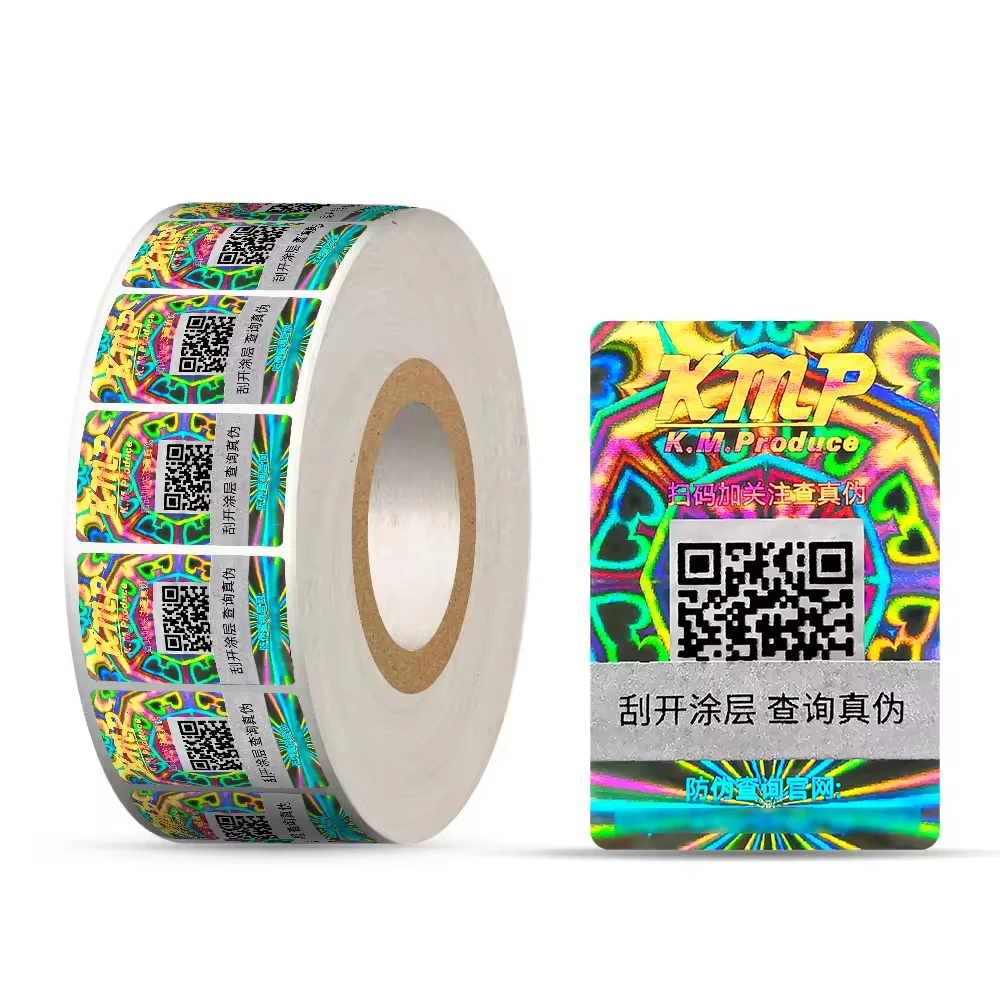
- Overt (visible) layer: a custom holographic or hot-stamped security label. Hard to reproduce, instant to recognise, zero tech for the buyer.
- Covert (scannable) layer: a QR or serialized 2D code that resolves to a verification page or batch record. This is what turns a static seal into a queryable data point.
- Tamper-evidence: a VOID tamper-evident label that leaves a permanent “VOID” mark if removed — your first line of defence against refill and reseal fraud.
The right combination is a judgement call, not a one-size sticker. That is exactly why we recently reorganised our catalog into dedicated, browseable subcategory pages for each security feature — holographic, QR-security, VOID, certificate-of-authenticity and cosmetic-specific lines — so a buyer can match the feature to the threat instead of guessing. Pair the label with a custom security carton and the tamper layer runs across the primary and secondary pack.
How we produce multi-layer security labels
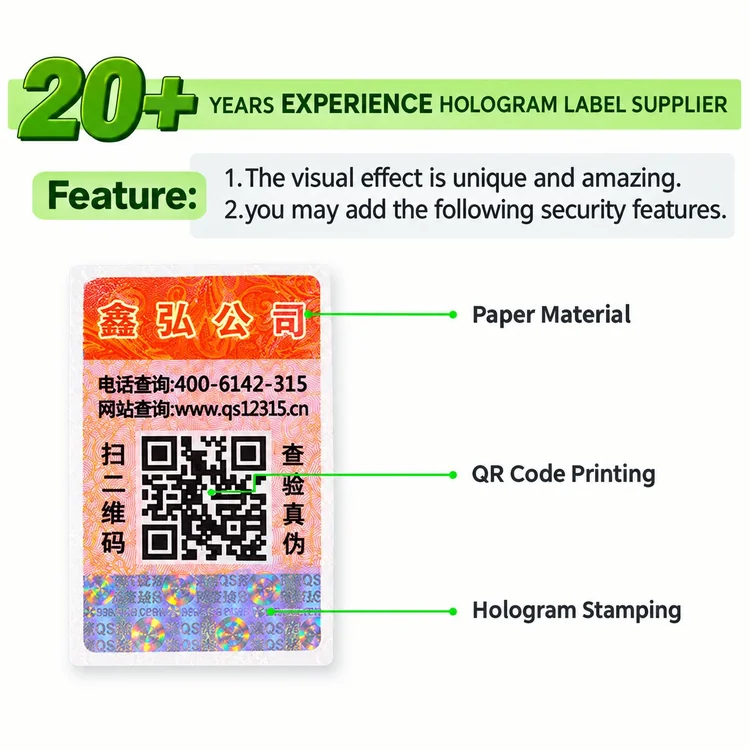
On our lines, a certificate-of-authenticity label is built in three registered passes: the base material is printed with the unique QR or serialized 2D code, then the hologram or hot-foil layer is stamped in precise registration on top. Because the two layers are independent, a forger who copies the hologram still cannot reproduce the unique code, and a forger who copies the code cannot recreate the stamp. For serialized runs we print on a variable-data line so every unit carries a distinct identifier.
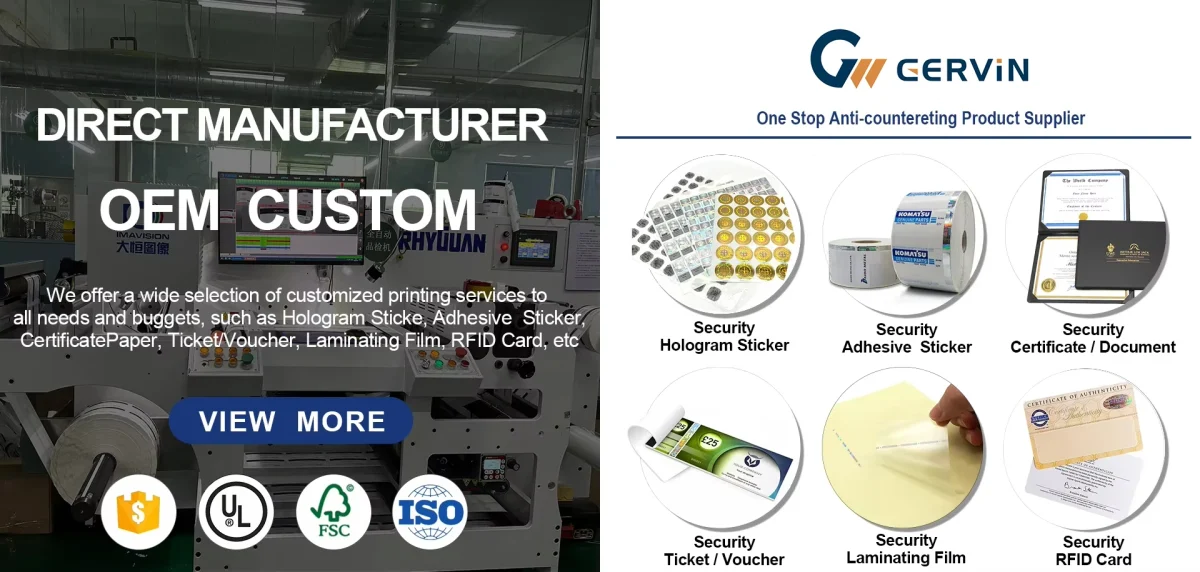
Small brands are not excluded: our cosmetic anti-counterfeit labels and certificate-of-authenticity hologram labels are available at low minimum order quantities, so a growing brand can add a verifiable layer without committing to a million-unit run.
Anti-counterfeit label options compared
| Option | Best for | Smartphone verification | Lead time |
|---|---|---|---|
| Holographic / hot-stamp label | Overt, instant recognition | Visual only | Short |
| QR / serialized 2D code | Batch & unit traceability | Yes (app-free) | Short |
| VOID tamper-evident | Refill / reseal defence | Visual (VOID mark) | Short |
| Certificate-of-authenticity | Premium / warranty goods | Yes (QR + hologram) | Medium |
| Cosmetic-specific | Skincare & makeup | Yes (QR + hologram) | Short |
Your 5-point brand-protection checklist
- Map the risk. Where are you leaking — marketplace fakes, refills, or grey-market diversion? The answer decides the layer.
- Lead with an overt mark. A holographic or hot-stamped element buyers recognise instantly.
- Add a scannable code. A QR or serialized 2D code that resolves to a verification page — app-free.
- Close the pack with tamper-evidence. VOID layers on cap, seal and carton.
- Make it verifiable, not just visible. Test the scan flow on three phones before launch.
Frequently asked questions
Are holographic stickers anti-counterfeit?
They are an overt security feature: hard to copy and instantly recognisable, but on their own they are visible rather than queryable. Pair them with a QR or serialized code for true verification.
How do QR-code security labels work?
Each label carries a unique (or batch-unique) QR or 2D code that resolves to a verification page or record. The buyer scans with a phone camera — no app needed — and sees whether the item matches.
What is a VOID tamper-evident label?
A label with a hidden adhesive layer that, when peeled, leaves a permanent “VOID” message on the surface, proving the pack was opened or reused.
Can a small brand afford anti-counterfeit labels?
Yes. Low minimum order quantities and variable-data printing mean serialized, verifiable labels are viable from the first few thousand units upward.
Broader supply-chain compliance: anti-counterfeit authentication is only one layer. EU-bound paper packaging now also falls under EUDR due-diligence rules from 30 December 2026, so importers should consolidate their packaging-compliance documentation early. See our EUDR paper packaging checklist for boxes and bags.
If your products are electronics or phones, the threats narrow to warranty fraud and screen swaps. Our phone screen anti-counterfeit labels guide covers that scenario in detail.
Disclaimer: This is general information, not legal or regulatory advice. Verify current obligations — including PPWR implementation dates — against the official EUR-Lex text and qualified counsel.
Ready to see a sample on your own artwork? Request a physical sample and we will mock up a layered security label matched to your risk profile.