
Send Your Inquiry Today
EPR Packaging Requirements: A 2026-27 US Buyer’s Guide
Table of Contents
- What Changed: Seven US States Now Put Packaging Costs on Producers
- Which Businesses Are Hit by State EPR Laws
- California SB 343: The October 4, 2026 Labeling Rule for Recycling Claims
- What EPR Packaging Requirements Mean for Your Labels and Boxes
- How We Produce EPR-Ready Packaging
- Illustrative Scenario: A Cosmetics Brand Pilots a Mono-Material Box
- State-by-State EPR Snapshot
- Your EPR-Ready Packaging RFQ Checklist
- Frequently Asked Questions
Disclaimer: This article is general information, not legal advice. US state EPR programs are still finalizing implementing regulations, and dates shift as rulemaking closes. Always confirm current obligations with each state agency or qualified counsel. Last updated October 2026. Primary sources: Circular Action Alliance, CalRecycle (SB 54), and our US packaging EPR laws by state guide.
As of October 2026, seven US states have enacted packaging EPR laws, and the fee clocks are already running. If you sell boxes, labels, or paper bags into the United States, these EPR packaging requirements change who pays to recycle your packaging — and when. Extended Producer Responsibility (EPR) shifts end-of-life costs from municipalities onto the brands that place packaging on the market. Oregon is already invoicing producers, Colorado started in January 2026, and California’s payment obligations begin January 2027. Miss a registration deadline or a fee and you risk civil penalties and, in some states, a sales ban.
The good news: most of what EPR actually measures — recyclability, material data, and clear labeling — is decided on the converting line, not in a lawyer’s office. This guide explains the rules from a converter’s view: what your box and label must carry, and how to get there without overstocking non-compliant inventory.
What Changed: Seven US States Now Put Packaging Costs on Producers
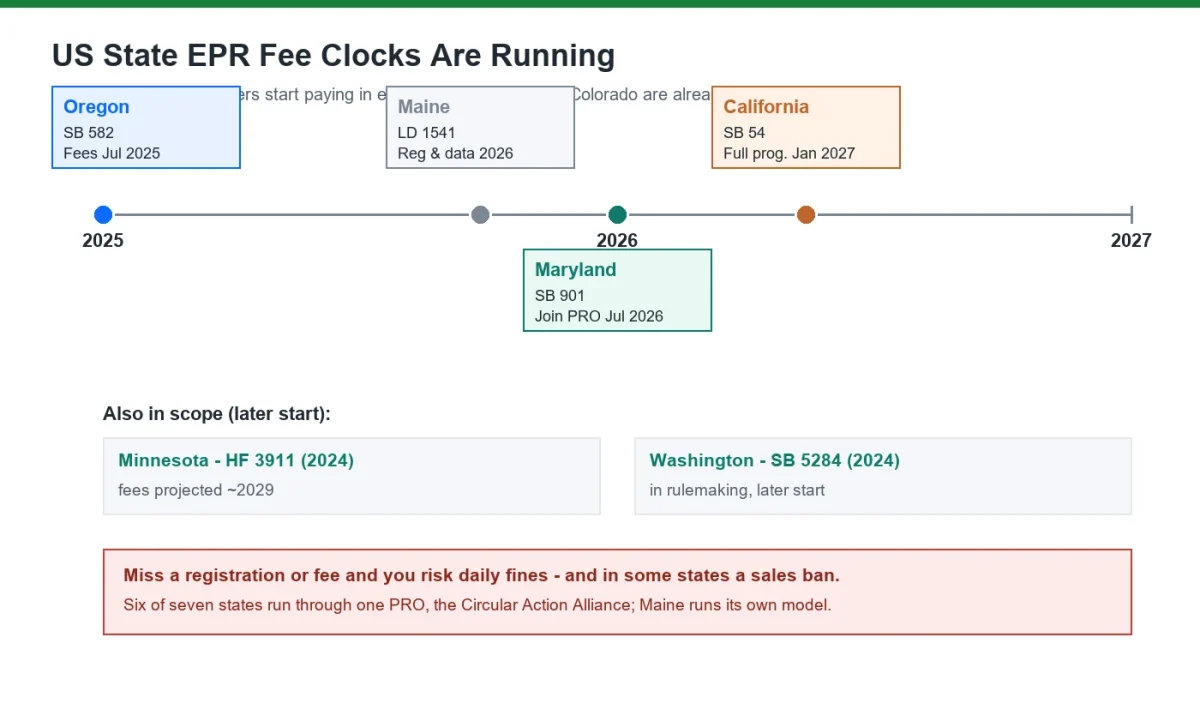
Five years ago, US packaging recycling was funded by residents and local government. Today, seven states have enacted packaging EPR laws. Understanding these EPR packaging requirements begins with the state list and their start dates:
- Maine (LD 1541, 2021) — the first US state; producer registration and 2025 data reporting came due in 2026. Fee structure still depends on a stewardship organization being selected.
- Oregon (SB 582, 2021) — fees active since July 1, 2025, run through the Circular Action Alliance (CAA).
- Colorado (HB 22-1355, 2022) — producer responsibility dues began January 1, 2026.
- California (SB 54, 2022) — permanent regulations took effect May 1, 2026; producer registration was due June 1, 2026; baseline data reporting was due July 1, 2026; fee obligations and full program implementation begin January 1, 2027.
- Maryland (SB 901, 2025) — producers join a PRO starting July 1, 2026; payments are expected later, with many observers pointing to 2028.
- Minnesota (HF 3911, 2024) — fees projected to begin around February 2029.
- Washington (E2SSB 5284, 2025) — in rulemaking; full implementation expected around 2030, with a sales restriction on non-compliant packaging from March 1, 2029.
The mechanism behind EPR is the same everywhere: you register as a producer (usually the brand owner, sometimes the importer), report the volume and type of packaging you place on the market, and pay a fee. Most states are designing fees that reward easy-to-recycle structures and penalize hard-to-separate materials, though the exact eco-modulation schedules are still being published.
On the PRO side, the Circular Action Alliance (CAA) has been selected or designated as the PRO for California, Colorado, Maryland, Minnesota, Oregon, and Washington. Maine has not yet selected a stewardship organization; its DEP issued a request for proposals in June 2026. Washington’s final PRO designation should be confirmed through the state’s official rulemaking page before you assume CAA covers your obligation.
Which Businesses Are Hit by State EPR Laws
You are likely in scope if you manufacture, import, or sell branded packaged goods into any of these states — including pure e-commerce. Obligation generally follows the brand owner, and where the brand owner has no in-state presence, it can fall to the importer or licensee.
That means the following businesses should be planning for these EPR packaging requirements now:
- Cosmetic and skincare brands shipping rigid boxes, folding cartons, and labels into CA/OR/CO.
- Food, beverage, and supplement sellers using pouches, cartons, and secondary packaging.
- Electronics and consumer-goods companies with retail or mailer boxes.
- Small brands — most states have a de minimis exemption, but the thresholds vary. For example, California uses a roughly $1 million annual gross revenue test; Oregon exempts producers that place less than one metric ton of covered material in-state or have under $5 million in global revenue; Colorado exempts producers that place less than one metric ton or have under roughly $5.63 million in global revenue, adjusted annually for CPI. Always check the current state rule, because thresholds and registration requirements change as implementing regulations are finalized.
If your packaging crosses a state line into a covered state, plan on EPR packaging requirements applying. This is not a physical-presence test.
One nuance: whether a pressure-sensitive label, sticker, or liner counts as covered packaging differs by state. Some states include labels and adhesives; others focus on primary and secondary packaging. If labels are a large share of your product weight, confirm the scope with each state’s implementing rule or PRO.
California SB 343: The October 4, 2026 Labeling Rule for Recycling Claims
On October 4, 2026, California’s SB 343 “chasing arrows” rule took effect. Under the rule, packaging that does not meet the state’s recyclability standard generally cannot use the universal recycling symbol (the chasing arrows) or any other recyclability claim. A federal court challenge is pending, so the rule may still be modified, but as of this writing the restriction is in force.
For a converter, this is the most concrete EPR-related labeling change. If your current box, bag, or sleeve uses the chasing arrows, a “widely recyclable” badge, or language like “please recycle,” and the structure fails SB 343’s four-part test, the artwork may need a redesign. The four-part test looks at whether residents have curbside access, whether the material is sorted at scale, whether a recycling process exists, and whether there is a viable end market.
Practical implication for inventory:
- Packaging already in California stores or warehouses before October 4, 2026 can generally be sold through, but new production for California should be reviewed.
- Packaging with a PE liner, foil lamination, or non-removable plastic window often cannot pass the SB 343 test, so the chasing-arrows symbol should not be printed on it unless you have verified compliance.
- Mono-material paper or board without plastic coatings is far more likely to pass the test and keep the mark.
What EPR Packaging Requirements Mean for Your Labels and Boxes
Reading EPR packaging requirements correctly means looking past the registration forms to the box itself. The fee you pay is driven by material choices made at design and print time. Four things matter most:
1. Material design drives the fee
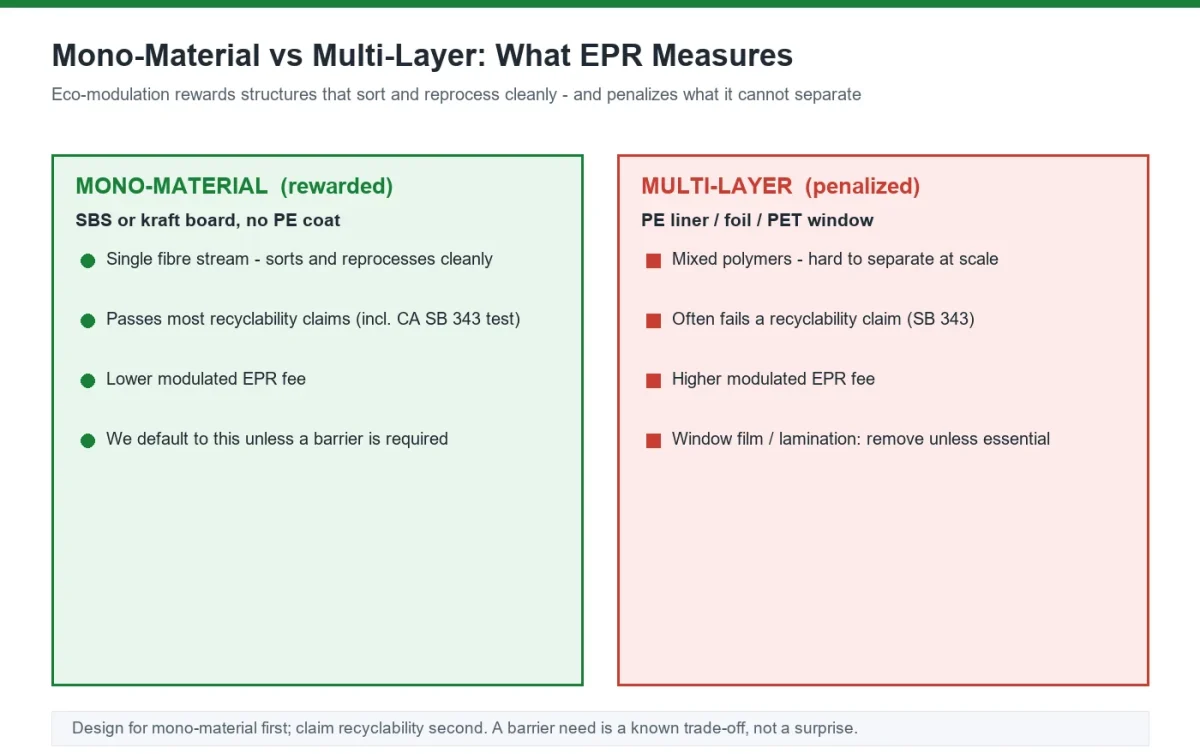
State EPR packaging requirements are moving toward fee schedules that reward recyclable structures. A single-material SBS or kraft carton sorts and reprocesses cleanly and is usually placed in a lower fee tier. A carton with a PE liner, foil lamination, or a PET window is harder to separate and may land in a higher tier — or fail a recyclability claim entirely. The single biggest lever is avoiding unnecessary plastic coatings and multi-layer laminates. Exact tier placement depends on the published PRO fee schedule, which is still being finalized in several states.
2. Recyclability claims live or die on structure
California’s SB 343 sets a four-part recyclability test — roughly 60% of residents must have curbside access, the material must be sorted and reprocessed at scale, a recycling process must exist, and a viable end market must be present. A box with a PE inner coating or a non-removable window film often cannot meet that test, so printing “recyclable” or the chasing-arrows symbol on it becomes a compliance risk. Design for mono-material first; claim second.
3. What the label and box can carry
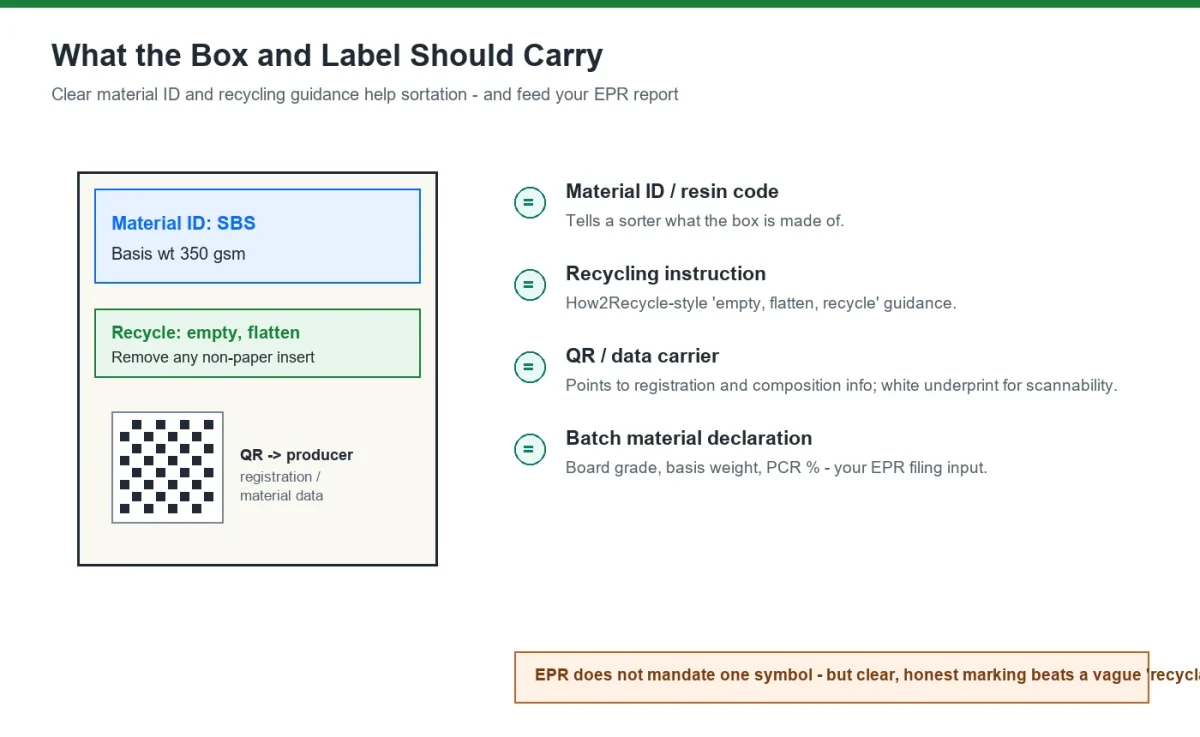
EPR does not yet dictate one universal symbol, but clear material identification helps sortation and reporting. Markings we can print include:
- Resin identification or material type codes where relevant.
- Generic recycling guidance such as “empty, flatten, recycle” — but note that the chasing-arrows symbol and claims like “widely recyclable” are restricted in California unless SB 343’s test is met.
- Optional QR or data carriers pointing to producer registration or material composition information.
If you want to use the official How2Recycle label, your brand must join the program and obtain authorization; we cannot print a trademarked How2Recycle mark without it.
4. Recycled-content data, not FSC
EPR reporting asks for the materials you placed on the market — typically by type and weight. If your board includes post-consumer recycled (PCR) content, you may report it with mill documentation. Note the boundary clearly: EPR does not require FSC. We do not hold an FSC Chain-of-Custody certificate and do not print the FSC trademark. What we can provide is board sourced from certified mills, with the mill’s certificate number, batch credential, board TDS, and fiber-origin statement — the data your EPR report may need, without a claim we cannot make. See our EUDR packaging guide for the same data-vs-logo distinction.
How We Help You Meet EPR Packaging Requirements
As a converter, our job is to turn the regulation into a printable, shippable structure. Meeting these EPR packaging requirements starts on the converting line. Here is how we approach it:
- Mono-material by default. We default to uncoated or lightly coated SBS and kraft board without PE lamination. When a barrier is genuinely needed (grease, moisture), we tell you the recyclability trade-off up front so the fee impact is a known number, not a surprise.
- Print the right marks. Recycling instructions, material IDs, and a white underprint for QR/scannability are part of standard artwork — no separate vendor needed. We will flag California SB 343 issues if your artwork contains a chasing-arrows symbol on a non-compliant structure.
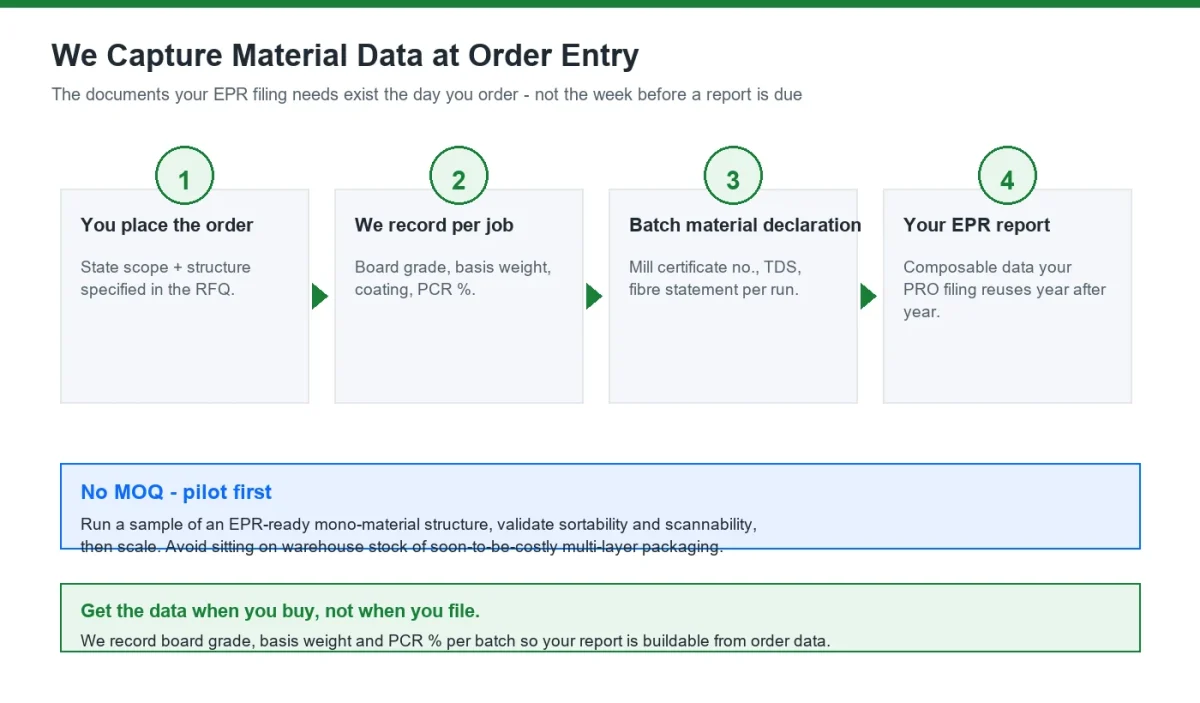
- We capture material data at order entry. Board grade, basis weight, coating, and PCR percentage can be recorded per job and per batch. That means the documentation your EPR packaging requirements filing may need can exist the day you order — not the week before a report is due.
- Low minimums for pilot runs. EPR packaging requirements often mean testing a recyclable structure before committing volume. We run low MOQ on custom packaging, so you can pilot a mono-material box or a revised label as a sample run, validate sortability and scannability, then scale — instead of sitting on a warehouse of soon-to-be-costly multi-layer stock. Exact minimums depend on the structure and finish; rigid boxes and folding cartons start in the low hundreds of units.
Illustrative Scenario: A Cosmetics Brand Pilots a Mono-Material Box
This is a composite, illustrative scenario drawn from common buyer situations — not a specific customer order.
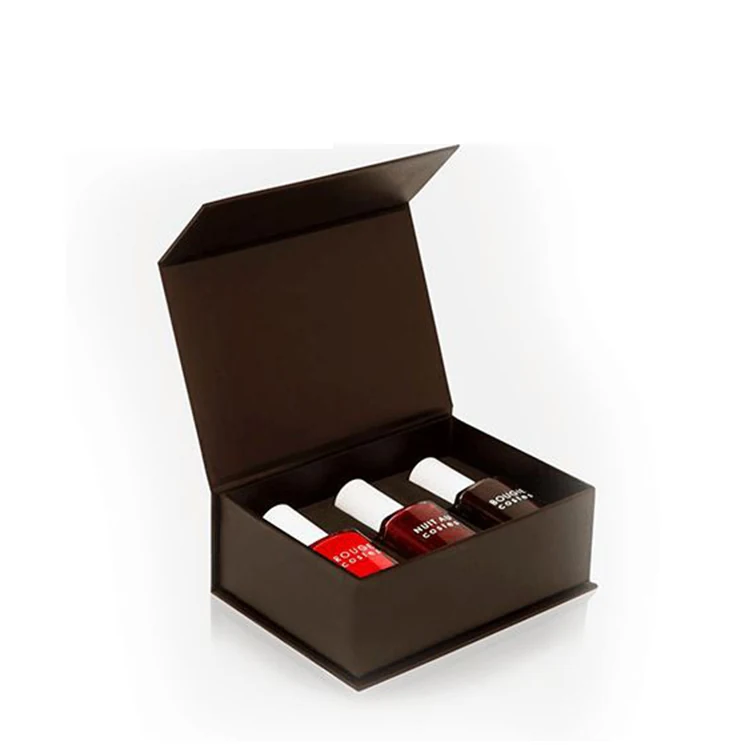
A US skincare brand sells rigid boxes into California and Oregon. Their existing box used a PE-coated inner liner for scent protection. That liner made the structure harder to recycle and risked failing California’s SB 343 test, and it could place the box in a higher fee tier under Oregon’s CAA schedule. We ran a low-MOQ sample replacing the PE liner with an uncoated kraft construction, printed a clear material-ID and generic recycling instruction, and provided a batch material-declaration sheet (board grade, basis weight, 0% PE, PCR content where used). The brand validated the new structure with a small run, used the declaration in its reporting, and only then moved volume. The result: a structure that was more likely to pass SB 343 and could reduce the fee — reached without scrapping existing inventory overnight. This is how EPR becomes a printable, shippable structure rather than a surprise invoice.

State-by-State EPR Snapshot
| State | Law | Key dates | PRO / administrator | What your packaging should carry |
|---|---|---|---|---|
| Maine | LD 1541 (2021) | Registration & 2025 data due 2026; fees TBD pending stewardship-org selection | Not yet selected (RFP issued June 2026) | Material data; sortable structure |
| Oregon | SB 582 (2021) | Fees active Jul 1, 2025 | CAA | Material ID; mono-material preferred |
| Colorado | HB 22-1355 (2022) | Dues from Jan 1, 2026 | CAA | Recyclability; material data |
| California | SB 54 (2022) | Reg. eff. May 1, 2026; reg. due Jun 1, 2026; data due Jul 1, 2026; fees Jan 1, 2027 | CAA | SB 343 recyclability test; material data; 100% recyclable/compostable by 2032 |
| Maryland | SB 901 (2025) | Join PRO Jul 1, 2026; payments expected ~2028 | CAA + others | Material data; sortable structure |
| Minnesota | HF 3911 (2024) | Fees projected ~Feb 2029 | CAA | Material data; mono-material preferred |
| Washington | E2SSB 5284 (2025) | Rulemaking; full program ~2030; sales restriction Mar 1, 2029 | Rulemaking pending | Material data; sortable structure |
Penalties vary by state. Oregon has published a maximum of $25,000 per day for violations. Other states authorize civil penalties and, in some cases, sales restrictions for non-participants. Dates are subject to change as implementing rules close — verify with each agency.
Your EPR-Ready Packaging RFQ Checklist
Before you brief a converter, lock down these points so your packaging is defensible under state EPR:
- State scope: which of the seven states do you sell into? (drives which deadlines apply)
- Material structure: can the box or label be mono-material? List every coating, laminate, and window film.
- PCR content: target percentage, and can the mill certify it with a batch credential?
- Markings: recycling instruction, material ID, optional QR/data carrier for registration info.
- Data handoff: who captures board grade, basis weight, and PCR % per batch for your filing?
We package these EPR packaging requirements into a one-page EPR-Ready Packaging RFQ Checklist (spreadsheet) you can send to any supplier. Request it from our team and we will pre-fill the converter side with our standard data fields.
Frequently Asked Questions
Does EPR apply to small brands?
Often yes, but most states have a de minimis exemption. The thresholds vary by state — commonly under one metric ton placed in-state, or under a revenue threshold. If you ship meaningful volume into CA, OR, or CO, assume you are in scope and confirm with the state rule.
Does EPR require FSC-certified packaging?
No. EPR and FSC are separate systems. EPR is about end-of-life funding and recyclability; FSC is about fiber sourcing. We do not hold an FSC Chain-of-Custody certificate and do not print the FSC trademark. For EPR you need material composition and recycled-content data, which we can provide via mill certificate numbers, batch credentials, and board TDS — not an FSC claim.
What packaging data must my supplier give me?
At minimum: board grade, basis weight, coatings/laminates used, and any PCR percentage with mill documentation. We can record these per job and per batch so your report is buildable from order data, not reconstructed later.
Does EPR require recycled content now?
Not immediately for paper packaging. California’s SB 54 sets targets that apply primarily to single-use plastics: 100% recyclable or compostable by 2032, 65% of single-use plastic actually recycled, and a 25% source reduction. These plastic targets do not directly apply to paperboard boxes. Fees are already being modulated by material type and recyclability, so structure — not just recycled content — affects your cost now.
How is US EPR different from EU PPWR?
Both shift cost to producers and reward recyclability, but they are separate laws with separate filings. The EU’s PPWR sets union-wide labeling and design rules; US EPR is state-by-state with different PROs and deadlines. If you sell on both sides of the Atlantic, plan two compliance tracks.
Do labels and stickers count as covered packaging?
It depends on the state. Some programs include pressure-sensitive labels, liners, and adhesives in the weight calculation; others focus on primary, secondary, and transport packaging. If labels are a large share of your product, confirm scope with each state’s implementing rule or PRO.
Do you have a minimum order quantity?
We keep minimums low. You can pilot an EPR-ready mono-material structure as a sample run, validate it, and scale only after it passes — the practical way to comply without overstocking non-compliant inventory. Exact minimums depend on the product and finish; rigid boxes and folding cartons typically start in the low hundreds of units.
Related reading
- US Packaging EPR Laws by State: What Paper Packaging and Label Buyers Must Do in 2026-2027
- PPWR Labelling Requirements: A Packaging Compliance Guide
- FSC Packaging Boxes & the EUDR Buyer Guide (data vs logo)
- Anti-Counterfeit Labels: A Buyer’s Guide — batch traceability and QR for audit trails
- Custom Cosmetic Boxes: A Buyer’s Guide
Ready to meet EPR packaging requirements with a pilot structure? We offer low MOQ, free die-line support, and a compliance pre-check. Send us your state scope and current spec, and we will return a mono-material recommendation with the material-data sheet your filing needs. Start a sample run →
This article is general information, not legal advice. State EPR rules and dates change as implementing regulations are finalized; verify current obligations with each state agency or counsel. Sources: Circular Action Alliance, CalRecycle SB 54, and the US packaging EPR state tracker.
Related guide: EPR compliance also means traceable, tamper-secure packaging. See our guide to tamper-evident labels for regulated markets and how a converter produces them to spec.