
Send Your Inquiry Today
The Future of Package Printing: A Comprehensive Guide to Custom Solutions and Security Trends in 2026
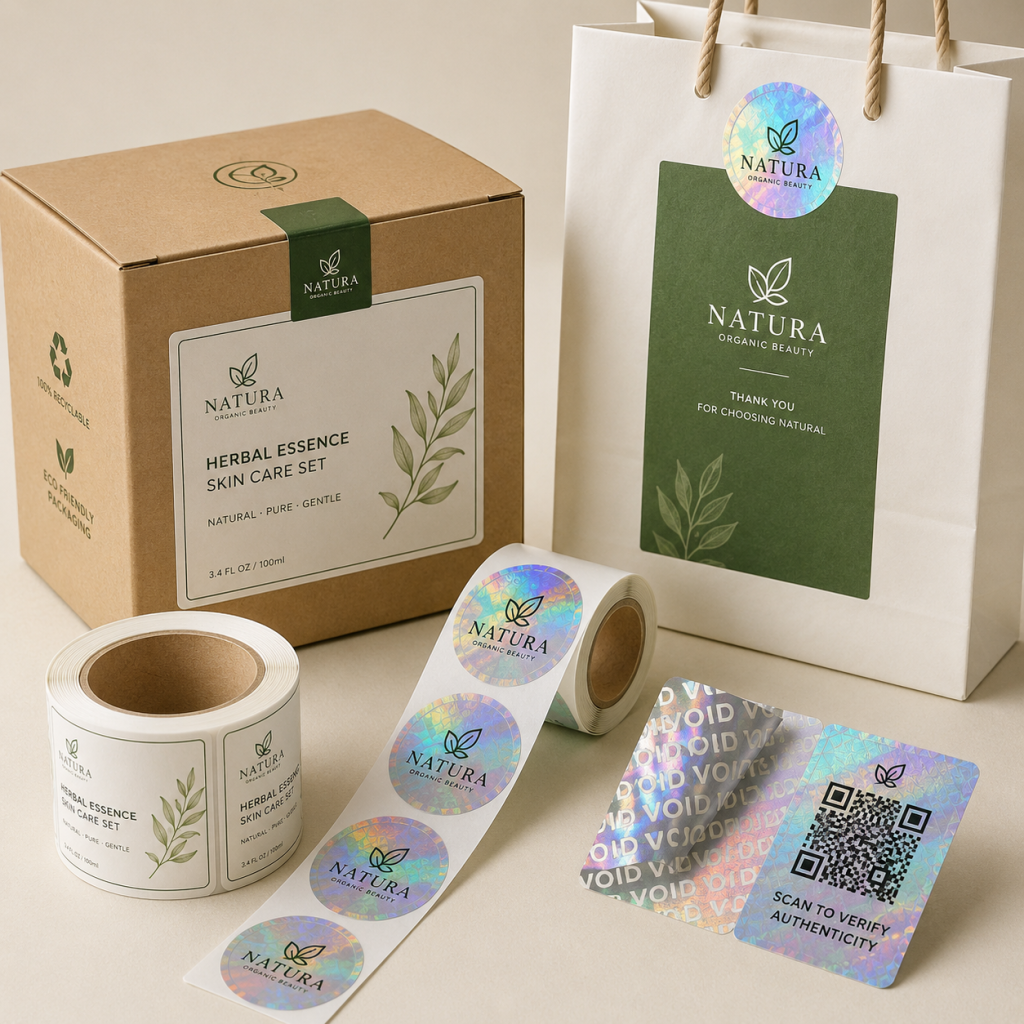
Between 2026 and 2027, more packaging regulation takes effect in the EU and US than in the previous decade combined. For brands and importers, “future of package printing” is no longer a trend essay — it is a compliance calendar with dates and penalties. This guide lays out what changes, when, and what each change means for how your boxes, labels, and bags are actually printed.
The 2026–2027 Compliance Timeline
| Regulation | Key dates | What changes on-pack |
|---|---|---|
| PPWR (EU Packaging & Packaging Waste Regulation) | In force; obligations phase in from Aug 2026 | Recyclability grades for all packaging incl. labels; minimum recycled content; label as separate component must not block recyclability |
| EUDR (EU Deforestation Regulation) | Large operators Dec 2026; small/mid Jun 2027 | Due-diligence statements for wood-fiber packaging (HS ch. 48); geolocation traceability for virgin fiber |
| US state EPR laws (OR, CA, CO, ME, MN, MD, WA) | Fees active and rising 2025–2027 | Eco-modulated fees by material; fiber-based and mono-material packaging earns lower fees |
| GS1 Sunrise 2027 | Retail POS transition through 2027 | 2D barcodes (QR/DataMatrix) scannable at checkout, replacing EAN/UPC-only |
PPWR: Recyclability Becomes a Graded Attribute
The PPWR pushes the EU toward grading every packaging format A–C for recyclability, with poorly recyclable formats facing market restrictions over time. For printing, two implications stand out. First, labels are assessed as part of the package: a recyclable bottle with a metallized label and incompatible adhesive can drag the whole unit’s grade down, so label material choice is now a packaging-engineering decision, not a design afterthought. Second, mono-material design wins: paper packaging with paper-based closures and water-based inks grades better than multi-layer composites. Ask your supplier for material declarations that feed your grading file — a sustainable packaging manufacturer should issue them routinely.
EUDR: Paper and Board Need Traceability
EUDR applies to wood-derived products including paper and paperboard packaging. In practice: if your cartons contain virgin fiber, your supply chain needs due-diligence statements and geolocation data for the timber source. Recycled fiber content significantly simplifies the burden. This is one of the top questions we now field from importers — and one of the strongest reasons to consolidate with a manufacturer who can document its board sources. Our guide to compliance documentation when sourcing from China covers the document set retailers actually ask for.
GS1 Sunrise 2027: Every Retail Pack Becomes a 2D Code Carrier
Point-of-sale systems worldwide are transitioning to 2D barcode scanning by 2027. Brands respond by adding QR codes carrying the GTIN, which lets one code serve checkout, traceability, and consumer content. Printing requirements are specific: the 2D code needs adequate size (typically ≥15–20mm for retail scanning), a clear quiet zone, and placement that survives the print process — lamination over a low-contrast code kills scannability. The convergence opportunity: a serialized QR code can carry both the GS1 data and unit-level authentication, which is exactly how anti-counterfeit QR labels and smart interactive packaging work.
Technology Trends That Matter (and One That Mostly Doesn’t)
Digital printing at scale: short-run, versioned, and serialized packaging is now a press-button reality — the enabling technology behind low-MOQ programs and market-test launches. Serialization infrastructure: cloud verification for every unit is standard practice in pharma and spreading to cosmetics and electronics; see the three-tier framework in the anti-counterfeit labeling guide. Security printing convergence: overt features, serialized data, and GS1 compliance are merging into single label constructions. And the one that mostly doesn’t matter yet: printed electronics and NFC-everything remain niche — QR codes cover 95% of interactive use cases at 1% of the cost.
Frequently Asked Questions
Does my packaging really need a 2D barcode by 2027?
If you sell through retail POS, plan for it. GS1’s Sunrise 2027 is the industry commitment date after which retailers can process 2D codes at checkout; major chains are already scanning them. The safest path is a QR carrying the GTIN plus your consumer content, printed to spec with tested scannability — not a photocopied code that fails the first scan audit.
When does EUDR actually apply to my paper packaging?
Large and medium operators must comply from December 30, 2026; micro and small enterprises from June 30, 2027. It applies to packaging containing wood fiber placed on the EU market, with obligations falling on the entity placing it on the market — which is typically you, the importer, not your factory. Start collecting due-diligence statements from your packaging supplier now; retrofitting documentation later is far harder.
Which single change saves the most compliance cost?
Mono-material, fiber-based packaging with documented recycled content. It scores well under PPWR grading, reduces US EPR eco-modulation fees, and simplifies EUDR evidence — one specification decision that pays in three regimes simultaneously.