
Send Your Inquiry Today
Custom Paper Bags: Sustainable Wholesale Packaging for Retail & Food Brands
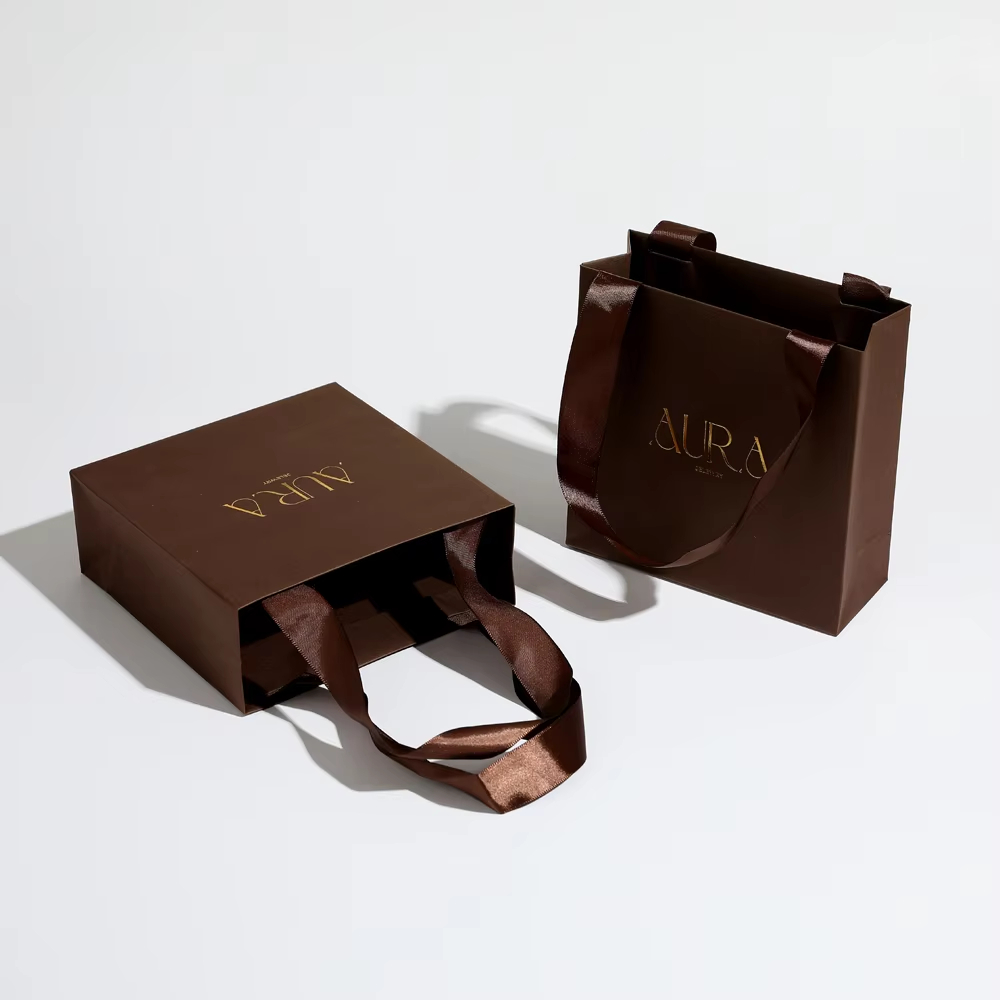
Ordering custom paper bags at wholesale is a specification exercise disguised as a simple purchase: get the size, GSM, handle, and print decisions right and the unit economics work; get them wrong and you pay for bags that tear, fade, or cost double what the design required. This guide covers the wholesale buying process for retail and food brands — the spec checklist, price structure, and the details that separate a bag program from a bag problem.
The Specification Checklist
| Spec item | Options | Decision driver |
|---|---|---|
| Size (W×H×gusset) | Matched to boxed product + 20–40mm headroom | Heaviest/largest item the bag carries |
| Paper & GSM | Brown/white kraft 120–170; art paper 170–250 | Load + brand look (see bag printing guide) |
| Handle | Twisted, flat tape, ribbon, die-cut | Weight class + positioning |
| Flexo 1–3 colors / full-color + lamination | Design complexity vs unit cost | |
| Food contact | Food-safe inks & board if carrying unpackaged food | Regulatory, not optional, for food service |
For food brands, the food-contact line is the one most often missed: a bag carrying loose bakery goods is a food-contact material and needs food-safe inks and board — the compliance framework is the same one covered in our food packaging guide.
Wholesale Price Structure
Paper bag pricing follows a classic setup-amortization curve. Bag-making lines run long: MOQ typically 1,000–3,000 per design, with the price curve breaking visibly at 5,000 and 10,000. Reference ranges at wholesale:
| Bag type | 3,000 units | 10,000 units |
|---|---|---|
| Kraft flexo 1–2 color, twisted handle | $0.18–$0.40 | $0.12–$0.28 |
| White kraft, flat tape handle | $0.20–$0.45 | $0.14–$0.32 |
| Art paper full-color + matte lamination | $0.55–$1.00 | $0.38–$0.70 |
| Luxury (250gsm+, ribbon handle, foil) | $0.90–$1.60 | $0.60–$1.10 |
Read the table as a shape, not gospel — sizes and freight shift it. The decision insight: printing economy is in color count, not paper. A one-color logo on 200gsm kraft can look more premium than four-color flood print, and it prices like the economy row.
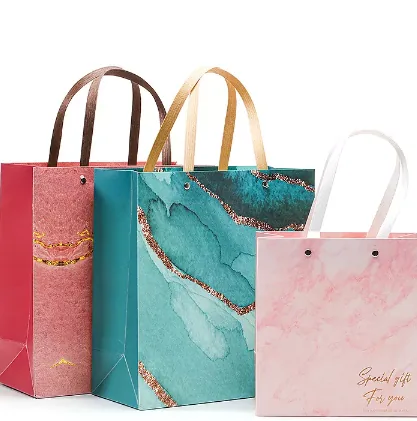
Lead Time and Reorder Discipline
Standard production runs 10–15 working days after golden-sample approval, plus 25–35 days ocean freight to US/EU (air freight in 5–8 days at a multiple of the cost). Two practices keep the program healthy: keep dies and print plates on file at the factory so reorders skip tooling cost and time; and approve a golden sample per design so reorder #3 matches order #1. When bags ship with boxes and labels from the same manufacturer, color stays consistent across every touchpoint and freight consolidates — the system logic is laid out in our packaging system guide.
Retail vs. Food Service Programs
Retail programs optimize for branding (heavier stock, better handles, print quality) and turn over slowly; food programs optimize for unit cost and throughput (lighter kraft, die-cut or flat handles, 1-color print) at high volume. Wine bags are their own niche — single-bottle kraft with divider inserts for gifting, double-bottle for retail; they pair naturally with boutique kraft bag programs. Luxury retail positioning on sustainable stocks is covered in the eco-luxury bag guide.
Frequently Asked Questions
Why do brands source custom paper bags from Chinese manufacturers?
Most wholesale volume is produced in China’s coastal packaging clusters, where bag forming, flexo and offset printing, handle twisting and QC sit under one roof. That integration is why a Chinese supplier can hold MOQ at 1,000–3,000 per design and quote a fraction of Western converter pricing. What protects you is process, not geography: a factory-direct partner like GV Printing runs in-house prepress, golden-sample approval per design, and export documentation for US/EU destinations.
Can I approve a pre-production sample before the bulk run?
Yes — and you should insist on it. The standard workflow is a golden sample produced 5–7 working days after artwork approval, express-shipped for sign-off; mass production starts only after your written approval, and reorder #3 must match order #1 against that same reference. Sample cost is typically credited against the bulk order.
What artwork files does a paper bag factory need?
Vector files (AI, PDF or EPS) at true size, fonts outlined, colours specified as Pantone or CMYK, with the factory’s dieline as the canvas. Mark handle direction and any foil or emboss areas on a separate layer. Photos or low-resolution JPGs need redrawing before printing, which adds days — send print-ready art and the schedule holds.
Which payment and shipping terms apply when importing paper bags from China?
Standard payment is 30% deposit with the balance before shipment; Trade Assurance or letters of credit cover larger first orders. Shipping is quoted FOB, CIF or DDP — ocean freight runs 25–35 days to US/EU, air 5–8 days at a multiple of the cost. Consolidating bags with boxes and labels from the same factory cuts freight and keeps colour consistent.
Are custom paper bags safe for direct food contact?
A bag carrying loose, unpackaged food is a food-contact material, so it needs food-safe inks and board — a regulatory requirement, not a marketing option. Ask for a PFAS-free barrier declaration alongside the food-contact statement; the compliance detail is the same framework covered in our food-contact takeaway bags.
Is paper really more sustainable than plastic for retail bags?
Over the full lifecycle, yes for most retail programs: paper is biodegradable, kerbside recyclable with paper handles, and made from a renewable fibre stream, while its production water and energy cost is offset by reuse and recycling at end of life. The claim only holds if the design stays mono-material — plastic lamination or non-paper handles pull the bag back toward mixed-material waste.
Kraft vs White vs Coated: Which Paper Grade Fits Your Brand
Three grades cover almost every retail paper bag programme, and the choice is a compromise between print quality, cost and how the bag reads on a shelf.
| Grade | Print result | Strength | Cost | Reads as |
|---|---|---|---|---|
| Virgin natural kraft | Muted; colours absorb 20–30% | High (long fibre) | Lowest | Eco, honest, artisan |
| Recycled brown kraft | Slightly fuzzy edges | 15–20% lower than virgin | Low | Sustainability-first |
| Bleached white kraft | Sharpest, photo-grade | Medium-high | +20–35% | Clean, clinical, premium food |
| Coated art paper (laminated) | Full CMYK, gloss or matt | Medium; coating cracks on fold | Highest | Luxury, fashion |
Kraft is the honest default. Kraft paper is made by a chemical pulping process that leaves long, strong fibres — which is why a kraft bag carries more weight at a lower gsm than a recycled equivalent, and why the natural brown has become a sustainability signal in its own right.
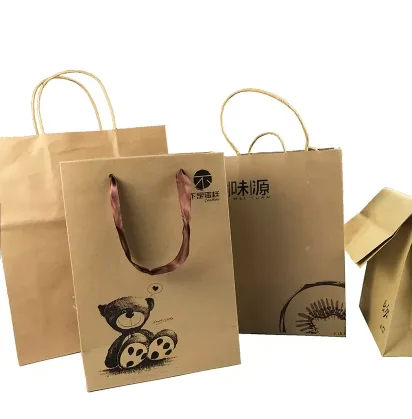
Recycled content costs you strength. Each trip through the pulper shortens the fibres. A bag made from high post-consumer content needs roughly 15–20% more gsm to carry the same load, or a reinforced handle patch. That is not a defect — it is the trade you accept for the claim.
Coating is where recyclability gets complicated. A plastic lamination gives you photographic print on a bag, and it also turns a repulpable fibre product into a mixed-material one. Under the EU Packaging and Packaging Waste Regulation, recyclability is assessed on the whole article, not just the base sheet. If you want gloss, ask for a water-based varnish or a dispersion coating rather than a film laminate.
2026 Compliance for Paper Bag Buyers: PPWR, PFAS and Green Claims
Three regulatory threads now touch a paper bag specification, and all three are documented at the point of order rather than at the point of sale.
PPWR — design for recycling. The EU’s Packaging and Packaging Waste Regulation moves from a directive to a regulation, which means it applies directly without national transposition. The practical effect for bags: recyclability is graded on the finished article, and design choices that impede fibre recovery — plastic laminates, non-paper handles, heavy foil coverage — work against the grade.
PFAS in food contact. Per- and polyfluoroalkyl substances were the standard grease-proofing treatment for paper food packaging. That has been unwound: the US FDA confirmed in February 2024 that PFAS-containing grease-proofing substances for paper and paperboard were no longer being sold for that use in the US market, and EU restrictions are tightening in parallel. If your bag touches food, ask for a PFAS-free barrier declaration, not just a “food safe” statement.
Green claims must be substantiated. The EU’s Green Claims Directive requires environmental claims — “recyclable”, “compostable”, “made from recycled content” — to be backed by evidence and independently verified. Two consequences for buyers: vague claims are now a liability, and a claim printed on a bag has to match the documentation you hold.
The document set to request. A food-contact declaration or compliance statement referencing the applicable framework, an FSC or PEFC chain-of-custody certificate number if you claim certified fibre, and a recycled-content percentage with its calculation basis. Certificates can be checked publicly — FSC certificate search — so there is no reason to accept a claim on trust. For grade selection and printing detail, see our kraft paper bag guide and our ultimate guide to paper bag printing.
Storage and Shelf Life: How Paper Bags Degrade Before Use
Paper is hygroscopic — it takes on and gives off moisture with the air around it. Bags that were perfect on arrival can arrive at a store creased, wavy or weaker than specified, and the cause is almost always storage rather than manufacture.
What happens in a humid warehouse. Board absorbs moisture and expands, mostly across the grain. Flat-packed bags stored loose can warp; glued seams can soften; and a bag that has taken on moisture loses carrying strength. Kraft bags are more tolerant than coated ones, but no paper product is immune.
What happens in a hot, dry one. The opposite failure: board dries out and becomes brittle, and hot-melt or PVA seams can craze. Bags stored near a heat source or in direct sun for months will crack at the fold when a customer picks them up.
The practical rules. Keep cartons sealed and off the floor, on a pallet, in a space that is dry and out of direct sun. Rotate stock first-in, first-out — paper packaging has a shelf life in practice if not in specification. And if your distribution includes a humid season, do not decant bags into open shelving weeks before use.
Order in sensible cycles. The temptation with a good price break is a year of bags in one delivery. If you do not have conditioned storage, two smaller orders land in better condition than one large one that sits. For low-volume programmes see our low-MOQ paper bag options.
Related Solutions
Explore more custom-printing guides from our team:
- Custom Corrugated Boxes for Ecommerce, Shipping, Food and Retail
- Food Packaging Solutions: Custom Printed Boxes for Food Brands, Restaurants & Takeaway Businesses
- Custom Packaging Labels for EU/US Brands: Materials, Printing & Trends
- Custom Paper Boxes for Food, Pizza and Candle Packaging
- Wholesale Packaging Boxes & Gift Paper Bags: MOQ and Bulk Pricing
- Eco-luxury paper bag packaging: rethinking sustainable in 2026
- Boutique kraft paper bags: what they are and why use them