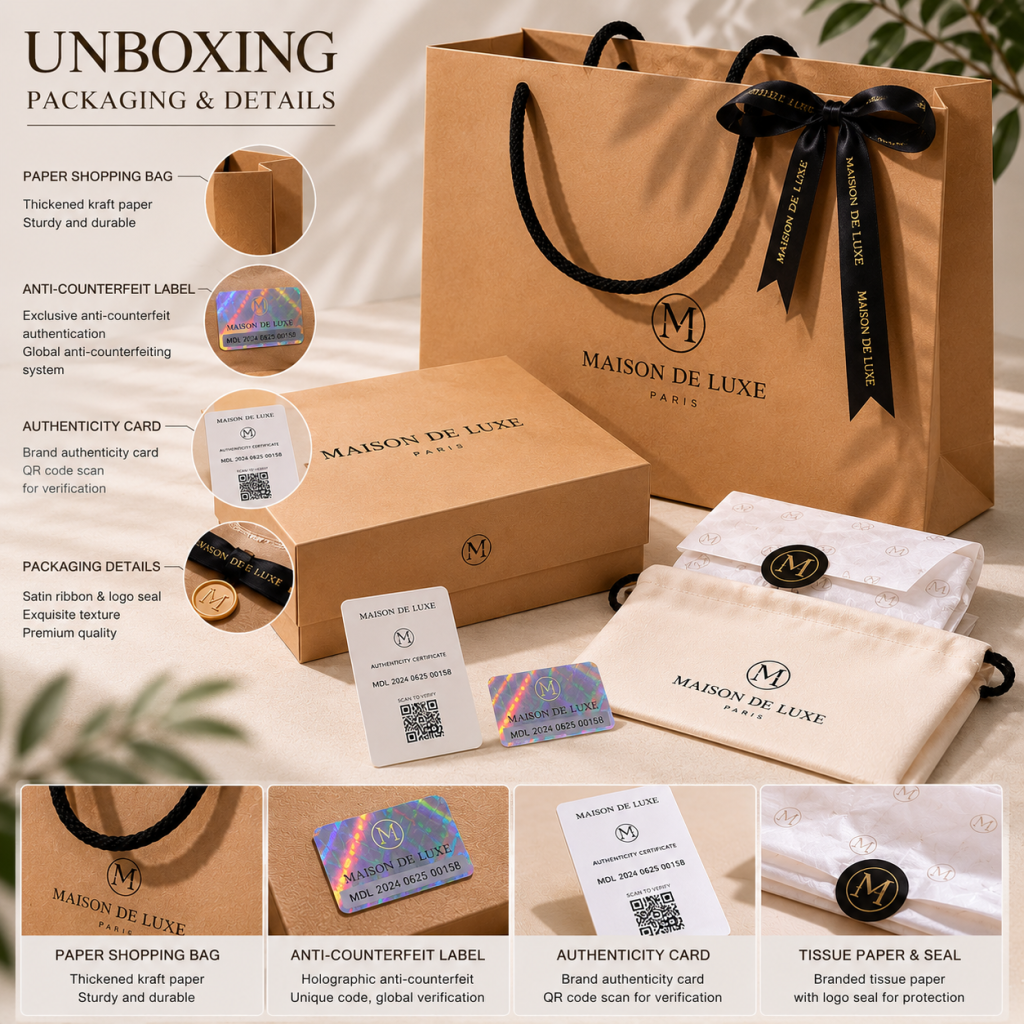
The Ultimate Guide to Custom Packaging: How Paper Box, Packaging Label, and Paper Bag Printing Elevate Your Brand
Every physical product brand makes the same three packaging decisions: what box protects and presents the product, what label identifies and certifies it, and what bag carries it out the door. Most articles treat these as separate purchases. In practice, brands that coordinate all three cut unit costs 10–20%, shorten lead times, and present a consistent identity from shelf to doorstep. This guide explains how the three decisions interact — and where money is typically wasted.
Think of Packaging as a System, Not Three Purchases
A product’s packaging system has three jobs: protect the product through shipping and handling, communicate the brand at the moment of first contact, and comply with the regulations of every market it enters. Each component does a different share of that work:
The system view matters because specification mistakes compound. A carton sized without measuring the labeled bottle runs tight at the filling line. A bag ordered in a GSM too light for the boxed product inside fails at the handle. Start with the product’s dimensions and weight, then specify outward.
Paper Boxes: Where the Money Goes
Box cost is driven by board grade, structural complexity, print process, and finishing. A digitally printed folding carton can start at 100–500 units for market testing; offset-printed runs typically start at 1,000–3,000. Before specifying, understand which box type fits your product — folding carton, corrugated, rigid, or mailer, because the wrong structure is the single most expensive packaging mistake. If you are evaluating suppliers, use a structured checklist rather than comparing quotes blindly.
Labels: Small Spend, Outsized Risk
Labels are usually the cheapest line item and the most regulated. A food or cosmetic label carries mandatory content, allergen and CLP declarations, and increasingly a 2D barcode under GS1 Sunrise 2027. Label failures are also the most common packaging complaint we see from buyers: labels that peel off plastic, fade in retail light, or fail wet-chain testing. Material selection — facestock plus adhesive matched to the container surface — solves most of this before printing begins. See our label materials guide for the full matrix.
Paper Bags: The Retail Handshake
A paper bag is the only packaging element customers voluntarily carry in public — it is a walking advertisement with a practical job. Specify by load: 120–150 GSM kraft handles light retail goods; 150–210 GSM suits boxed product; luxury boutiques typically run 210–250 GSM with ribbon or flat tape handles. Full specifications and wholesale pricing logic are covered in our custom paper bags buying guide.
Where Brands Waste Money
Four patterns repeat across the quotes we review: over-specifying board weight when a lighter flute would do; printing full-color flood coverage where one spot color plus foil carries more perceived value; ordering bags and boxes from separate factories and paying two sets of tooling and freight; and treating compliance documents as an afterthought, then paying rush fees when a retailer demands PPWR material declarations. Consolidating box, label, and bag production with one manufacturer eliminates the third and fourth problems entirely.
Frequently Asked Questions
How much does custom packaging cost for a small business?
For a complete system — printed box, label, and bag — small-batch programs (500–1,000 units) typically land between $0.80 and $3.00 per unit set depending on box structure and finishing. Unit costs fall sharply at 3,000–5,000 units as offset tooling amortizes. Request quotes at three quantity tiers so the price curve is visible before committing.
What is a realistic minimum order for a full packaging set?
Digital label printing starts around 500 labels with no plates; digitally printed cartons start around 100–300 units; custom paper bags usually start at 1,000–3,000 because bag-making lines run long. If your volumes are still small, low-MOQ packaging programs are designed exactly for this stage.
Should I source boxes, labels, and bags from one supplier?
When volumes justify it, yes. One factory coordinates color matching across all three (the same brand red on bag, box, and label), consolidates freight, and issues consistent compliance documentation. At very small volumes, specialized digital label shops can be cheaper for labels alone — keep the option open until your volume crosses roughly 5,000 labels per order.
One Supplier or Three? The Consolidation Decision
Boxes, labels and bags are three different production lines with three different tooling sets. Whether you buy them together or separately is a real decision with real trade-offs, and the right answer depends on where your risk actually sits.
The case for consolidating. Colour consistency across the three items is the strongest argument. A brand red matched on a folding carton, a label stock and a kraft bag by three different converters will not match — each one is matching to a different substrate with a different ink set and a different tolerance. One supplier running all three can match them to each other. You also get one sample cycle, one freight consolidation and one point of accountability when a launch date slips.
The case for splitting. Specialist capability. A converter whose core business is security labels will have origination, numbering and tamper-feature capability that a carton plant genuinely does not. If one component in your set is technically demanding — a serialized security label, a soft-touch rigid box — buy that one from the specialist and consolidate the rest.
The hidden cost of splitting. It is not unit price, it is coordination. Three sample cycles instead of one, three minimum order quantities to hit, and colour matching done by eye across suppliers. On a launch with a fixed date, that coordination cost is usually larger than any saving on unit price.
A workable middle path. Consolidate the items where colour and timing matter most — typically the carton and the label — and buy commodity items separately. Then insist on physical reference samples of every component held by the consolidating supplier, so future reorders are matched to a physical standard rather than to a PDF. Our custom packaging box and custom label programmes are run this way.
The Specification Sheet That Prevents a Bad Order
Most disappointing orders are not caused by bad suppliers. They are caused by an order that never said what was wanted. A one-page specification per component removes most of the ambiguity.
Structure. Finished dimensions (internal, not external), board or material grade with gsm, flute or caliper, and closure or assembly method.
Print. Process, number of colours, named Pantone references for anything brand-critical, and finishes with their position on the panel.
Compliance. Any food-contact, CLP, recycling or certification requirement, and the document you expect back — a declaration of compliance, a certificate number, a test report.
Quantity and timing. Order quantity, acceptable overrun or underrun, sample approval stage, and the date the goods must land.
What “approved” means. Say whether approval is on a digital proof, a hard proof, or a physical pre-production sample — and who signs. For anything with a structural risk or a brand-critical colour, a physical sample is the only approval that means anything. For the full picture across boxes, labels and bags, see our industry packaging guide.
What a Realistic Budget Looks Like for a Full Packaging Set
Brands budgeting a launch usually price the boxes and discover the rest later. A full set — carton, label, insert and bag — has a cost structure where the visible unit price is only part of the number.
Fixed costs dominate the first order. Plates, dies, origination for any hologram or foil tool, and sampling are one-time charges that do not scale with quantity. On a 500-unit first run they can represent a third or more of the invoice; on a 5,000-unit run they disappear into rounding. This is why the per-unit price quoted for a small first order looks so much worse than the price you see later — nothing changed except the denominator.
Unit cost falls in steps, not smoothly. Price breaks cluster at the quantities where a new press run, a larger sheet or a different process becomes efficient. The practical move is to ask for quotes at three quantities around your expected volume — you will often find that a modestly larger order costs less per unit by enough to justify the extra stock.
Budget the samples. A structural sample and a printed pre-production sample are two different things and you will likely want both. Budget for them as a line item, and budget for one round of corrections. Skipping sampling is the most expensive saving available in packaging.
Freight is not a detail. Packaging is bulky and light, so dimensional weight governs. A carton that packs flat and nests efficiently can beat a cheaper unit price on landed cost. Ask for carton dimensions and units per carton, not just a per-piece price.
A workable starting shape. For a small brand launching one product: a printed folding carton at 1,000–3,000 units, one or two colour labels at the same volume, and a stock or lightly printed bag. That combination keeps fixed costs recoverable while leaving room to correct the design on the second run. See our custom packaging box programme for quantity brackets.
Related Solutions
Explore more custom-printing guides from our team: