
Send Your Inquiry Today
Custom Hologram Stickers for Brand Protection: Security, Aesthetics, and EU Packaging Compliance
In an increasingly complex global supply chain, global brand owners, packaging engineers, and procurement managers face a daunting dual challenge: combating sophisticated product counterfeiting while satisfying rigorous international environmental regulations. Global commerce suffers over $1.8 trillion in losses annually due to illicit trade, grey market diversion, and fraud across consumer electronics, luxury goods, pharmaceuticals, and cosmetics.
Simultaneously, regulatory authorities in Europe and North America have placed sustainable packaging under intense scrutiny. The European Union’s landmark Packaging and Packaging Waste Regulation (PPWR) has fundamentally reshaped how brands design, specify, and recycle consumer packaging. In this new landscape, custom hologram stickers are no longer merely decorative visual accents. They have evolved into critical, multi-functional security instruments that verify product authenticity, elevate brand prestige, and satisfy strict sustainability mandates.
For the full specification checklist — origination, artwork layers, material options and MOQ — see our custom hologram sticker specification guide.
1. The Rise of Personalised Holographic Stickers in Global Brand Defense
For decades, companies relied on off-the-shelf, generic holographic labels to give their products an authentic appearance. However, in today’s anti-counterfeiting landscape, stock holographic patterns provide a false sense of security. Because generic patterns are freely available on open wholesale platforms, organized counterfeiters can easily source identical optical films to dress up fake merchandise.
This vulnerability has driven a industry-wide shift toward personalised holographic stickers. Unlike stock alternatives, bespoke holographic labels utilize custom optical master originations engineered through advanced electron-beam (e-beam) lithography, dot-matrix vector recording, or 3D kinetic optical synthesis.
[Generic Stock Patterns] ──> High Counterfeit Risk (Readily Available Online)
[Personalised Holograms] ──> E-Beam Lithography + Custom Master + Covert Micro-Text (Bank-Grade Security)
Custom origination allows brands to embed unique visual signatures directly into the holographic matrix. These features include:
- Custom Optical Images & Brand Logos: Multi-channel 2D/3D depth layers that morph dynamically when viewed at different angles.
- Covert Micro-Text & Nano-Text: Text features measuring down to 5 microns that remain invisible to the naked eye and require specialized 50x magnification loops for verification.
- Kinetic Guilloche Patterns: High-density interlocking optical line structures that cannot be reproduced using standard high-resolution digital scanners or printers.
From a marketing perspective, bespoke holography triggers a strong psychological response during the unboxing experience. In Western retail markets, high-end consumers associate dynamic optical light diffraction with quality, craftsmanship, and verified origin. Personalization bridges the gap between functional security and luxury brand aesthetics.
2. How Security Stickers and Security Labels Combat Global Counterfeiting
Product counterfeiting extends far beyond simple physical knockoffs; it manifests as grey market diversion, unauthorized channel distribution, and warranty fraud. To establish an impenetrable defense across international logistics networks, brands deploy security stickers to monitor, authenticate, and control their physical inventory.
The modern anti-counterfeiting architecture relies on a “hybrid security model” that marries physical optical protection with digital track-and-trace infrastructure.
       ┌─────────────────────────────────────────────────────────────┐
       │                HYBRID SECURITY ARCHITECTURE                 │
       ├──────────────────────────────┬──────────────────────────────┤
       │     Physical Optical Layer   │     Digital Tracking Layer   │
       ├──────────────────────────────┼──────────────────────────────┤
       │ • 3D Holographic Matrix      │ • Serialized QR / DataMatrix │
       │ • Micro-Text & UV Inks       │ • Encrypted Cloud Database   │
       │ • Tamper-Evident Substrate   │ • Real-time Scan Verification│
       └──────────────────────────────┴──────────────────────────────┘
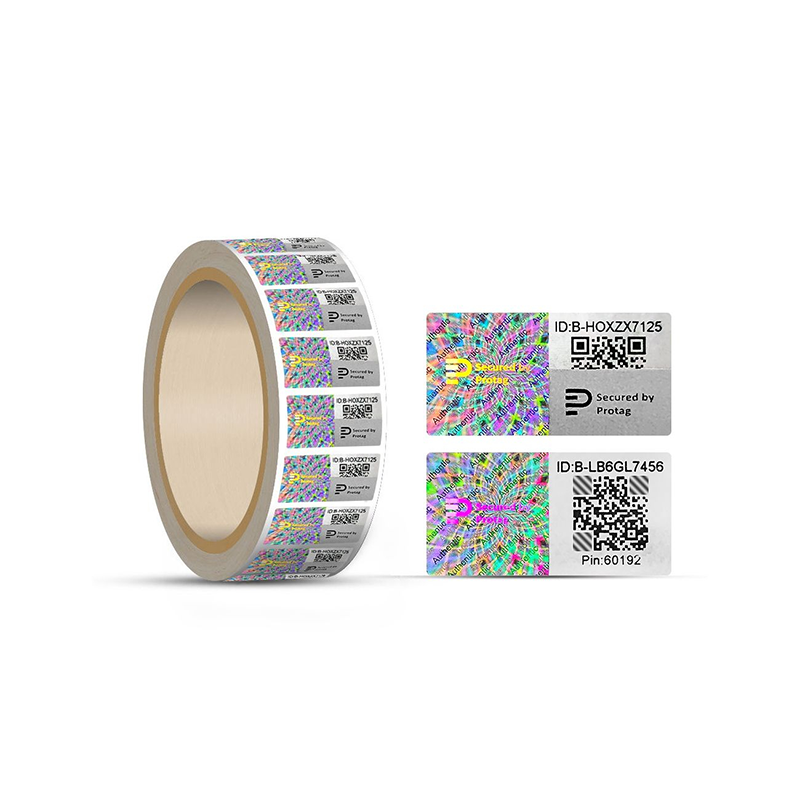
By printing unique, serialized 2D DataMatrix codes or encrypted QR codes directly onto high-security labels, companies create a digital twin for every physical SKU. When a package travels from factory floor to distributor warehouse to retail shelf, field inspectors or consumers can scan the code with a smartphone. The cloud platform verifies the digital signature while the inspector visually confirms the physical, uncopyable holographic film surrounding the code.
Furthermore, applying specialized security labels over carton flaps, bottle closures, and structural seams effectively thwarts grey market diversion. If a distributor attempts to erase batch codes or repackage goods for unauthorized regions, the compromised security label leaves visible evidence of tampering, protecting the brand’s global pricing structure and legal standing.
3. Maximum Protection: Integrating Tamper Resistant Stickers and Advanced Sticker Hologram Tech
Physical security is only as strong as its weakest link. If a holographic label can be peeled off a genuine package using hot air or solvents and re-applied to a counterfeit box, the security system fails completely. This is where tamper resistant stickers provide an indispensable physical safeguard.
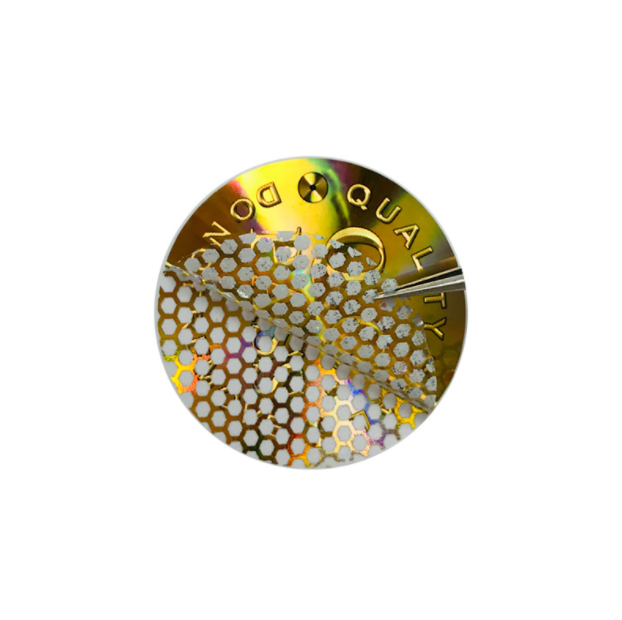
Tamper-evident technology relies on precision adhesive engineering combined with friable film chemistry. When an unauthorized user attempts to lift the label, the mechanical bond of the adhesive to the container substrate proves stronger than the internal cohesive strength of the label film itself. This results in predictable, controlled destruction:
- VOID Pattern / Custom Residue Release: The film splits horizontally, leaving behind a bold “VOID,” “OPENED,” or custom corporate logo on the container while destroying the holographic image on the lifted film.
- Ultra-Destructible Substrates (Fragile Vinyl): The label shatters into tiny, eggshell-like fragments upon the slightest lift attempt, making clean removal impossible.
- Non-Residue Tamper-Evident Film: Ideal for reusable packaging or luxury surfaces, the label shows internal delamination (showing a hidden VOID message inside the sticker) without leaving sticky residue on the product surface.
Unmodified Seal  ──> [ Layer 1: Holographic Film ] - [ Layer 2: VOID Pattern ] - [ Layer 3: Adhesive ]
Attempted Peel   ──> [ Lifted Top Layer ] + [ Permanent "VOID" Pattern Left on Package Substrate ]
Integrating a custom sticker hologram onto a tamper-evident substrate creates a dual-layer security barrier. The optical hologram provides visual proof of origin, while the tamper-evident backing prevents illicit transfer.
In the pharmaceutical and healthcare sectors, this combination is a legal necessity. Under the European Union’s Falsified Medicines Directive (Directive 2011/62/EU)
, prescription drug packaging distributed across EU member states must feature mandatory Anti-Tampering Devices (ATD). Custom tamper-evident holographic seals directly satisfy these regulatory requirements, ensuring patient safety and legal compliance.
4. Premium Aesthetics Meets Precision: Modern Hologram Prints and Holographic Stickers
While security engineers prioritize tamper resistance and micro-text, brand directors focus heavily on visual impact, color fidelity, and shelf presence. Historically, brand managers worried that adding industrial security labels would detract from sophisticated packaging artwork. Advances in hybrid printing technology have completely eliminated this compromise.
Modern high-precision hologram prints seamlessly blend traditional print processes—such as high-definition flexography, digital offset, and screen printing—with metallic holographic foil embossing.
┌───────────────────────────────────────────────────────────┐
│              HYBRID PRINTING LAYER STRUCTURE              │
├───────────────────────────────────────────────────────────┤
│ 1. Anti-Scratch Protective UV Varnish / Gloss Laminate   │
├───────────────────────────────────────────────────────────┤
│ 2. High-Definition Opaque Inks & Spot UV Brand Colors     │
├───────────────────────────────────────────────────────────┤
│ 3. Custom Embossed Holographic Diffraction Matrix         │
├───────────────────────────────────────────────────────────┤
│ 4. Tamper-Evident Release Layer / Substrate               │
├───────────────────────────────────────────────────────────┤
│ 5. High-Tack / Wash-off Pressure-Sensitive Adhesive      │
└───────────────────────────────────────────────────────────┘
By applying localized spot-white underlays, print engineers can obscure the reflective rainbow effect behind corporate text and solid logos, allowing exact Pantone color matching. Meanwhile, adjacent transparent or metallic areas burst into dynamic diffraction patterns as ambient light shifts.
Applying premium holographic stickers across various consumer touchpoints yields distinct commercial benefits:
- E-Commerce Unboxing Elevation: DTC (Direct-to-Consumer) luxury brands use holographic seals on exterior mailer boxes to build anticipation and project premium value before the box is even opened.
- Retail Shelf Differentiation: In crowded retail environments like cosmetics aisles or craft spirit displays, light-diffracting labels catch consumer eyes faster than flat pressure-sensitive paper labels.
- Durability in Harsh Environments: Premium holographic labels feature protective top-coats (such as anti-scratch matte or gloss UV varnishes) that protect surface optics from abrasion, chemical spills, and moisture during long-distance maritime shipping.
5. Material Engineering: Optimizing Holographic Vinyl for High-Performance Stickers Holographic
Selecting the right raw material substrate determines whether a security label will survive its lifecycle. In industrial environments involving moisture, temperature swings, and mechanical abrasion, holographic vinyl (polyvinyl chloride and flexible polymeric films) remains a workhorse material choice.
Holographic vinyl provides exceptional tear resistance, dimensional stability, and conformability over curved surfaces such as glass bottles, plastic tubes, and aluminum cans.
| Material Feature | Standard Paper Labels | Rigid PET Holographic Film | Flexible Holographic Vinyl |
| Water & Moisture Resistance | Poor (Disintegrates) | Excellent | Superior |
| Conformability over Curves | Moderate | Poor (Prone to flagging) | Excellent (Zero memory effect) |
| Tamper-Evident Capability | Low | High (with specialized coating) | High (Ultra-destructible options) |
| Outdoor UV Stability | Unsuitable | 1–2 Years | 3–5 Years (Industrial Grade) |
| High-Speed Auto-Labeling | High | High | High (Requires precise tension control) |
When engineering stickers holographic for automated, high-speed production lines, material converters must fine-tune physical specifications:
- Liner Release Tension: The silicone release liner must peel away effortlessly at application speeds exceeding 300 units per minute without tearing or causing label misregistration.
- Adhesive Tack & Viscosity: Formulations must adapt to specific application surfaces, including low-surface-energy (LSE) plastics like polyethylene (PE) and polypropylene (PP), textured cardboard, or cold glass containers.
- Thermal Resistance: Labels applied in warm manufacturing environments must maintain geometric stability without adhesive bleed or shrinkage.
6. Navigating EU PPWR Standards: Eco-Friendly Rules for Custom Hologram Stickers
The global packaging industry faces its most radical transformation in decades due to sweeping environmental legislation passed in the European Union. The official adoption of Regulation (EU) 2025/40 on Packaging and Packaging Waste (PPWR)
replaces older directives, mandating that all packaging placed on the EU market must be recyclable by design (Design for Recycling – DfR), with strict enforcement timeline benchmarks phasing in through 2030 and 2040.
Under the PPWR framework, labels and security stickers are not evaluated in isolation; they are assessed as integral components of the total packaging unit. If a non-recyclable plastic label or permanent adhesive contaminates a paper box recycling pulper or a PET bottle wash-line, the entire package risks receiving a failing Recyclability Performance Grade, subjecting the brand to severe Extended Producer Responsibility (EPR) financial penalties or outright market access restriction.
                               EU PPWR COMPLIANCE MATRIX

 [Traditional Non-Compliant Label]          [PPWR-Compliant Holographic Label]
  • Heavy Metallic Foils                     • Reduced Ultra-Thin PET Foil Gauge
  • Permanent Cross-Linked Glue              • Alkali Wash-Off Hot-Melt Adhesive
  • Contaminates PET Flake Stream           • Detaches Cleanly at 60–85°C
  ──> Result: Grade C/F (EPR Penalty)       ──> Result: Grade A (Full Circularity)
To help multinational brand owners navigate these stringent rules, label manufacturers must align custom hologram sticker specifications with the latest RecyClass Packaging Design for Recycling Guidelines
. Key engineering strategies include:
Frequently Asked Questions
What actually makes a hologram sticker hard to counterfeit?
The barrier is the master origination. We create a custom holographic master with 3D depth, microtext and hidden features, then emboss it onto foil — the master never circulates in the open market, so a copy needs the same master and embossing tooling. On top of that we can add serialized QR codes for a second layer of verification that a street copy cannot reproduce.
How does EU PPWR affect custom hologram labels?
PPWR pushes packaging toward less plastic and easier recyclability. For holographic labels we recommend a mono-material PET or PP construction instead of multi-layer laminates, and we die-cut to the actual shape to cut waste. We do not claim forestry certification (we do not hold FSC), but we will work with you on a recyclability assessment for your label structure and help you document it.
Can you add serialized QR codes onto a hologram label?
Yes. We print or inkjet a unique code on the holographic layer so every unit is individually identifiable, and it can point to your verification backend — we can supply a reference architecture and integrate with a VOID tamper feature so opening destroys the code. The database and app side is typically owned by you or built with our guidance.
What is the difference between overt, covert and forensic security?
Overt features are visible to the eye (the hologram, a VOID message). Covert features need a tool — UV ink, infrared marks. Forensic features need a lab — chemical or DNA tags. For most brand-protection programs we combine overt plus serialization; covert and forensic layers are added where the risk or product value justifies the cost.
What is the minimum order and lead time for a custom hologram?
Holograms need master origination, which is a one-time setup, so the first order includes tooling time. After that, repeats are faster. We price by roll and the MOQ is usually modest; we will send a real holographic proof so you can confirm the effect before the production run. With 20+ years in holographic printing we keep the schedule predictable.