
Send Your Inquiry Today
Tamper Evident Seals for Product Security, Brand Protection and Retail Packaging
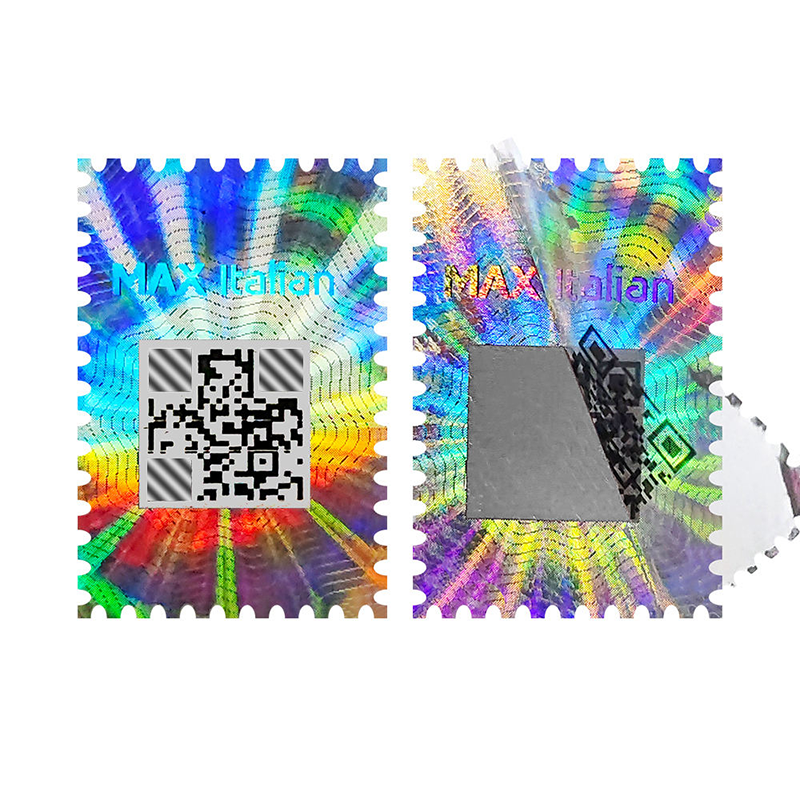
A security label has a simple job: make it clear when a package has been opened or interfered with.
For EU shipments, check our PPWR labelling requirements checklist: what must appear on the pack from 12 August 2026, and what only bites in 2028 and 2030.
For brands selling through distributors, retailers and e-commerce channels, that simple function can become important. A carton may pass through several warehouses before reaching the customer. A skincare box may be opened in a retail environment. An electronic product may be returned, resealed and placed back into inventory. In each case, the package needs a way to show whether its original closure has been disturbed.
This is where tamper evident seals are used.
Unlike conventional decorative stickers, tamper evident seals are designed to show visible evidence of opening. Depending on the construction, the seal may reveal a VOID message, break apart, leave residue, separate into layers or display another irreversible change.
For European and US brands, however, security is only one part of the packaging discussion. Material selection, environmental claims, recyclability and packaging waste are receiving greater attention from procurement teams. The EU’s Packaging and Packaging Waste Regulation (PPWR), for example, applies from August 12, 2026 and establishes requirements covering packaging placed on the EU market. The official EU Packaging and Packaging Waste Regulation (PPWR) is therefore becoming an important reference point for packaging development and sourcing.
What Are Tamper Evident Seals and How Do They Protect Products?
Tamper evident seals are labels or closures designed to provide visible evidence when someone attempts to open or remove them.
The security effect can be created in several ways. A VOID label may reveal a hidden message after removal. A destructible label may break into small pieces, making it difficult to remove in one piece. Other constructions can leave adhesive residue or expose a secondary pattern when the seal is disturbed.
Typical constructions include:
- VOID security labels
- Destructible labels
- Residue-forming seals
- Pattern-reveal labels
- Layer-separation labels
- Serialized security labels
- Holographic security labels
- Barcode and QR code security labels
The right construction depends on the packaging surface, adhesive requirement, opening method and expected handling conditions.
A folding carton, for example, may require a small seal across the opening flap. A plastic container may require a different adhesive system. A high-value electronics package may combine tamper evidence with serialization or barcode identification.
The purpose is not to claim that a package can never be opened. The more practical function is to make unauthorized opening visible and difficult to conceal.
Tamper Proof Stickers vs. Tamper Resistant Stickers: What Is the Difference?
The terms tamper proof stickers, tamper evident seals and tamper resistant stickers appear frequently in packaging and security-label searches, but they should not automatically be treated as identical products.
Tamper evident labels focus on detection. The label changes when somebody attempts to remove or open it.
Tamper resistant stickers generally aim to increase the difficulty of unauthorized removal or interference.
Tamper proof stickers is a common commercial search term, but manufacturers should be careful with absolute wording. No adhesive label should be presented as an unlimited guarantee against tampering.
For B2B purchasing, it is more useful to define the actual security mechanism:
- Does the label reveal VOID text?
- Does it leave residue?
- Does the material destruct?
- Does it contain a holographic feature?
- Does it carry a unique serial number?
- Can the barcode or QR code be verified?
Those specifications give purchasing teams a much clearer basis for comparing suppliers.
Holographic Vinyl and Holographic Stickers for Brand Protection
Security labels do not have to look purely functional.
Holographic vinyl can add a visual authentication layer to packaging while also supporting a premium appearance. Depending on the material and printing process, holographic effects can include rainbow patterns, geometric structures, custom logos, micro-patterns and other optical effects.
This makes holographic stickers particularly useful for brands that want security and visual identity to work together.
For example, a skincare brand could place a custom holographic seal across the opening flap of a cosmetic carton. The label would identify the brand visually while also showing whether the carton has been opened.
Holographic effects can also be combined with other security features rather than used alone. A label might contain a custom holographic background, printed serial number and QR code in the same production run.
For brands concerned about counterfeiting, this layered approach is often more useful than relying on one visible feature.
Tamper Evident Seals for Cosmetics and Skincare Packaging
Cosmetics and skincare are strong applications for tamper evident packaging because products often move through retailers, distributors, warehouses and direct-to-consumer channels.
Typical products include:
- Facial cream cartons
- Serum boxes
- Foundation boxes
- Lipstick packaging
- Perfume boxes
- Skincare gift sets
- Cosmetic jars
- Beauty product bottles
- Haircare packaging
- Personal care kits
For folding cartons, a tamper evident seal can be positioned across the opening flap. For jars and bottles, the label construction needs to match the surface and closure design.
Premium beauty brands can also use personalised holographic stickers with their logo, brand pattern or custom security graphic.
The advantage is straightforward: the security label becomes part of the packaging design instead of looking like a generic warning sticker.
Tamper Evident Seals for Pharmaceuticals and Healthcare Products
Healthcare packaging places greater emphasis on package integrity and controlled handling.
Potential applications include:
- Medicine cartons
- OTC healthcare products
- Medical device boxes
- Diagnostic kits
- Supplement containers
- First-aid kits
- Healthcare product boxes
Tamper evident seals can provide a visible indication that the original package has been opened. For products requiring identification or traceability, the seal can also carry batch numbers, serial numbers, barcodes or QR codes.
The security label itself does not replace applicable pharmaceutical, medical-device, food-contact or labeling requirements. Instead, it forms one component of the overall packaging system.
For manufacturers, this means the label specification should be developed around the customer’s actual product, packaging surface and regulatory requirements rather than selecting a standard label simply because it looks suitable.
Tamper Evident Seals for Electronics and High-Value Products
Electronics and other high-value goods are another practical application.
Products may include:
- Smartphones and accessories
- Headphones
- Chargers
- Computer components
- Smart devices
- Consumer electronics
- Electronic accessories
- Replacement parts
In these applications, the security label can combine tamper evidence with product identification.
For example, a carton seal may contain a unique serial number and security barcode label. The barcode identifies the product or batch, while the tamper evident construction indicates whether the package has been disturbed.
This creates three useful functions:
Product identification + Traceability + Tamper detection
For brands operating through multiple distributors, that combination can make inventory and packaging control easier.
Tamper Evident Seals for Food and Beverage Packaging
Food and beverage packaging has a different set of requirements, so security labels need to be selected according to the actual packaging construction and intended use.
Applications can include:
- Coffee boxes
- Tea packaging
- Specialty food cartons
- Confectionery boxes
- Supplement packaging
- Jar seals
- Bottle labels
- Premium food gift boxes
Here, tamper evident seals are primarily about package integrity. The customer should be able to identify whether the original closure has been disturbed.
Material claims also require careful consideration.
A label being made from a particular substrate does not automatically make the complete package recyclable or environmentally preferable. Brands should evaluate the complete packaging structure and make environmental claims based on the actual product configuration.
This is particularly relevant in the US. The FTC Green Guides on Environmental Marketing Claims are designed to help marketers avoid environmental claims that could mislead consumers. For packaging companies, that means terms such as “eco-friendly,” “recyclable” or “sustainable” should not be used as broad marketing language without appropriate substantiation.
Tamper Evident Seals for Luxury Goods and Brand Protection
Luxury packaging requires a balance between security and presentation.
Common applications include:
- Jewelry boxes
- Watch packaging
- Premium cosmetics
- Designer accessories
- Collectible products
- Limited-edition packaging
- Premium consumer goods
A large industrial-looking security label may not suit this type of packaging.
Instead, a small custom holographic seal can incorporate the brand logo, pattern or other visual identifier. Custom die-cutting can also produce shapes that match the packaging design.
For brands dealing with counterfeit risks, holographic effects can be combined with serial numbers, QR codes or other identification features to create multiple levels of product authentication.
Security Tags for Retail and E-commerce Packaging
Retail security involves more than preventing shoplifting.
Security tags for retail can refer to electronic article surveillance systems, physical anti-theft tags and packaging security labels. Tamper evident seals serve a different function: they show whether the package itself has been opened or interfered with.
They are useful for:
- Retail cartons
- E-commerce packaging
- Subscription boxes
- Electronics
- Cosmetics
- Premium consumer products
- Warranty packaging
Anti Theft Tags vs. Tamper Evident Seals
Anti theft tags are primarily designed to deter or detect unauthorized removal of merchandise.
Tamper evident seals are designed to show whether packaging has been opened.
The two can therefore be used together. A retailer may use an anti-theft system in the store while a tamper evident seal protects the package during transportation, storage and delivery.
For e-commerce, this distinction is particularly useful because the package can pass through several hands before reaching the customer.
Personalised Holographic Stickers for Custom Brand Security
Brands that want security features to match their packaging can use personalised holographic stickers.
Depending on the project, customization can include:
- Brand logo
- Custom holographic pattern
- Serial number
- QR code
- Barcode
- Micro-text
- Custom shape
- Variable data
- Security background
Labels can also be produced in different formats, including individual pieces, sheets and rolls.
For a B2B project, customization should start with the packaging rather than the artwork alone. The label size, substrate, adhesive, application surface and opening direction all affect the final construction.
Security Barcode Labels for Tracking and Authentication
Security barcode labels become more valuable when a brand needs both physical security and product identification.
Depending on the customer’s system, a label can include:
- EAN
- UPC
- Code 128
- QR codes
- Serial numbers
- Batch numbers
- Product IDs
A barcode can support inventory identification, while the tamper evident structure provides evidence of package interference.
For distributors and retailers, this can simplify product tracking without requiring a separate identification label and security seal.
Sticker Hologram and Custom Holographic Security Effects
The phrase sticker hologram is often used by buyers searching for holographic security labels, but the actual construction can vary.
A custom label may use holographic film, printed security graphics, metallic effects or other optical structures.
The correct solution depends on the purpose of the label.
If the priority is brand presentation, a strong visual holographic effect may be appropriate. If authentication is more important, a custom pattern or serialized design may be more suitable. If tamper detection is the main requirement, the holographic layer can be combined with a destructible or VOID construction.
The security effect should therefore be selected before final artwork is approved.
How Tamper Evident Seals Are Manufactured for B2B Orders
As a direct manufacturer, we develop tamper evident seals according to the application rather than treating them as standard promotional stickers.
The production process starts with material selection. Depending on the project, options can include PET, PP, vinyl, holographic substrates and other security materials.
Adhesive selection comes next. Permanent adhesive, destructible adhesive, VOID constructions and residue-forming systems behave differently on different surfaces.
The printing stage can include CMYK graphics, spot colors, barcodes, QR codes, serial numbers and variable data.
After printing, precision die cutting creates the required label size and shape. For B2B production, quality inspection can cover print registration, die-cut accuracy, barcode readability, adhesive consistency and batch-to-batch appearance.
This approach is especially important for brands ordering security labels in bulk because inconsistent label construction can create problems during automated or manual application.
Packaging Compliance Is Becoming Part of Material Selection
Packaging security is increasingly being discussed alongside packaging sustainability.
For European buyers, the EU Packaging and Packaging Waste Regulation (EU) 2025/40 applies from August 12, 2026. The regulation covers packaging and packaging waste and introduces requirements related to packaging manufacturing, composition, waste prevention and recoverability. The EU’s own guidance confirms the August 12, 2026 application date. (EUR-Lex)
This does not mean that every tamper evident seal has to use one universal material. Instead, packaging teams need to understand how the security label fits into the complete package and what documentation or environmental claims may be required for the finished packaging.
The same principle applies in the United States, where requirements can vary by state.
California’s SB 54 Packaging Extended Producer Responsibility Program establishes an EPR framework for covered packaging and single-use plastic food service ware. California’s permanent SB 54 regulations became effective on May 1, 2026. (CalRecycle Home Page)
For packaging buyers, the practical takeaway is not simply to ask whether a label is “green.” It is to ask what material it uses, how it is produced, how it interacts with the primary package and what evidence supports any environmental claim.
Why Choose a Direct Manufacturer for Tamper Evident Seals?
Direct factory sourcing gives B2B buyers more control over the technical specification.
Instead of choosing from a fixed catalog, buyers can define:
- Label material
- Adhesive type
- Tamper evident construction
- Holographic effect
- Label size
- Shape
- Printing method
- Barcode or QR code
- Variable data
- Roll or sheet format
- Packaging format
- Production quantity
This also allows the security label to be developed around the customer’s actual packaging.
For example, a cosmetics company may need a small holographic seal for a folding carton, while an electronics manufacturer may need a serialized destructible label with barcode printing. Both are tamper evident products, but the manufacturing specifications are completely different.
As a direct manufacturer, we can work from the packaging structure, artwork and security requirements to develop the appropriate label construction for B2B production.
How Tamper Proof Stickers Actually Fail: The Four Working Mechanisms
A tamper seal only works if it fails on purpose. The engineering goal is simple: the label must show visible, irreversible evidence the moment someone tries to remove, lift or reapply it. Manufacturers achieve this through four proven mechanisms, and choosing among them is the single most important specification decision on a security label order.
1. Destructible facestock. Vinyl or paper engineered to fragment into small pieces the instant someone attempts to peel it. The label cannot be removed in one piece, so it cannot be reapplied to a counterfeit unit. This is the standard for electronics serial seals, warranty stickers and pharma cartons.
2. VOID release patterns. The adhesive layer splits deliberately: removing the label leaves the word “VOID” (or a custom message, or a checkerboard pattern) on the product surface and on the label itself. VOID labels are popular because tampering is self-evident to any consumer, with zero explanation needed.
3. High-tack adhesives. The adhesive bonds more strongly to the application surface than to the label film, so the label essentially self-destructs before it lets go. Combined with frangible facestocks, this makes clean removal practically impossible without solvents — which themselves leave visible traces.
4. Serialisation and variable data. Sequential numbers, barcodes or QR codes printed per unit let you trace exactly which unit was sealed, when and on which production line — the mechanism behind QR-based authentication labels. Serialization converts a passive seal into an audit trail.
The commercial logic is hard to argue with. The OECD and EUIPO estimate counterfeit goods in global trade at roughly USD 467 billion, expanding from luxury goods into automotive parts, medicines, cosmetics and food — categories where a fake is a safety incident, not just a revenue loss. Against that exposure, a roll of engineered security labels costs a fraction of a single recall or brand-damaging incident, and unlike cameras or RFID, needs no power, software or staff monitoring to do its job.
Matching the Seal to the Risk Level
| Seal type | How it shows tampering | Best fit | Relative cost |
|---|---|---|---|
| Standard tamper proof sticker (destructible) | Facestock fragments on removal | Electronics, warranty, serial seals | Low |
| VOID sticker (full or checkerboard release) | “VOID” message left on surface | Cosmetics jars, pharma cartons, retail | Low–medium |
| Holographic VOID seal | Hologram distorts + VOID residue | Luxury goods, supplements, high-risk SKUs | Medium |
| Serialized / QR security label | Audit trail + digital verification | Pharma, licensing, track-and-trace programs | Medium–high |
Rule of thumb: match the seal value to the unit value. A $15 candle jar needs a VOID sticker; a $150 serum or a medicine carton deserves serialization. For help translating these options into a quotation, use our security label quote guide, and for the production side, see how security labels are made inside the factory.
Tamper Evident Seals FAQs
Are tamper evident seals the same as tamper proof stickers?
Not exactly. Tamper evident seals are designed to show evidence of opening or interference. “Tamper proof” is commonly used as a commercial search term, but it should not be interpreted as an absolute guarantee that a package cannot be opened.
Can tamper evident seals be customised with a logo?
Yes. Logos, brand graphics, serial numbers, QR codes, barcodes and custom holographic patterns can be incorporated depending on the selected material and security construction.
Can holographic vinyl be used for security labels?
Yes. Holographic vinyl and other holographic substrates can be used when visual authentication and brand presentation are important.
Can security barcode labels include QR codes?
Yes. QR codes, barcodes, serial numbers and batch information can be integrated into many custom security label constructions.
What industries use tamper evident seals?
Common applications include cosmetics, skincare, healthcare, electronics, food and beverage, luxury goods, retail and e-commerce.
Can I order custom tamper evident seals in bulk?
Yes. Custom sizes, materials, adhesives, security effects, printing and packaging formats can be developed for B2B production orders.
The most effective security label is not necessarily the most complicated one. It is the one that matches the product, packaging surface, distribution environment and security objective.
For brands selling in Europe and the United States, that decision increasingly needs to consider both product protection and packaging responsibility. A well-designed tamper evident seal can provide visible opening detection, support product identification and reinforce brand protection while remaining part of a properly specified packaging system.
Tamper-Evident Formats Compared
Each format leaves a different kind of evidence. Choose based on what should happen when someone tries to open the pack, and on the surface the label has to stick to.
| Format | Evidence left after tampering | Residue on surface | Best for | Relative cost |
|---|---|---|---|---|
| VOID label | VOID or custom message appears on the label and substrate | Low to medium | Warranty seals, electronics, cartons | Low |
| Destructible / fragile film | Label breaks into small fragments, cannot be reapplied | Low | High-value retail, cosmetics, medicine | Low |
| Full transfer | Adhesive fully transfers and leaves a permanent VOID pattern | High | Luxury goods, tax stamps, sealed documents | Medium |
| Non-transfer | Shows tamper evidence without transferring adhesive | None | Aviation parts, industrial equipment | Medium |
| Tamper-evident seal strip | OPEN or VOID reveals when the strip is torn | Low | Courier bags, duty-free bags, postal security | Low |
Material and Adhesive Specifications
| Parameter | Available options |
|---|---|
| Face stock | Destructible film, PET, vinyl, fragile paper, holographic film |
| Adhesive | Permanent, high-tack, full-transfer, non-transfer, removable |
| Substrate compatibility | Carton, plastic, metal, glass, flexible film, coated board |
| Security add-ons | Serial number, QR code, barcode, hologram, hidden image, UV ink |
| Supply format | Roll for automatic application, sheet for manual use |
| Finishing | Matte or gloss varnish, protective overlaminate, custom die-cut |
Frequently Asked Questions
What is the difference between tamper-evident and tamper-proof?
Tamper-evident does not physically stop someone opening the pack. It makes the opening obvious by leaving a visible mark such as a VOID message, broken film or transferred adhesive.
What does VOID mean on a security label?
When the label is lifted, a hidden layer separates and the word VOID, or a custom message, appears on both the label and the surface. The pattern cannot be reversed or reassembled.
Will tamper-evident labels damage my product surface?
Depends on the format. Non-transfer labels leave no adhesive residue and suit surfaces that must stay clean. Full-transfer labels deliberately leave a permanent pattern and are used where the mark itself is the proof.
Can these seals be applied by machine?
Yes. Seal strips and roll-format labels are supplied wound for automatic applicators, with roll direction and core size matched to your equipment.
What surfaces do they adhere to?
Standard permanent adhesive suits carton, coated board, glass and most plastics. For flexible film, curved containers or low-energy plastics we recommend a high-tack or conformable adhesive.