
Send Your Inquiry Today
Custom Printed Labels for Bottles, Food, Cosmetics and Cleaning Products
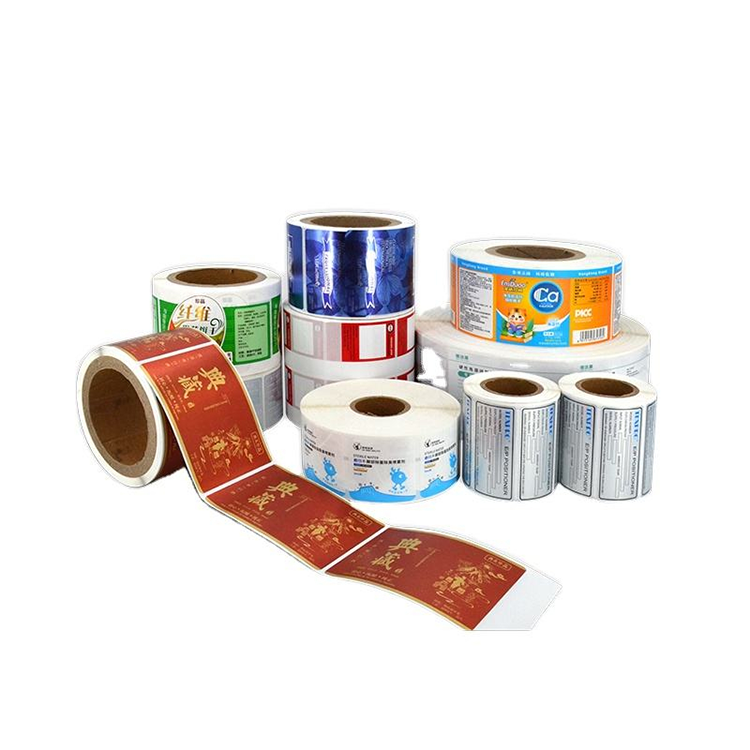
A product label has to survive more than a photo shoot. It gets squeezed in the shower, wiped down at the checkout counter, refrigerated overnight, or dragged through an automatic applicator at 300 labels a minute. The synthetic film that performs on a curved shampoo bottle can lift within a week on a chilled glass jar. So before locking in artwork, it’s worth working backward from where the label will actually live — on the shelf, in the fridge, or in someone’s wet hand.
For EU shipments, check our PPWR labelling requirements checklist: what must appear on the pack from 12 August 2026, and what only bites in 2028 and 2030.
This guide walks through the label materials and finishes that tend to work for bottled products, food, cosmetics, candles, household products and retail packaging. It’s meant as a starting reference for brand teams and buyers preparing a custom label RFQ — not a substitute for testing on the real container.
Planning a new label? Send Gervin Printing the container material, label size, artwork, quantity, application method and destination market through the contact form. Material, adhesive, print route, sampling and production schedule get confirmed against the actual spec, not a generic template
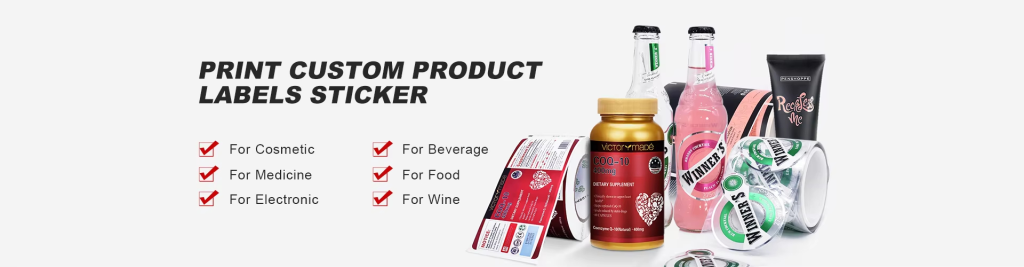
Custom Bottle Labels for Shampoo, Body Wash and Cleaning Products
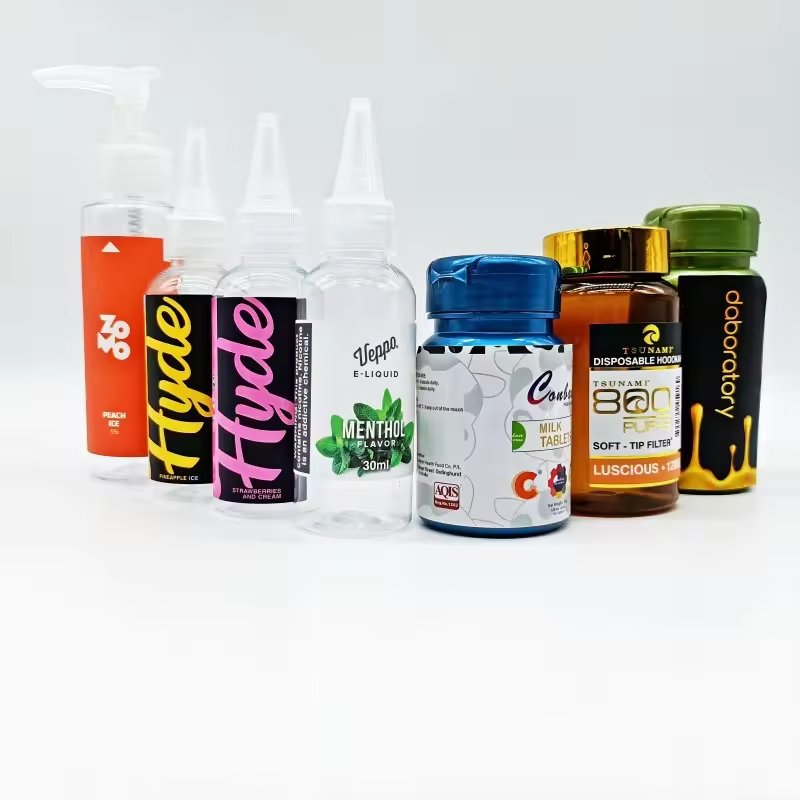
Shampoo, conditioner, body wash, hand soap, dishwashing liquid and laundry detergent share a rough environment: wet surfaces, curved bottles, and constant contact with oils and surfactants. A label that looks fine dry can start lifting at the seam within days once it’s used in an actual shower.
Synthetic label stock paired with a permanent or oil-based adhesive is usually the sensible starting point here. Whether that ends up being synthetic paper, PP, PE or PVC comes down to the bottle surface and how the product gets stored — Gervin Printing checks this against the container before recommending anything. A gloss or matte film can add scuff resistance, but film alone won’t fix a bond that fails on the actual plastic.
Worth checking before approving bottle labels:
- Bottle material — PET, HDPE, PP or glass
- Surface texture — smooth, textured, squeezable or tapered
- Label coverage relative to bottle size
- Storage environment — shower, fridge, warehouse, outdoors
- Handling conditions — wiped, squeezed, applied with wet hands
- Application method — hand-applied or automatic applicator
Moving the same artwork from a rigid glass bottle to a flexible plastic one often means changing the label construction entirely. The material decision should follow the product and its handling conditions, not the design file.
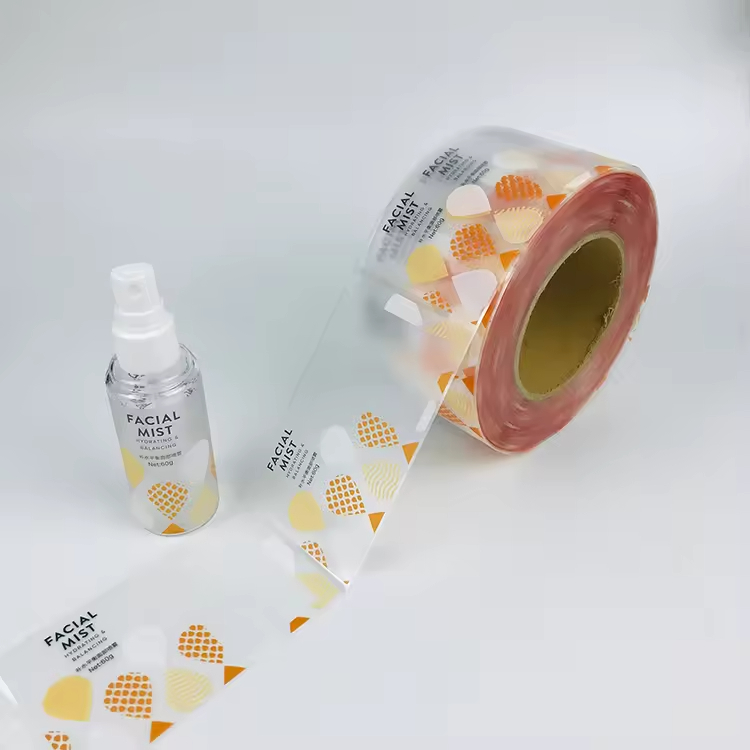
Waterproof Product Labels for Bottles and Jars
“Waterproof” without a defined exposure level is a spec that means nothing. A bottle sitting in a bathroom cabinet, a jar chilling in an ice bucket, and a cleaning-product bottle parked next to a sink all face different amounts of moisture — and calling for the wrong grade of “waterproof” material is one of the more common RFQ mistakes.
Water resistance is really a combination of face material, adhesive, ink and surface protection working together. Synthetic paper or film — BOPP/PP, PE or PVC — is the usual answer. Clear film keeps a no-label look on transparent packaging; white film gives a solid print background that makes small text easier to read; PE tends to work better on flexible or squeezable containers, similar to the adhesive testing methods outlined by the Pressure Sensitive Tape Council (PSTC).
Ask for an application sample before committing to production if the label needs to withstand:
- Condensation or splashes
- Oil, lotion or greasy handling
- Repeated wiping
- Refrigeration or temperature swings
- Contact with household cleaning liquids
- A curved or low-surface-energy plastic
Apply the sample to the actual container and check it after the relevant exposure — not just the front face while it’s still sitting on the release liner. Corners and edges fail first.
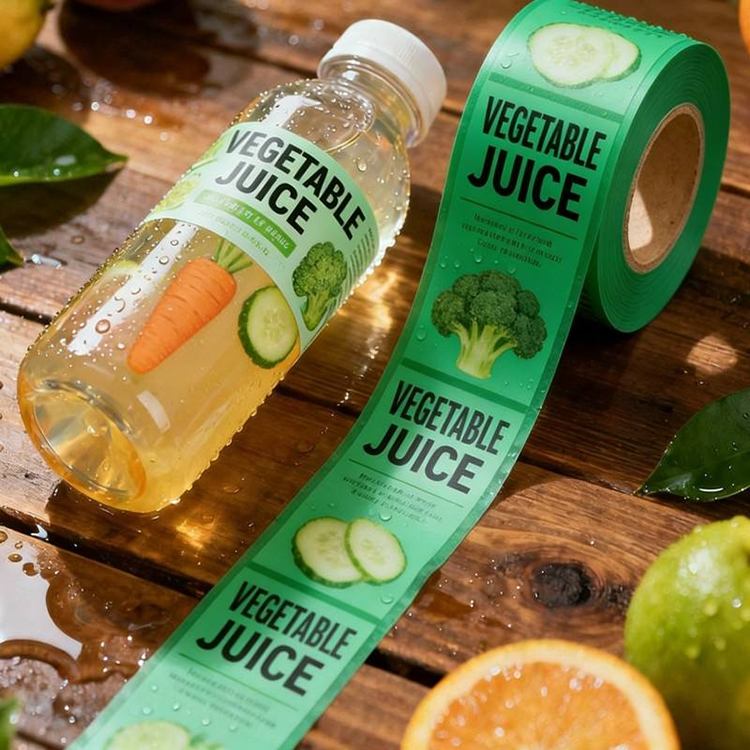
Custom Cosmetic Labels for Personal-Care Products
Cosmetic packaging has to look premium and survive daily handling at the same time. Serum bottles, creams, lotions, essential oils, lip balm, perfume and bath products show up on glass, coated plastic, metal and flexible packaging — and the label has to sit flat on all of them while still leaving room for ingredients, directions, warnings and batch codes required under regimes like the EU Cosmetics Regulation (EC) No 1223/2009.
Common starting points:
- Clear film for a minimal, transparent-bottle look
- White PP for bright color and strong contrast
- Metallic silver or gold for a premium shelf presence
- Pearlescent paper or film for a soft reflective finish
- Coated or kraft paper where the product stays dry and paper texture fits the brand
Cosmetic labels also need a plan for variable data upfront. Batch codes, shade names, scent variants and language versions can be printed during production or added afterward — either way, leave a clean, flat area for them so a barcode doesn’t end up straddling a crease or a heavily textured surface.
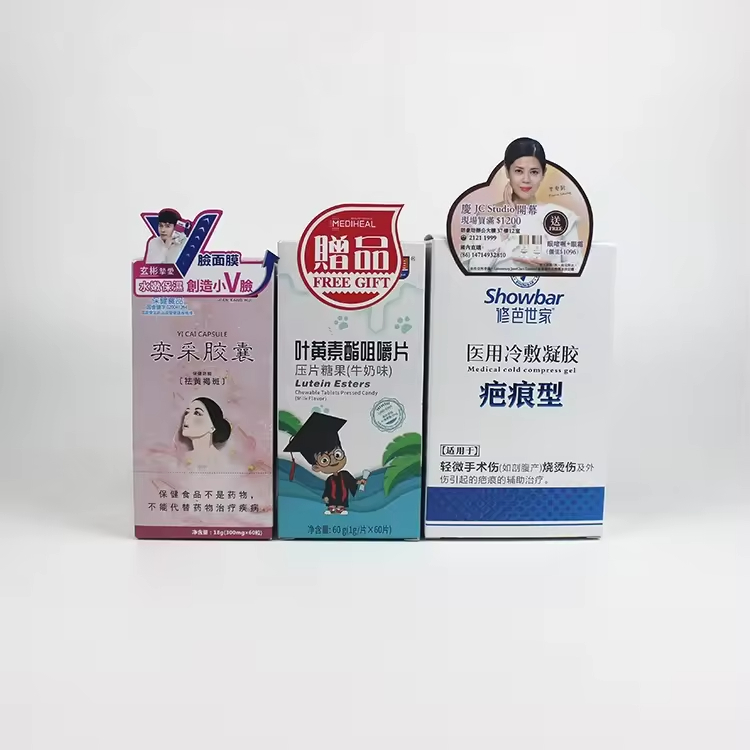
Custom Food Labels and Beverage Product Label Printing
A dry snack, a chilled drink, a sauce jar and a frozen product don’t ask the same thing of a label. Treating them as one category is where a lot of food-label projects go wrong.
Coated paper works well and stays economical for dry products. Synthetic paper or film comes in once the container will be chilled, exposed to condensation, or handled wet. Glass jars and bottles can run clear, white or metallic materials depending on the shelf look the brand wants.
Before ordering food labels, confirm:
- Primary or secondary packaging
- Container material and surface treatment
- Storage temperature and expected condensation
- Required product info, barcode and batch-code space
- Clean removal vs. permanent attachment
- Destination-market labeling requirements
Food-contact suitability depends on the full packaging system — face stock, adhesive, ink, coating and intended use together, in line with frameworks such as the FDA’s guidance on food contact substances. A generic “food safe” claim on a spec sheet isn’t documentation — ask for project-specific paperwork.
Labels for Candles, Jars and Home Products
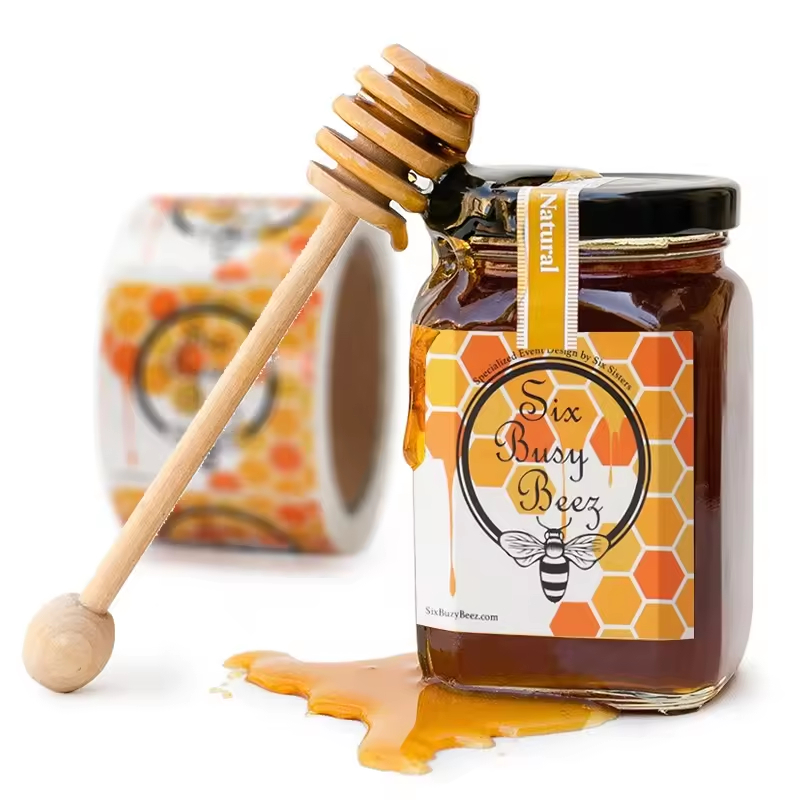
Candle labels, room-fragrance labels, honey and jam jar labels tend to have more design freedom, but the container conditions still matter — wax residue, oil, dust and glass curvature all affect how well a label holds up over the product’s shelf life.
Kraft paper suits a natural or handmade presentation. Matte paper reads as quiet and premium. Clear film lets the glass or liquid color show through the artwork. Metallic and pearlescent stocks add shelf visibility without needing a more complex box structure.
For small containers like candle jars, corner geometry matters more than people expect — very tight corners on a small label are genuinely harder to die-cut and apply consistently. A rounded rectangle with a generous corner radius usually looks better and runs more reliably on the production line.
Choosing Material by Container Surface
The right material is the one that performs on the actual container in the actual application route — this table is a starting point for an RFQ, not a substitute for a sample test.
| Material | Strengths | Typical applications | Main question to confirm |
|---|---|---|---|
| Coated paper | Smooth print surface, efficient cost | Dry foods, cartons, candles, general retail | Will moisture or oil reach the label? |
| Synthetic paper | Paper look with better moisture resistance | Toiletries, household products, damp environments | Is exposure high enough to require film instead? |
| White PP/BOPP film | Waterproof, strong contrast, scuff-resistant | Shampoo, body wash, cleaning products, beverages | Does the adhesive suit the container and its curve? |
| Clear PP/BOPP film | Transparent, clean visual effect | Clear bottles, cosmetics, drinks, glass jars | Will bubbles, bottle tint or application speed be an issue? |
| PE film | Flexible face, follows soft/squeezable containers | Flexible toiletry and household bottles | How much stretch and compression will the bottle see? |
| PVC or vinyl film | Durable, selected special-purpose use | High-durability labels | Does it meet destination-market environmental rules? |
| Kraft paper | Natural, uncoated texture | Organic products, candles, coffee, handmade goods | Will the label stay dry and flat in use? |
| Metallic or pearlescent stock | Reflective, decorative shelf appeal | Cosmetics, fragrance, wine, gift products | Do small text and codes stay legible on the surface? |
Gervin Printing can also review removable materials, transparent constructions, silver films and laser-effect stocks when a project calls for them.
Adhesive Selection for Plastic, Glass and Curved Bottles
Adhesive is part of the label spec, not an afterthought bolted on at the end. A face material can be perfect for a wet environment and still fail if the adhesive doesn’t bond to that specific plastic.
Permanent adhesive — including oil-based options — is the usual choice for bottles and jars needing a firm bond through normal handling. Removable adhesive works for temporary promotions or information that needs clean removal later. Low-surface-energy plastics like some PP and HDPE containers often need an adhesive selected specifically for that surface; test methods for this are covered in standards such as ASTM D3330 for peel adhesion.
On a curved or tapered bottle, check the label after it’s actually applied, not on a flat test sheet. Corners, leading edge and trailing edge fail first. Large solid-color labels also make lifting or scuffing more visible, so material and artwork should be reviewed together rather than approved separately.
Print Route and Finish
The print route follows the label material, artwork, quantity, number of versions and finish — Gervin Printing matches equipment and process to the confirmed order rather than running everything through one method.
Digital printing suits short or changing runs, multiple SKUs, and artwork that needs quick revision — useful for producing several scent, flavor or size variants without treating each one as its own production run.
Flexographic printing suits repeat production, bold graphics and roll-label work — a common choice when the design leans on strong brand colors, large coverage areas or a stable SKU lineup.
Foil, UV and protective films — hot foil, UV effects, embossing, gloss or matte film, scratch-resistant film — should serve a purpose: highlighting a logo, separating information, improving rub resistance, or adding a tactile brand cue. A protective film helps against water and handling, but it protects the ink, not the bond — a weak adhesive still needs its own fix.
Roll Labels or Sheet Labels?
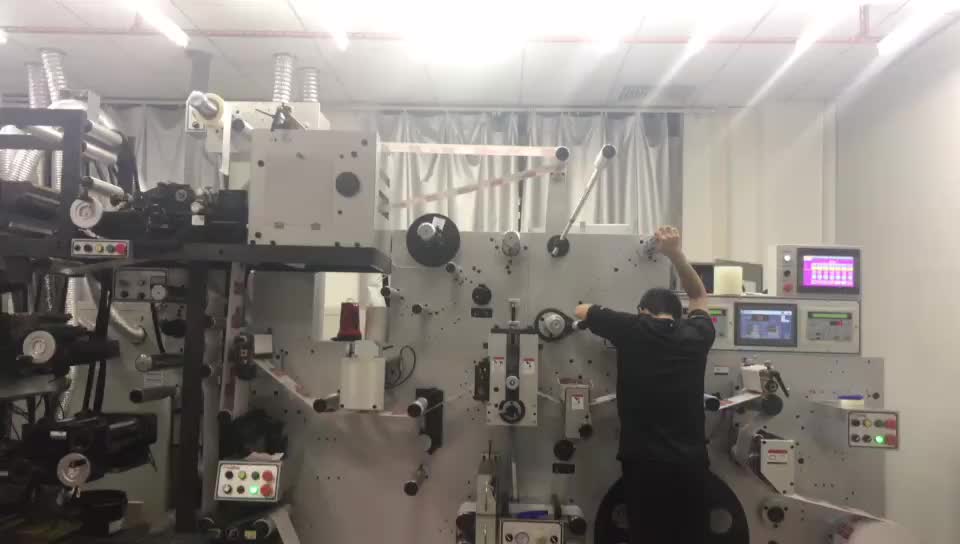
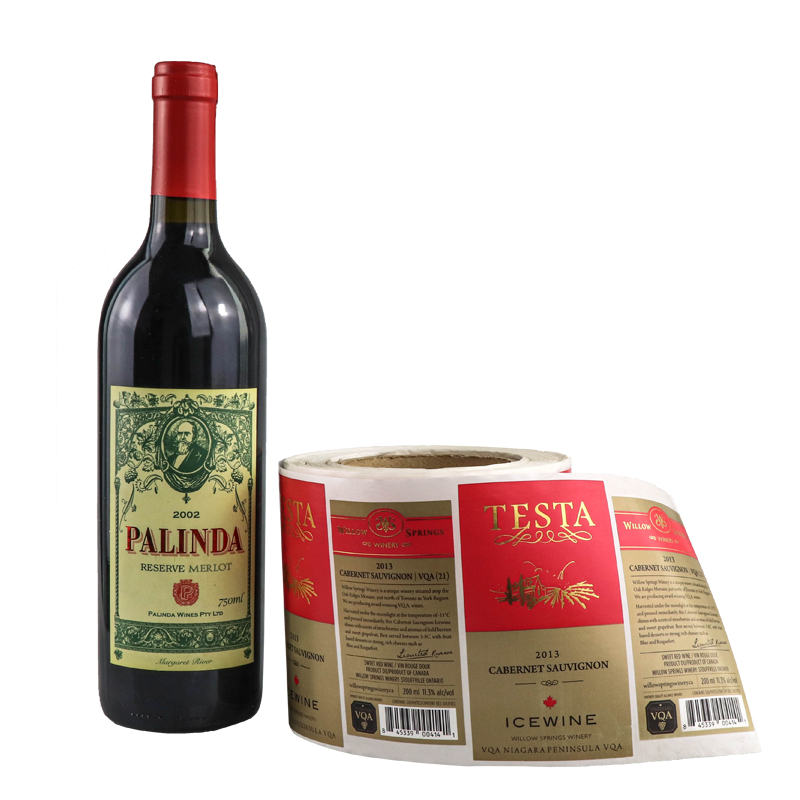
Roll labels fit an automatic applicator, continuous application, or compact storage. State the core size, unwind direction, label gap, outside roll diameter (if relevant), labels per roll and applicator requirements in the RFQ.
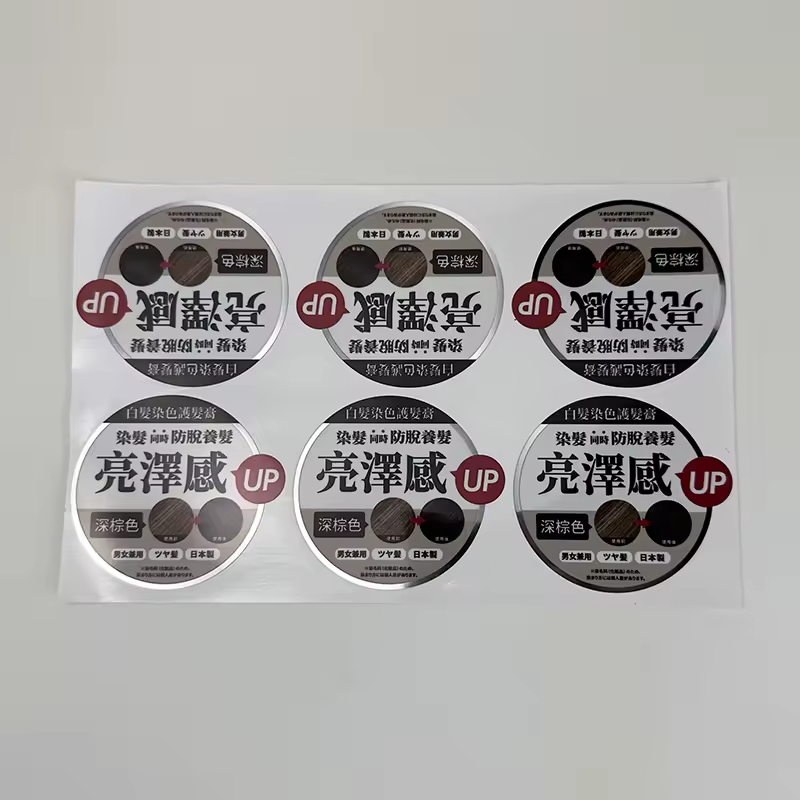
Sheet labels work for hand application, small batches, sampling, or products that don’t suit a roll applicator. Confirm sheet size, label layout and separation before production.
Don’t pick roll or sheet format from the artwork alone — a label that runs fine by hand may need a different gap, direction or liner once it’s on an automatic line.
Artwork and Variable-Data Requirements
Send final artwork in AI, CDR or PDF with the finished dieline and a 3mm bleed where required. Keep text, logos and barcodes clear of the cut line. If multiple SKUs share one die, mark the differences clearly and keep file naming consistent.
Flag these upfront if they apply:
- Barcodes or QR codes
- Batch numbers, expiry dates, serial data
- Multiple languages
- Small reversed text
- White ink under transparent artwork
- Metallic effects or spot colors
- Variable sizes, scents, flavors or claims
For roll labels, include label orientation, core dimension, count per roll and application direction — these affect the dieline, inspection process and packing method.
Sampling and Quality Checks Before Production
A useful sample should answer the questions that actually matter for the finished product:
- Does the label sit flat on the container without wrinkles or edge lift?
- Does the adhesive bond to the real plastic or glass surface?
- Does the print stay clear after realistic handling and exposure?
- Do the barcode, QR code and variable fields scan and read correctly?
- Does the finish match what was approved?
- Does the roll or sheet format run through the actual packing process?
For shampoo, body wash and cleaning-product labels, apply the sample to the real bottle and check it after moisture, wiping and normal handling. For food and beverage labels, run it through the intended cold or humid storage condition. For automatic application, test a representative roll on the actual line settings — not just a hand-applied sample.
MOQ, Lead Time and Shipping
Because labels are made to a specific size, material, artwork, finish, quantity and delivery format, MOQ, sampling, production schedule and shipping method get confirmed per order. A quotation can shift if the SKU count, roll spec, adhesive, finishing process or destination changes.
For a comparable quotation, provide:
- Finished label size and shape
- Container material, diameter or surface description
- Label material preference, if already tested
- Adhesive and removability requirement
- Print colors, coverage and finish
- Quantity by SKU
- Roll or sheet format
- Automatic or manual application method
- Artwork and variable-data requirements
- Destination market, packaging and delivery requirements
- Sampling purpose and approval timing
See the custom label solutions guide for more background on material choices and printing considerations.
Common Label Problems and How to Prevent Them
The label lifts from the bottle — usually an adhesive mismatch, condensation, oil on the surface, excessive curvature, or not enough application pressure. Test on the real container and define storage/handling conditions before mass production.
The label wrinkles or tunnels — happens when face material, adhesive, liner and container curve don’t work together, or the label was applied too fast. Check dimensions, corner shape, application direction and machine settings.
Print scuffs or loses contrast — ink, coating, film and handling route all play a role. A protective film may help, but test the full construction after realistic rubbing, moisture or chemical exposure.
Color doesn’t match the screen — screens aren’t a production color standard. Agree on reference color, material, print process and acceptable variation before approval; different face stocks shift how the same artwork reads.
Barcode or QR code won’t scan — check print contrast, quiet zone, size, distortion, surface texture and where it lands on the container. Don’t place codes over folds, heavy metallic effects or a sharply curved area without testing first — GS1’s barcode quality guidelines are a useful reference here.
Request Custom Printed Labels from Gervin Printing
The right label starts with the container, not the artwork file. A shampoo bottle, a dishwashing-liquid bottle, a sauce jar, a candle glass and a dry-food pouch can all need different face materials, adhesives and finishes even at the same label size.
Send Gervin Printing the product details, container information, label dimensions, artwork, quantity, application method and destination market — the label construction, printing and finishing get reviewed against the actual project, not a generic recommendation.
For security and authentication requirements, see the custom security label options. For a quotation or application review, use the Gervin Printing contact page.
Frequently Asked Questions
Which label material works best on a curved or squeezable bottle?
We match the substrate to the container. For rigid PET or glass bottles we typically run BOPP or clear PP film — it stays flat on tight curves and resists moisture. For squeezable tubes and soft bottles we use a softer PP that flexes without lifting at the edges. On small-radius curves we also switch to a higher-tack adhesive and a thinner face stock so the label conforms instead of bridging.
Do food and cosmetic bottle labels need special compliance?
Yes, and we plan for it at the material stage. Where a label sits near a food or cosmetic contact surface we select adhesives and films that meet the relevant food-contact frameworks (for example FDA 21 CFR and EU 10/2011 for indirect contact, and EU 1223/2009 for cosmetic labelling information). We can supply a material compliance declaration from the film and adhesive mills — note this is a food-contact compliance statement, not a forestry (FSC) claim, which we do not hold.
Should I order roll or sheet labels for my filling line?
It depends on how you apply them. If you run an automatic labelling machine, roll labels are the right choice — we format the roll to your core diameter, unwind direction and gap so it feeds cleanly, and we set die-cut waste removal and tension for stable dispensing. For hand-apply or short runs, sheet labels are simpler. Tell us your applicator model and we will set the roll spec before production.
How do you keep a small run of many SKUs affordable?
We combine SKUs onto shared print layouts and use digital or flexo printing depending on the run size, then apply variable data (serial numbers, batch codes, QR) by digital print or inkjet. Because the material is priced by roll width, multi-SKU jobs on one roll cut both setup and material cost. We also print a real-material proof so you can confirm adhesion before the full run.
Will the label survive refrigeration, humidity or alcohol wipes?
We specify for the actual environment. For cold-chain and refrigerated bottles we use a frost-resistant adhesive; for wet or condensation-prone areas we run waterproof PP or synthetic paper; where labels get wiped with alcohol or sanitizer we add a solvent-resistant varnish or lamination. We can run a simple environment test on your samples before bulk production.