
Send Your Inquiry Today
EUDR Paper Packaging: The 2026 Supplier Document Checklist
On this page
Your paper boxes and paper bags are about to hit a hard customs deadline. The EU Deforestation Regulation (EUDR) applies to paper and board packaging from 30 December 2026 for large and medium operators, with small operators following on 30 June 2027. If you import empty cartons, corrugated cases, or paper bags into the EU, your supplier must hand you specific documents — or your shipment can be stopped at the border. This guide is the converter-side checklist: what the law actually requires, where FSC fits (and where it does not), and the exact documents to request from a box or bag maker before you tool a run.
This article is a practical, manufacturer-side overview, not legal advice. EUDR dates and product scope can shift with implementing acts; always confirm against the official texts linked below and with your EU importer of record.
What EUDR Actually Changes for Paper Packaging
The EU Deforestation Regulation is Regulation (EU) 2023/1115, amended by Regulation (EU) 2025/2650. It is not a labelling preference — it is a market-access condition. From the application date, relevant products cannot be placed on (or exported from) the EU market unless they are deforestation-free, legally produced, and covered by a due diligence statement (DDS) filed in the EU Information System (TRACES).
For our sector the trigger is the wood commodity. Annex I lists Chapters 47 and 48 of the Combined Nomenclature, which pulls paper, paperboard, cartons, boxes, paper bags, and paper-based labels into scope. Printed matter under Chapter 49 (books, brochures, catalogues) stays out. The European Commission has stated there will be no further postponement — the date has already slipped twice, and the simplification review published in May 2026 kept 30 December 2026 in place.
Source texts: European Commission — EUDR implementation and EUR-Lex CELEX 32023R1115.
Who Has to Comply — and Which Packaging Is In Scope
The legal burden sits with the operator: the party that first places an in-scope product on the EU market (normally your EU importer of record). A non-EU factory does not carry the EU legal duty unless it acts as the importer. But the operator cannot complete due diligence without data from upstream — so your supplier has a hard commercial obligation to provide it.
Which packaging counts is the part most teams get wrong:
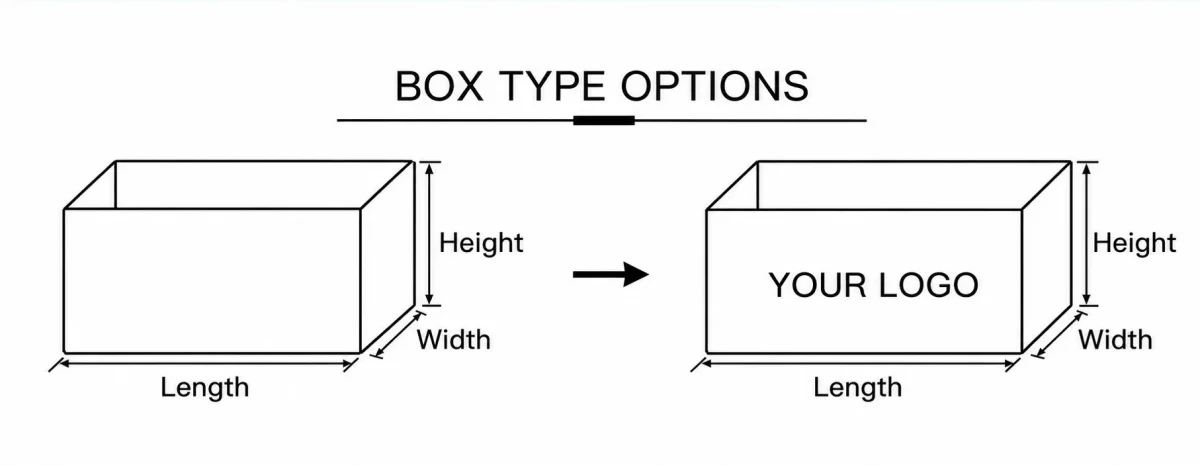
- In scope: empty folding cartons, rigid boxes, corrugated cases, paper bags, and paper-based labels traded as goods in their own right (heading 4819 / Chapter 48).
- Out of scope at the point of use: the same carton the moment it is filled and carrying your product — packaging “in use” is exempt. The exemption relieves the user, not the maker who sold it empty.
- Out of scope entirely: products made entirely from recovered or recycled material. A 100% recycled box is outside EUDR — but blend in any virgin fibre and the virgin portion must be traced back to the forest plot.
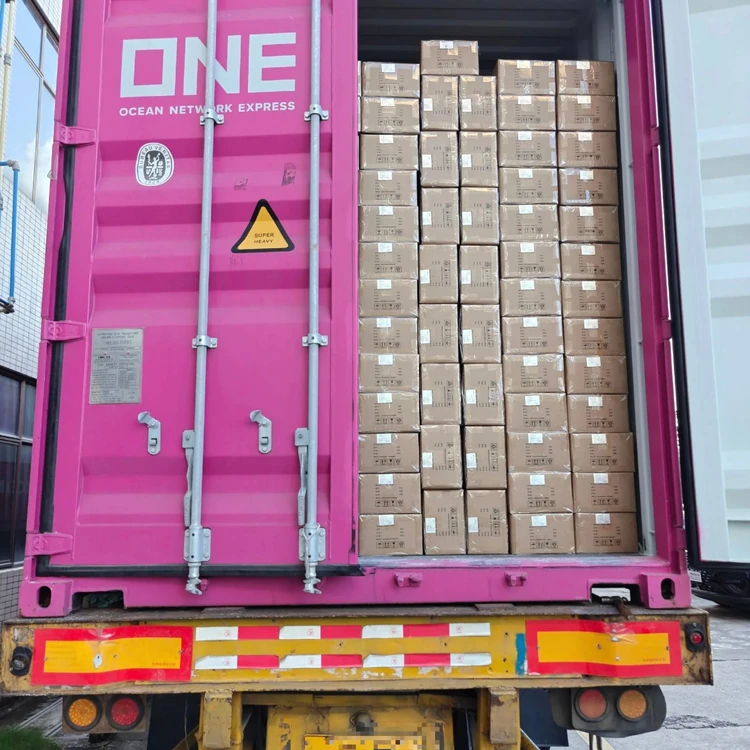
Why this matters for a buyer: if you import 50,000 empty rigid boxes from a Chinese converter, you are likely the operator and the converter is your data supplier. If you ship goods inside those boxes, the filled boxes are exempt on arrival — but the empties you stock and the next order still need documentation.
What EUDR Means for Your Boxes and Paper Bags
This is the section that separates EUDR from every other packaging rule. EUDR does not ask “is it FSC?” It asks four questions, and only one of them touches certification:
- Where exactly was the wood grown? You need the latitude and longitude of every plot of land where the harvested wood originated — not just the country, and not just a certificate number.
- Was that land deforested after 31 December 2020? The cut-off date is fixed; any post-2020 conversion to plantation is disqualifying for that plot.
- Was it produced legally? Under the laws of the country of harvest.
- Has due diligence been done, and a DDS submitted? Through the EU Information System (TRACES).
The practical takeaway for a brand: an FSC logo is not EUDR compliance. FSC proves responsible forest management and chain of custody; EUDR demands plot-level geolocation and a due diligence statement. A certificate helps as evidence of legality, but it does not replace the DDS or the coordinates. If a run mixes pulp from several forests, every source must be documented.
The second takeaway is about material strategy. Moving to genuinely 100% recycled board is the lowest-risk route, because recovered-material product is excluded. But most premium cartons and bags still use virgin fibre for stiffness and print surface — so for those, the supplier’s mill certificate number, fibre-origin statement, and virgin/recycled split become the documents you must collect.

How a Converter Supplies EUDR-Ready Packaging
As a printing and converting factory, our role is to be the upstream data supplier your EU importer needs — and to print the traceability that makes the pack auditable. Here is what we build into an EUDR-ready order.
Board sourcing and evidence. We source board from FSC-certified mills and pass through the mill certificate number, the technical data sheet (TDS), and a fibre-origin statement showing virgin versus recycled content. We do not print an FSC trademark claim on packaging we are not authorised to certify; what we provide is the documented chain-of-custody evidence behind the material, which your importer folds into its due diligence file.
Printed traceability. EUDR and the wider digital-product-passport trend both reward a pack that carries its own reference. We can print a batch or lot code and a GS1 Digital Link QR code that points to your due diligence statement reference, so a customs check or a retailer audit can resolve the pack to its DDS in seconds. This overlaps directly with the Sunrise 2027 2D-barcode printing guide we published earlier.
The document package we hand importers includes: a material declaration (board grade, grammage, virgin/recycled split), mill certificate references, and production records retained for at least five years. The importer still owns the DDS submission — we supply the inputs.
Illustrative scenario, not a specific customer order: a European cosmetics brand briefing 50,000 rigid boxes asked for the mill certificate number, the virgin/recycled fibre split, and a lot code printed inside the lid. We returned the material declaration and the certificate references before tooling, the importer filed the DDS, and the first shipment cleared without a documentation hold. The same package now repeats on every reorder.
EUDR Supplier Document Checklist
Use this as a copy-ready checklist when you brief a box or bag supplier. Mark each item as supplied or missing before you confirm a run.
| Document / data point | What it proves | Needed by |
|---|---|---|
| Mill certificate number (FSC or equivalent CoC) | Chain-of-custody evidence for the board | Before tooling |
| Fibre-origin statement (virgin vs recycled split) | Whether EUDR scope applies at all | Before tooling |
| Geolocation of harvest plots (lat/long) | Deforestation-free, post-2020 cut-off | With the DDS |
| Legality declaration (country of harvest) | Produced under local law | With the DDS |
| Batch / lot code on the pack | Traceability back to the production run | At print |
| Due diligence statement (DDS) reference | Submitted in TRACES by the EU operator | Before EU import |
For the broader supplier-audit side — not EUDR-specific — our Factory Verification Checklist for Packaging Buyers (PDF) covers the 12 checks that separate a real factory from a trading company.
EUDR vs PPWR vs EPR — Where the Rules Overlap
EUDR is one of three packaging regimes a European buyer now faces, and they pull in different directions:
- EUDR (30 Dec 2026): deforestation-free proof and plot geolocation for wood-derived packaging. About where the fibre came from.
- PPWR (already applying from 12 Aug 2026): recyclability, heavy-metal limits, and EPR registration. About what the pack is made of and how it is recovered. See our PPWR recyclability grades A/B/C guide and the China green-printing certificates guide.
- National EPR (US) and EU EPR fees: producer fees by material and tonnage. About who pays for end-of-life.
The overlap is material data: the same board grade, grammage, and recycled-content declaration feeds EUDR due diligence, PPWR technical files, and EPR fee calculations. Getting one clean material declaration from your converter pays off across all three. In the US, the parallel pressure is state EPR — covered separately in our US state EPR buyer’s guide.
FAQ
Does the EUDR apply to paper and cardboard packaging?
Yes. Paper and paperboard are Chapter 48 of the Combined Nomenclature and are listed in EUDR Annex I. That includes cartons, boxes, corrugated cases, paper bags, and paper-based labels when traded empty. Printed matter under Chapter 49 is excluded.
Do paper bags need FSC certification for EUDR?
FSC certification helps as legality evidence but is not EUDR compliance. EUDR requires plot-level geolocation, a no-deforestation-after-2020 check, and a due diligence statement in TRACES. An FSC logo alone will not clear the requirement.
Is 100% recycled paper packaging exempt?
Products made entirely from recovered or recycled material are outside EUDR scope. The moment virgin fibre is blended in, the virgin portion must be traced to its harvest plots.
When does EUDR apply to small businesses?
Large and medium operators and traders must comply from 30 December 2026. Other micro and small operators have until 30 June 2027. Retailers and platforms often demand supplier compliance earlier to protect their own inventory.
What documents must my packaging supplier provide?
At minimum: the mill certificate number, a fibre-origin (virgin vs recycled) statement, and production records retained five years. The EU operator still files the due diligence statement — the supplier provides the inputs.
What happens if a shipment has no valid DDS reference?
Without a due diligence reference number, goods can be refused at the EU border. Penalties for serious breaches reach at least 4% of total annual EU turnover, plus possible confiscation and exclusion from public contracts.
Need EUDR-ready packaging documentation for your next carton or paper bag run? Tell us your product, material, and EU importer, and we will return the material declaration, mill certificate references, and traceability printing options before tooling. Request a quote and document package.
Related: Custom Packaging Boxes · Custom Paper Bags · Sunrise 2027 2D Barcode Printing