
Send Your Inquiry Today
Label Sticker Printing: A Practical Guide from Material Selection to Production
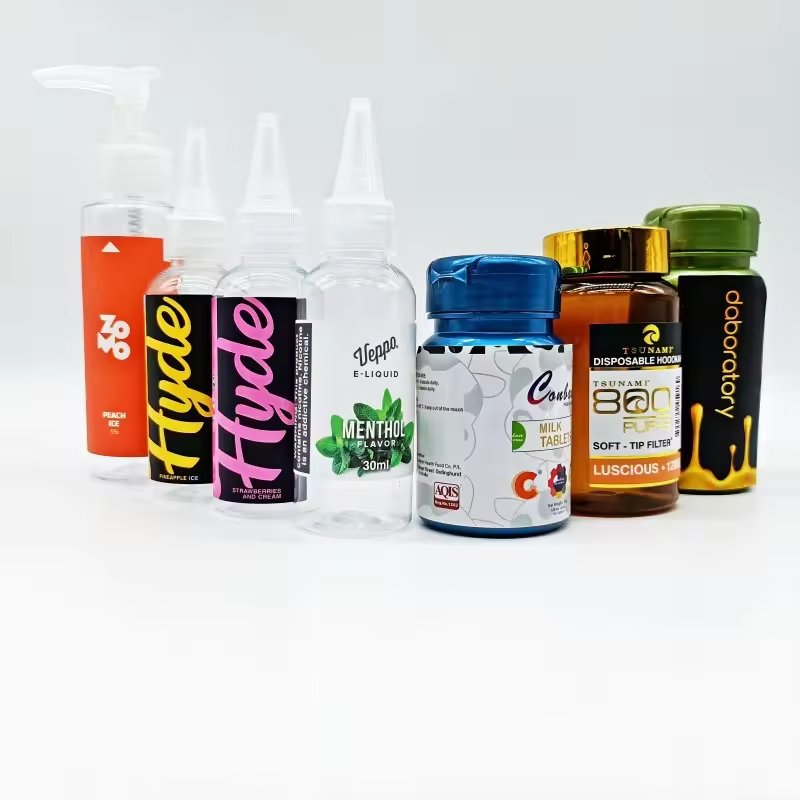
Label printing looks deceptively simple — print a design, slap on some adhesive, done. But anyone who’s actually placed a bulk order knows better: the wrong material can leave an outdoor label peeling within three months, the wrong ink can fade within half a year, and the wrong process can turn a “security” hologram into something anyone can copy.
For EU shipments, check our PPWR labelling requirements checklist: what must appear on the pack from 12 August 2026, and what only bites in 2028 and 2030.
This guide walks through materials (vinyl, paper, holographic film), processes (digital printing, UV curing, thermal transfer, hologram embossing), and the compliance requirements that come with different industries (GS1 barcode specs, GHS chemical labeling). Along the way, we’ll point to how Gervin actually handles these in production — particularly in hologram security labels, which is where the company has put 15+ years of dedicated R&D.
Understanding Label Sticker Printing
“Label printing” is a bit of a catch-all term — it covers a full workflow from material choice to finished production, not just “printing a design on something.” The core difference from ordinary printing is the substrate: labels use adhesive-backed vinyl, film, or metalized material instead of plain paper, which means specialized equipment is needed to get ink or toner to bond to a non-absorbent surface. A sticker, at its core, is just a custom label with adhesive on the back — after printing, it still needs die-cutting or kiss-cutting into sheets, rolls, or custom shapes that peel and apply cleanly.
At Gervin, this entire pipeline sits under one roof: everyday self-adhesive paper labels, transparent vinyl window decals, and — the company’s actual specialty — hologram security labels all come off the same production lines.
From a marketing angle, a sticker is basically a portable ad for your brand. From a production angle, turning a design file into something print-ready means getting the bleed and resolution right — and if the product falls into a regulated category, the design has to meet whatever rules apply. GHS hazard icons, for instance, have to be black symbols on a white diamond with a red border; that’s not a style choice, it’s a requirement. Throughout this guide, “label printing” means the whole process of making a label look good, hold up physically, and stay compliant.
Vinyl Stickers and Waterproof Materials
A common scenario: a customer ships product to Southeast Asia or the Middle East, where warehouse temperatures regularly exceed 35°C. Two or three months in a shipping carton, and the label starts curling, fading, or peeling off entirely. Nine times out of ten, the root cause is the same — paper labels or a generic film were used instead of vinyl.
Vinyl (PVC) is the default choice for outdoor use because it’s inherently water-resistant and UV-stable, unlike paper, which absorbs moisture and warps. But not all vinyl is equal: untreated vinyl left under strong UV for a year or two will still show some fading. That’s why most outdoor labels get an extra laminate layer — it adds scratch resistance and additional UV protection, and it’s the step that actually makes a label durable, not an optional extra.
Two terms are easy to mix up here. Waterproof vinyl refers to a surface coating that resists water and chemical exposure. Transparent vinyl is clear vinyl film, commonly used for glass window decals or device branding, where the point is to let whatever’s underneath show through.
For this category, Gervin’s production covers both PP vinyl and paper-based self-adhesive materials, available as custom sticker sheets or continuous roll labels. Vinyl thickness and adhesive type (permanent vs. removable) can be mixed and matched — a label meant to survive five years outdoors and a one-off promotional sticker meant to peel off cleanly call for completely different material logic; one size doesn’t fit both. Full-color CMYK printing is standard, and Pantone spot-color matching is available for brands that need an exact corporate color. See the product range for current formats.
Printing Technologies: Digital, UV, and Specialty Finishes
Different label needs call for genuinely different printing processes — get the process wrong and both the finished look and the budget suffer.
Full-color labels — the kind you’d see on most product packaging — are typically handled with digital CMYK printing, which is the workhorse for small-to-mid volume runs that need frequent redesigns. But for a premium finish — think cosmetics or spirits packaging that needs to look expensive — UV-curable ink is usually the better call: the ink hardens instantly under UV light, producing more saturated color and a slightly raised, glossy texture that’s noticeably different from a standard matte label. This process also works on rigid substrates, not just vinyl.
Logistics and warehouse applications run on a completely different logic. The biggest risk for a barcode label isn’t that it looks bad — it’s that it fails to scan after getting knocked around or smeared with grease in a warehouse. That’s why thermal transfer printing is the industry standard for this category: ink is transferred from a ribbon under heat, producing denser, higher-resolution output that resists chemicals and abrasion — better suited to inventory tags and outdoor asset labels than standard inkjet. When printing barcodes, GS1’s placement guidelines are worth following directly: black bars on a white or light background, with an adequate quiet-zone margin, or scan rates will drop noticeably.
Hologram labels are Gervin’s actual core business — not one line item among several. These use embossed metallic film that produces a rainbow, angle-shifting effect that’s genuinely hard to replicate, which is why they’re common for anti-counterfeiting seals and warranty stickers — anywhere a product needs to be verifiable at a glance. Gervin has put over 15 years into R&D specifically in this area, using laser-engraved, laminated construction to produce real security holograms — a different thing entirely from the decorative metallic-vinyl stickers that look similar but offer no actual anti-counterfeiting protection (more on that distinction in the FAQ below). If brand protection or tamper-evidence is the priority, this is the product line worth starting with — see the hologram label range.
Label Types at a Glance
| Label Type | Material / Substrate | Durability / Performance | Typical Application | Gervin Product Line |
|---|---|---|---|---|
| Vinyl Sticker | PVC vinyl | Waterproof, UV-resistant | Product branding, outdoor decals | Self-Adhesive Label |
| Transparent Vinyl Sticker | Clear vinyl (PVC) | Waterproof, discreet background | Window/device branding | Self-Adhesive Label |
| Waterproof Vinyl Sticker | Laminated vinyl or PE/PET | Tear-resistant, UV-stable | Outdoor equipment, packaging | Self-Adhesive Label |
| Hologram Sticker | Metalized polyester film | Tamper-evident, scratch-resistant | Security seals, brand authentication | Hologram Sticker (core specialty) |
| Barcode Label | Thermal or digitally printed film/paper | High-contrast, GS1-compliant | Product ID, inventory | Packaging Label |
| Roll Labels | Paper, PP, vinyl | Continuous rolls for high-speed application | Food & beverage, cosmetics | Packaging Label / Roll Label |
| Hot Stamping Label | Foil-stamped paper or film | Metallic accent, premium finish | Retail packaging, gifting | Hot Stamping Label |
| Full-Color Labels | Any printable substrate | CMYK printing, waterproof options | Branding, product packaging | Packaging Label |
Not sure which category fits your product? Gervin’s design and sales team can review it and recommend a material-and-adhesive combination based on 20+ years of production experience.
Industry Applications and Best Practices
Different industries need different things from a label, mostly because the underlying problem each one is solving is different.
Cosmetics and consumer goods brands care most about first impressions on a shelf, so full-color printing with foil stamping or hot-stamped finishes gets used most — the priority is simply looking good. Brands focused on counterfeiting are solving a different problem entirely: proving a bottle or a box is genuine, which makes hologram security labels a necessity rather than a nice-to-have. Logistics and retail operate on yet another logic — a barcode label just needs to scan reliably at checkout or in a warehouse; looks are the least important variable.
Chemicals, food, and cosmetics also carry hard compliance requirements on top of everything else. Chemical products, for instance, must meet GHS standards — OSHA’s Hazard Communication standard specifically requires hazard pictograms to be black symbols on a white diamond background with a bold red border. There’s no flexibility here; getting it wrong means the label itself is non-compliant.
Reputable label converters generally align their processes with guidance from industry bodies like TLMI (Tag and Label Manufacturers Institute), on top of ISO color and material standards. Specs like those in ISO 12647 — covering bleed, resolution, color control — might look like fine print, but they’re usually the actual root cause when a first batch looks perfect and a reorder doesn’t quite match. Following a consistent standard is what keeps color stable across repeat orders.
Why Source Through a Factory Direct
A question customers ask often: why deal directly with a factory instead of a trading company?
The difference mostly comes down to three things. First, sampling cost — going direct usually means free design proposals and free samples as standard, instead of paying repeatedly just to confirm a color or material. Second, control over specialty processes — die-cutting, embossing, hologram origination: any adjustment has to be relayed through a middleman if one’s involved, adding delay and information loss. Hologram labels especially require repeated tuning of laser-engraving parameters, which barely works through a trading-company layer. Third, iteration speed — swapping a material or adhesive type, a factory can adjust production parameters directly instead of routing the change through several layers.
Gervin has been manufacturing in Guangzhou for 20 years, with 15+ years specifically in hologram label R&D. The numbers themselves aren’t really the point — what matters is what gets learned along the way: which adhesives fail in humid climates, which vinyl thicknesses jam on high-speed labeling machines. That kind of knowledge is hard to pass along through a trading intermediary; going direct to the factory is usually the only way to get a useful answer to those questions. More on the About Us page, or get in touch for a quote.
FAQ
Q1: How do I choose between paper and vinyl labels? Is paper good enough on a tight budget? If the label is only used indoors and has a short lifespan — one-off promotions, shipping labels — paper is fine and cheaper. But for anything outdoors, humid, or expected to last more than six months, go with vinyl. Paper labels in a humid climate or a warehouse near a port can wrinkle and lose adhesion within a month or two.
Q2: My sticker was labeled “waterproof and UV-resistant” but faded within six months. Material or process issue? Could be either, but it’s usually the ink type. Standard water-based ink fades faster under prolonged sun exposure; UV-curable or solvent-based ink holds up noticeably better. Also check whether the label has a protective laminate — even UV-stable ink can look dull over time on unlaminated vinyl. Before ordering, ask your supplier directly which ink type they’re using rather than relying on “waterproof and UV-resistant” as a blanket claim.
Q3: There are a lot of holographic stickers on the market — how do I tell if one is actually security-grade? The clearest way is to look at construction. A genuine security hologram is a multi-layer, laser-engraved metalized film — genuinely difficult to replicate. Many “hologram-looking” stickers are just printed graphics on a metallic vinyl surface — visually similar, but without the engraved layer, which makes them cheap to copy and offers no real anti-counterfeiting value. If brand protection is the priority, ask to see a sample of the laser-engraved process specifically, not just the reflective effect.
Q4: My barcode labels print fine but scanners keep failing to read them. What’s going on? Usually one of a few things: resolution too low (aim for at least 300 DPI), insufficient quiet-zone margin around the barcode, or a red background (some scanners struggle to read red, and GS1 guidelines specifically advise against it). Always sample and test with an actual scanner before running a full batch — don’t wait until the whole order is printed to find out it doesn’t scan.
Q5: Can custom stickers be printed in small batches? Can processes be combined — foil stamping plus full color, for example? Yes. Digital CMYK printing is friendly to smaller order quantities, and Pantone spot color, foil stamping, and spot UV gloss can all be layered together. Have your dimensions and file specs ready (CMYK color mode, 300 DPI) before ordering, and always request a physical proof before full production — don’t skip that step.
In Summary
The range of material-and-process combinations in labels is genuinely more complex than it looks. A “waterproof label” for outdoor equipment and one for refrigerated food packaging call for entirely different material logic; a “hologram label” that’s purely decorative and one that’s genuinely security-grade can differ by an order of magnitude in anti-counterfeiting strength.
If you’re still weighing which label type or process fits your product, it’s usually faster to talk through the specific use case with a manufacturer than to trial-and-error it alone. Gervin’s team can recommend a material and process based on actual use conditions and budget, with free design proposals and samples — particularly useful for hologram security labels, which carry a higher technical bar. Get in touch for a quote.
Buyer Questions About Label Sticker Printing
Confirm face stock, adhesive, liner, finish, application temperature, roll direction, core size, MOQ and proofing method before production.
What information should be included in the quote?
Provide finished size, material, quantity, artwork status, application surface, destination and required delivery date. For security products, also specify the verification method and whether serialized data is needed.
How are MOQ, price and lead time determined?
Quantity, print process, tooling, finishes, testing and freight all affect the total. Approving artwork and material early is the fastest way to protect the requested ship date.
Can you supply samples and help with compliance?
Request a physical pre-production sample on the intended substrate. Confirm applicable food-contact, recycling, barcode or market requirements for the US and EU before mass production.
Transparent Vinyl and the No-Label Look
One of the most requested premium label constructions from North American and European buyers is the “no-label look”: transparent vinyl facestock that makes the printed design appear to float directly on the container. It is the default choice for skincare and cosmetic bottles, glass packaging where the product itself is part of the visual appeal, and premium spirits — and it holds fine print detail well, which matters when your artwork includes intricate die-lines or small-text ingredient panels.
Two specification notes from the production floor: first, clear labels expose adhesive quality — any bubbling or silvering under a transparent facestock is visible, so curved-surface application demands a conformable film and careful liner selection. Second, white ink becomes a design tool: logos and text that need opacity are laid down in white first, then overprinted — worth knowing when you prepare artwork, because it changes how files should be built.
How a Waterproof Label Is Actually Built
“Waterproof” is not one material — it is a construction. A label that survives repeated condensation, ice-bucket immersion or a dishwasher cycle is built in layers: a waterproof vinyl or PET base stock, lamination or a UV coating for surface protection, and an adhesive matched to the container material. Remove any one layer and the label fails at the weakest point — usually edge lift after the first wet cycle.
Before mass production, ask your supplier how the construction is validated. Credible validation is application-specific: condensation testing for beverage bottles straight from the cooler, immersion testing for products used around water, and accelerated aging for anything sold as reusable. If you are matching labels to container materials — including the low-surface-energy plastics that most labels refuse to stick to — the full material logic is in our label materials guide, and application-by-container specifics are covered in our labels for bottles, food and cosmetics guide.
Freezer and Cold Chain Labels: Adhesives That Do Not Fail
Cold chain is where ordinary label specifications break. The failure is rarely dramatic — a label that lifts at one corner, then peels across a pallet over a week — and by the time it is visible, the product is already in a freezer cabinet.
Three conditions to specify at once. The application temperature (what the label is applied at), the service temperature (what it lives at), and the surface condition (dry, frosted, or already frozen). A freezer-grade adhesive handles service down to about −40 °C, but almost no adhesive will bond to a frosted or wet surface. If labelling happens after freezing, you need a film face stock with an adhesive formulated for frozen application — and you should test it, because this is the single most common cold-chain failure.
Face stock follows the environment. Paper labels absorb condensation and fail in a freezer; films do not. BOPP is the mainstream choice for chilled food and beverage, PET for higher temperature or chemical exposure. If you want the uncoated paper look on a chilled product, use a paper-look film rather than actual paper.
Condensation is the hidden variable. A product moving from freezer to ambient collects surface water, and a label sitting on that water will lift. Adhesives formulated for moisture-tolerant application exist, and the print face should be protected too — a thermal transfer print will smear where a UV-cured or laminated one will not.
Test the whole cycle, not one point. Apply the label under production conditions, freeze it, thaw it, and put it in a wet cabinet for 48 hours. A lab test at room temperature predicts nothing about cold chain performance.
Related Guides
- Label Materials for EU/US Brands — facestock and adhesive selection by surface and environment — the layer beneath every printing decision.
- Custom Label Printing Solutions — materials, manufacturing capability and quality control for global brand programs.
- Labels for Bottles, Food & Cosmetics — specification by product category, including waterproof and food-contact requirements.
- Custom Security Labels — when a label must do more than identify — authentication and tamper evidence.
Frequently Asked Questions
What is the difference between labels and stickers?
A label carries mandatory and functional information — product identity, ingredients, barcodes, compliance marks — and is engineered as a material system (facestock + adhesive + liner) for a specific container and environment. A sticker is general-purpose decoration, usually sold on sheets with a one-size-fits-all adhesive. Product packaging needs labels; stickers cover promotion, packaging seals, and giveaways.
Roll labels or sheet labels — which should I order?
If a machine applies labels at a filling or packing line, order roll labels and specify the unwind direction and dispensing edge to match the applicator — your line technician knows the setting. If labels are applied by hand or needed for offices and short runs, sheet labels are simpler and cheaper. Converting a design between the two costs nothing if you tell the printer up front.
Why do labels peel off plastic containers?
Usually a surface-energy mismatch: HDPE and PP are low-surface-energy plastics that general-purpose adhesives cannot wet properly, so the bond fails over time. The fix is an adhesive formulated for LSE plastics, surface treatment at the filling line, or a conformable film facestock (PP/PE) that flexes with the container instead of lifting at the edges. Full material logic in the label materials guide above.