
The Ultimate Guide to Custom Packaging Boxes Printing: Elevate Your Brand in 2026
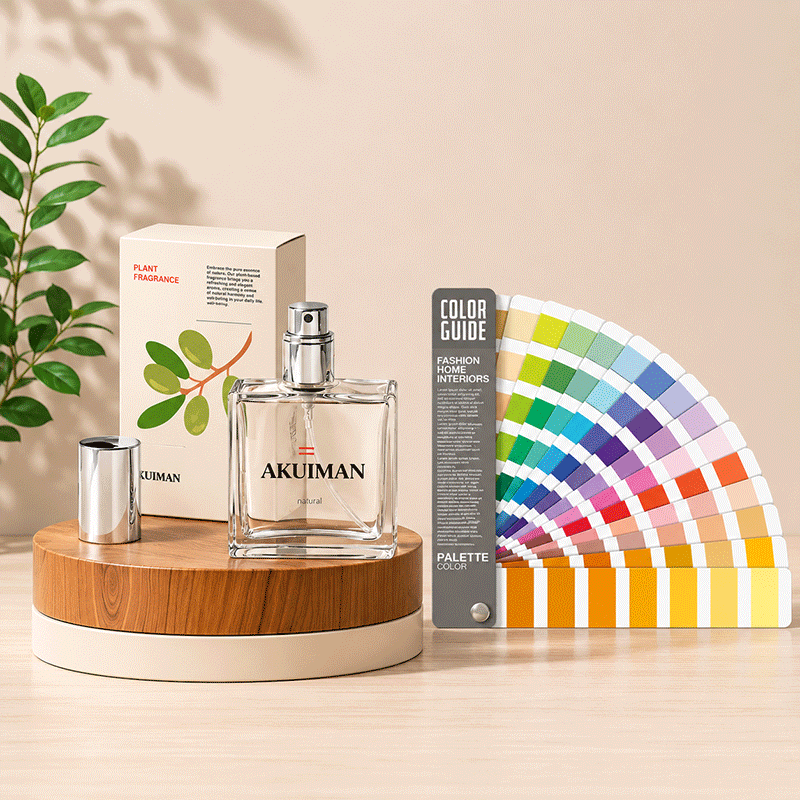
If you want your retail product to grab attention on crowded shelves or create an unforgettable unboxing experience, off-the-shelf shipping cartons simply will not cut it anymore. Today, custom packaging boxes printing serves as the literal face of your brand, acting as a silent salesman that communicates premium quality before a customer even touches the product inside. In this comprehensive, factory-backed guide, we will break down the structural engineering, advanced press technologies, and smart material selections that turn standard cardboard into a powerful marketing asset. Whether you are searching for high-volume wholesale custom logo boxes printing solutions to maximize your margins, or designing ultra-premium luxury custom packaging boxes to command a higher price point, we have you covered. We will explore how modern structural design influences consumer psychology, analyze the exact performance metrics of different paperboard grades, and provide actionable roadmaps to optimize your print supply chain for maximum ROI.

Key Takeaways

  • Structural Optimization: Matching the correct material grade directly reduces transit damage and shipping costs.
  • Print Technology Choice: Digital printing suits short runs, while offset printing offers the best economy of scale for wholesale custom logo boxes printing.
  • Sustainability Drives Sales: Utilizing FSC-certified materials and soy-based inks aligns your brand with modern eco-conscious consumer trends.
  • Texture Enhances Value: Combining tactile finishes like embossing with spot UV significantly elevates perceived brand luxury.

1. The Strategic Impact of Custom Box Packaging Printing on Modern Retail

In today’s highly competitive omnichannel marketplace, custom box packaging printing is no longer just a functional necessity for logistics; it is an essential component of your brand’s marketing mix. When a customer receives an order, your packaging provides the very first physical touchpoint with your company. Research consistently shows that premium presentation directly influences perceived product value, allowing smart brands to command a price premium.

By investing in high-quality custom product boxes, you are effectively telling your audience that what is inside is worth protecting and celebrating. From structural design to final surface embellishments, every decision you make impacts customer retention and word-of-mouth marketing.

For e-commerce brands, this physical touchpoint is magnified during the unboxing process. Utilizing custom printed mailer boxes product presentation strategies transforms a routine delivery into a shareable social media moment. When you design a box that feels robust, opens smoothly, and displays crisp, vibrant interior graphics, your customers are far more likely to share their experience online, granting your brand organic, highly trusted impressions.

2. Technical Material Standards for Cardboard Paper Box Printing

Choosing the right structural substrate is the most critical technical step in the engineering process. If you select a material that is too thin, your product risks arriving damaged; choose something too heavy, and you will unnecessarily inflate your manufacturing and shipping overhead. When dealing with cardboard paper box printing, manufacturers categorize paperboard materials by their thickness (measured in points or mils) and structural composition.

Understanding Key Packaging Substrates

  1. SBS (Solid Bleached Sulfate): This is the highest quality, purest white paperboard grade available. Made entirely from bleached chemical pulp, it offers a perfectly smooth surface ideal for the complex color profiles found on luxury cosmetic boxes.
  2. Kraft Board (Unbleached Paperboard): Known for its natural brown hue and exceptional tear resistance, Kraft is the go-to choice for brands pursuing an eco-friendly aesthetic. It provides excellent structural integrity for heavy items and pairs beautifully with high-contrast, minimalist flexographic inks.
  3. Corrugated Fiberboard: When your products require heavy-duty protection for local retail distribution or cross-border e-commerce transit, custom corrugated packaging boxes are indispensable. This material features a fluted paper wave sandwiched between two flat linerboards, providing incredible stacking strength and shock absorption.

To help you map your specific product requirements to the correct industrial substrate, we have compiled a structural engineering guide below.

Packaging Substrate Performance & Specification Matrix

Material Substrate TypeAvailable Thickness / Flute ProfilesCommon ApplicationsStructural Performance RatingRecommended Print Method
SBS Premium Paperboard16pt to 24pt ($0.016″ – 0.024″$)Luxury cosmetic boxes, high-end electronicsMedium Rigid / High SmoothnessOffset Lithography / Digital UV
Coated Kraft Back (CKB)18pt to 28pt ($0.018″ – 0.028″$)Heavy retail items, hardware, dry foodsHigh Tear Resistance / Eco-FriendlyFlexography / Screen Printing
E-Flute CorrugatedThickness: Around $1/16″$ ($1.6\text{ mm}$)Custom printed mailer boxes productHigh Crush Resistance / LightweightFlexography / Digital Direct
B-Flute CorrugatedThickness: Around $1/8″$ ($3.2\text{ mm}$)Subscription boxes, medium shipping boxes printingSuperior Stacking / Impact CushioningFlexography / Litho-Lamination
Greyboard (Rigid Setup)800gsm to 1500gsm (Non-bending)Luxury custom packaging boxes, gift setsMaximum Rigidity / Stationary ShapeLitho-Wrap / Premium Foil Stamping

3. Advanced Engineering: Elevating Luxury Custom Packaging Boxes

For high-ticket sectors like premium cosmetics, fine jewelry, and boutique electronics, the tactile feel of the packaging must match the premium nature of the product. This is where luxury custom packaging boxes come into play. Unlike folding cartons that ship flat, high-end rigid boxes are constructed from thick, non-bending greyboard that is mechanically wrapped with premium printed paper or textured art sheets.

To maximize consumer impact, leading brands incorporate advanced tactile finishes during the post-press phase of custom gift boxes production. Techniques such as blind embossing create raised, three-dimensional elements that invite touch, while debossing presses patterns deep into the fibers for a sleek, architectural feel.

[Greyboard Core: 1200gsm] ➔ Wrapped with [Premium Art Paper] ➔ Enhanced by [Spot UV + Foil Stamping]

When you combine these tactile techniques with spot UV gloss—a process where a high-gloss liquid coating is applied to specific areas and instantly cured using ultraviolet light—you create stunning visual contrast against a matte background. For wholesale buyers looking to scale, partnering with a factory that offers integrated wholesale custom logo boxes printing ensures these intricate multi-step finishes are executed with tight registration tolerances across large production runs.

4. Operational Optimization for Shipping Boxes Printing and Logistics

From a purely operational and logistical standpoint, the primary job of any container is to ensure your goods arrive at their destination completely unscathed. When designing high-volume shipping boxes printing arrays, you must balance aesthetic appeal with strict physical performance metrics.

To ensure your supply chain remains efficient, your engineering team should design packaging that complies with international distribution standards, such as those set by the International Safe Transit Association (ISTA). Designing boxes that fit perfectly onto standard shipping pallets prevents shifting during transport and maximizes cargo space, directly reducing your carbon footprint and fuel surcharges.

Furthermore, integrating smart structural features into your custom corrugated packaging boxes can drastically cut fulfillment times. For instance, incorporating dual self-sealing adhesive strips allows for incredibly fast packing in fulfillment centers while providing an integrated, glue-free return strip for the end consumer.

If your business operates in the perishable goods space, choosing specialized custom bakery boxes engineered with grease-resistant, FDA-approved clay coatings ensures your product remains fresh and visually appealing throughout its journey, preserving your brand’s reputation for quality.

5. Designing for Circularity: Future-Proofing Your Packaging Supply Chain

As global environmental regulations tighten and consumer preferences shift heavily toward circular economies, embedding sustainability into your procurement strategy is no longer optional. Modern custom packaging boxes printing workflows must minimize waste by using easily recyclable components and eliminating hazardous chemical finishes.

Raw Material (FSC Certified) ➔ Eco-Friendly Production ➔ Consumer Use ➔ 100% Curbside Recycling

Key Elements of Sustainable Packaging Design

  • Water-Based and Soy Inks: Traditional petroleum-based inks release high levels of Volatile Organic Compounds (VOCs) during the drying process. Switching to soy or vegetable-based inks dramatically reduces environmental impact and produces incredibly vibrant, true-to-life colors on porous paper surfaces.
  • Right-Sized Structural Engineering: Eliminating empty space inside your boxes reduces the need for plastic void-fill materials like bubble wrap. This not only lowers your material costs but also reduces total shipping weights.
  • Mono-Material Design: Creating boxes entirely from paperboard—including the internal structural inserts and dividers—allows the end consumer to drop the entire package directly into a standard curbside recycling bin without sorting, significantly increasing actual recycling rates.

To verify your environmental claims and build authentic trust with your audience, always look for materials certified by credible international forestry bodies, such as the Forest Stewardship Council (FSC). Displaying these recognized environmental marks directly on your custom prints clearly demonstrates your brand’s genuine commitment to sustainability.

6. FAQs Regarding Custom Packaging Boxes Printing

Q1: What is the minimum order quantity (MOQ) typically required for wholesale custom logo boxes printing?

MOQs vary significantly depending on the printing technology used. For digital printing, MOQs can be as low as 50 to 100 units because there are no physical printing plates to produce. However, for high-volume offset lithography or flexographic printing on custom corrugated packaging boxes, MOQs usually start around 1,000 to 2,000 units to offset the initial machine setup costs and plate fabrication fees.

Q2: How do I choose between digital and offset printing for my custom product boxes?

The choice comes down to your budget and total production volume. Digital printing offers incredibly fast turnaround times and affordable short runs, making it perfect for seasonal campaigns or testing new products. On the other hand, offset lithography offers unmatched color precision, access to special Pantone metallic inks, and the lowest per-unit cost once you scale past 1,000 units.

Q3: Can I get custom gift boxes printed on both the inside and the outside?

Yes, double-sided printing is an excellent way to elevate your presentation. Printing a solid brand color or a repeating logo pattern on the inside of custom gift boxes provides a premium, immersive unboxing experience. Just note that double-sided printing requires running the sheets through the press twice or using a specialized perfecting press, which adds to the initial manufacturing cost.

Q4: What file formats do packaging manufacturers require for custom box packaging printing?

To ensure your graphics print crisp and clear without pixelation, you should always submit vector artwork files in formats like Adobe Illustrator (.AI), Editable PDF, or Vector EPS. All text elements must be converted to outlines, and your color profiles should be set to CMYK or specific Pantone matching system (PMS) codes, rather than digital RGB.

Q5: How do custom bakery boxes differ from standard retail product boxes?

Packaging meant for direct food contact requires specialized material considerations. True custom bakery boxes are manufactured using FDA-approved food-grade paperboard and finished with natural, water-based barrier coatings. These coatings prevent oils, fats, and moisture from bleeding through the paperboard, keeping the structural integrity of the box intact and looking clean on retail displays.

Previous Post
What Are Boutique Kraft Paper Bags and Why Use Them
Next Post
The Ultimate Guide to Anti-Counterfeit Labeling: How High-Tech Protection Saves Your Brand Integrity and Consumer Trust